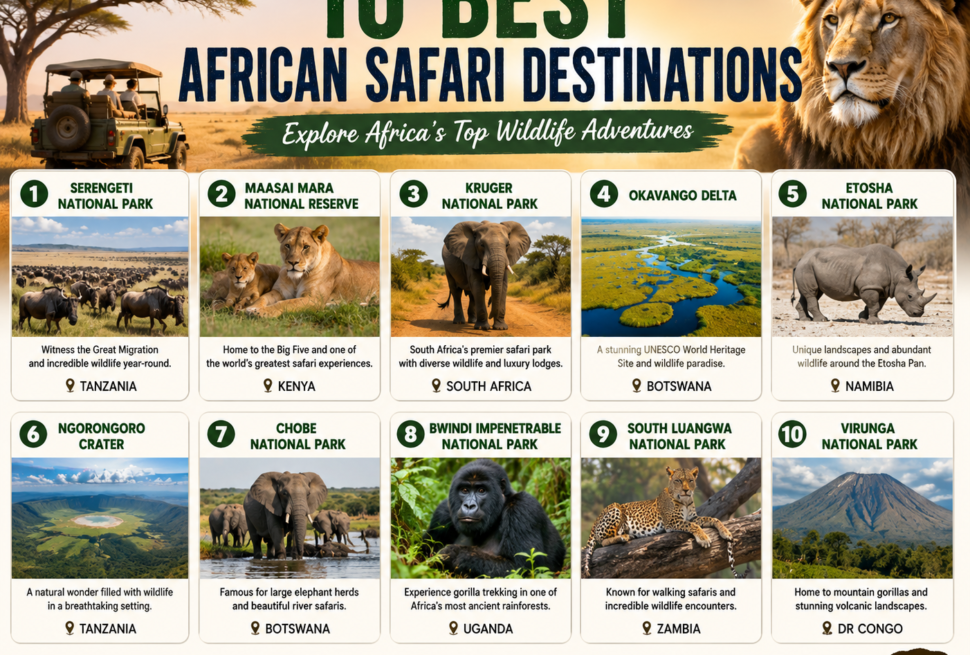
Etosha National Park Namibia: The Ultimate 2026 Safari Guide
Etosha National Park Namibia: Plan your 2026 Etosha safari: best time to visit, top wildlife, camps, fees, gates & pro tips for self-drive or guided tours in Namibia’s flagship park.
The Etosha Pan shimmers like a mirage under the Namibian sun—a vast, surreal salt desert fringed by acacia and mopane, where dust devils dance and the air hums with heat.
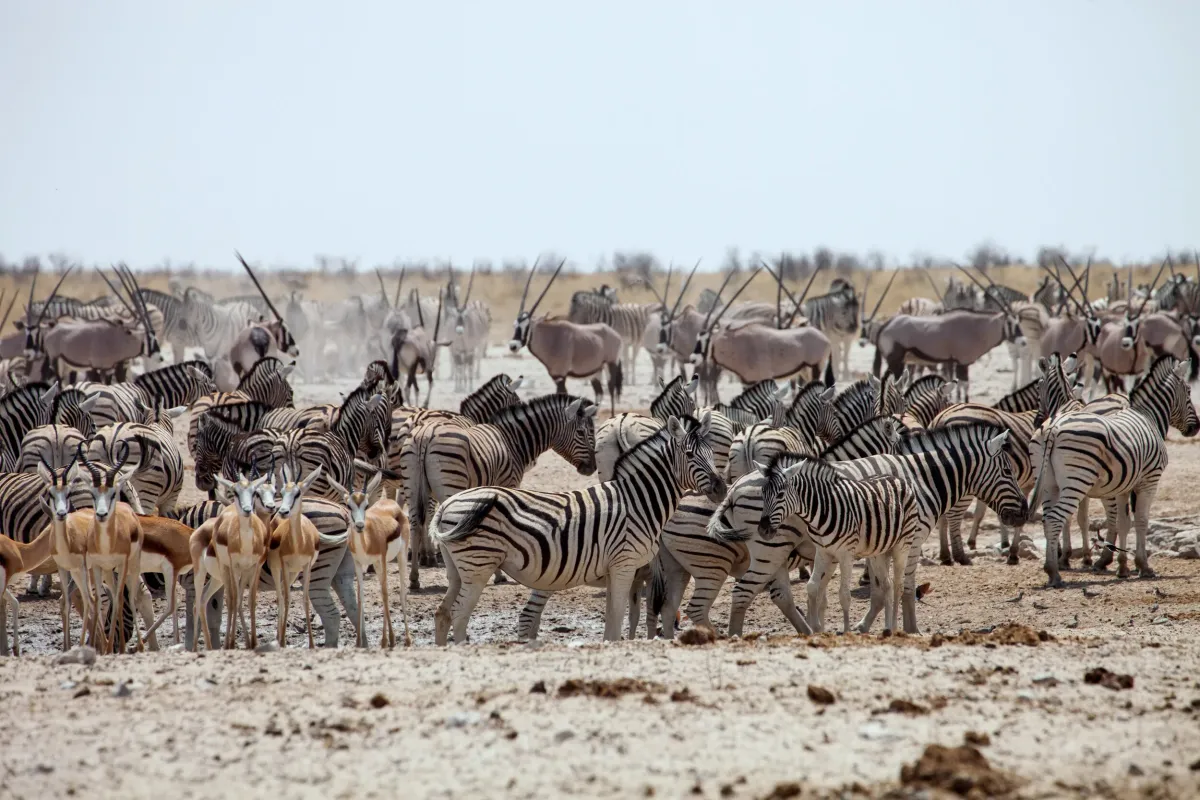
At dawn, herds of elephant, zebra, and springbok converge on the park’s legendary waterholes, while black rhino slip from the shadows under the watch of lions.
This is Etosha National Park, Namibia’s flagship wildlife destination and one of Africa’s most iconic safari parks.
In this complete 2026 Etosha safari guide, you’ll discover the best time to visit Etosha, the top camps and lodges (from budget camping to luxury pan-view chalets), which animals to see and where, up-to-date entry fees and gate times, and how to plan either a self-drive adventure or a fully guided safari.
Whether you’re flying in from the USA, UK, Canada, Europe, Asia, or Oceania, this guide is built to help you design a seamless, high-impact Namibia safari itinerary centered on Etosha.
Quick answers for skimmers:
-
Best time to visit Etosha: July–September for maximum wildlife at waterholes; November–March for birds, green landscapes, and newborns.
-
Must-see camps: Okaukuejo, Halali, Namutoni (plus Onkoshi and Dolomite for luxury)
-
2026 foreign adult fee: NAD 280 per person per day + vehicle NAD 60 (≤10 seats).
-
Gate times: roughly 06:00–18:00/19:30, varying by month.
Ready to plan your Etosha safari? Read on for the full deep dive—and when you’re ready to lock in dates and camps, contact Muzungu Africa Safaris for a custom, expertly guided Etosha National Park tour.
What Makes Etosha National Park Unique?
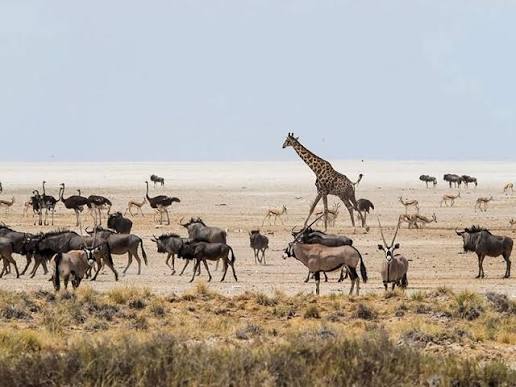
Etosha National Park is not just another African game reserve—it’s a landscape shaped by one of the world’s largest salt pans, a 4,800 km² white expanse that dominates the park’s center and dictates animal movements across 22,270 km² of protected land.
This unique ecology creates some of the most reliable and dramatic game viewing on the continent, especially in the dry season when wildlife clusters around scarce water.
Key features that set Etosha apart:
-
One of Africa’s oldest and largest parks, established in 1907 and home to the iconic Etosha Pan, a fossil lakebed visible from space.
-
114+ mammal species and 400+ bird species, including the Big Five (except buffalo in some areas), with particularly strong populations of black and white rhinos, elephants, lions, and giraffes.
-
Endemic black-faced impala, a conservation success story found only in this region, making Etosha a bucket-list destination for serious wildlife enthusiasts.
-
Floodlit waterholes at Okaukuejo, Halali, and Namutoni camps, where you can watch rhino, elephant, hyena, and even lions drink under the stars—without leaving your camp.
-
Ideal for self-drive safaris, thanks to a well-maintained road network, clear signage, and abundant wildlife concentrated around water sources, allowing independent travelers to enjoy world-class sightings without a guide.
For any Namibia itinerary, Etosha is non-negotiable: it’s the country’s wildlife crown jewel, blending raw desert beauty with exceptional safari experiences that rival the Serengeti or Kruger in their own unique way.
Best Time to Visit Etosha National Park
Timing your Etosha safari can mean the difference between good sightings and unforgettable encounters.
The park’s extreme climate—scorching days, cold nights, and a sharp wet/dry divide—creates distinct seasonal experiences.
1. Dry Season (May–October): Maximum Wildlife Concentration
The dry season is Etosha’s peak for classic game drives and predator action.
-
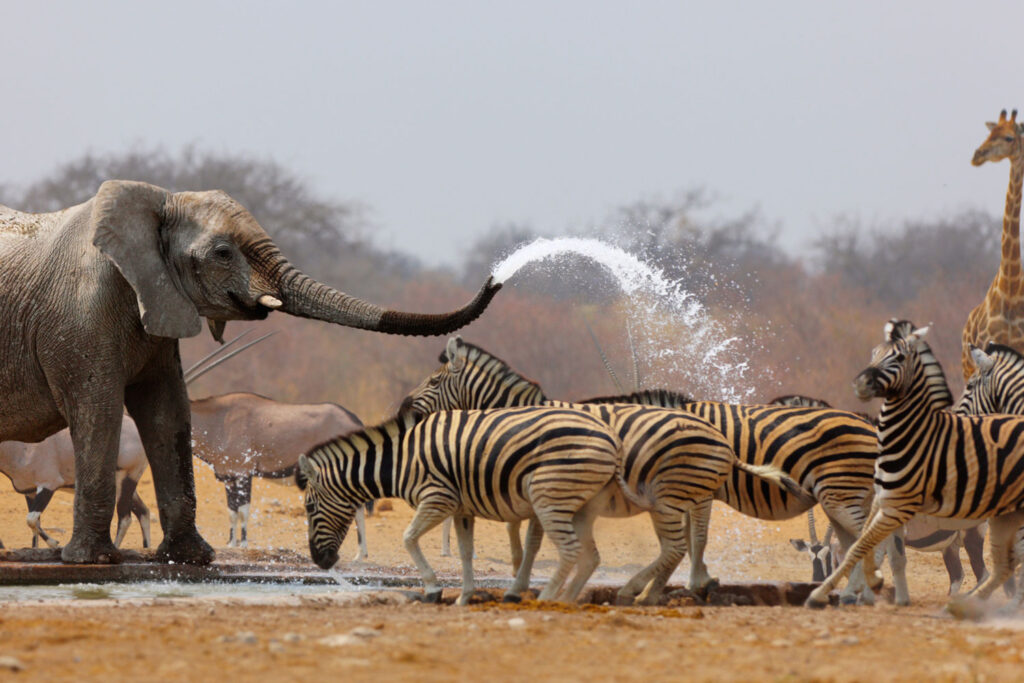
As water disappears from the pan and smaller pans, animals congregate at permanent waterholes, creating dense, reliable sightings.
-
July–September are the best months for wildlife density: expect large herds of elephant, zebra, wildebeest, and oryx, plus active lions, leopards, and cheetahs hunting near water.
-
Pros: clear skies, excellent light for photography, predictable animal movements, and cooler daytime temperatures.
-
Cons: colder mornings and evenings, higher visitor numbers (especially August–September), and premium rates at popular camps.
If your priority is seeing rhinos, elephants, and big cats in classic safari settings, target June–October.
2. Wet Season (November–April): Birds, Greenery & Newborns
The wet season transforms Etosha into a greener, more dispersed landscape.
-
November–March brings rain, filling seasonal pans and spreading wildlife across the park.
-
This is the best time for birding, with over 400 species, including migratory raptors, storks, and flamingos, on the pan.
-
You’ll see newborn antelopes (impala, springbok, and wildebeest) and dramatic storm skies—ideal for creative photography.
-
Pros: fewer crowds (except Dec/Jan holidays), lower rates at some camps, lush scenery, and active birdlife.
-
Cons: animals are more scattered, some roads may become muddy or challenging after heavy rain, and predator sightings can be less predictable.
For birders, photographers, and budget travelers, the wet season offers a different but equally rewarding Etosha experience.
Best Time of Day for Game Drives
Animal activity in Etosha is tightly linked to temperature and light.
-
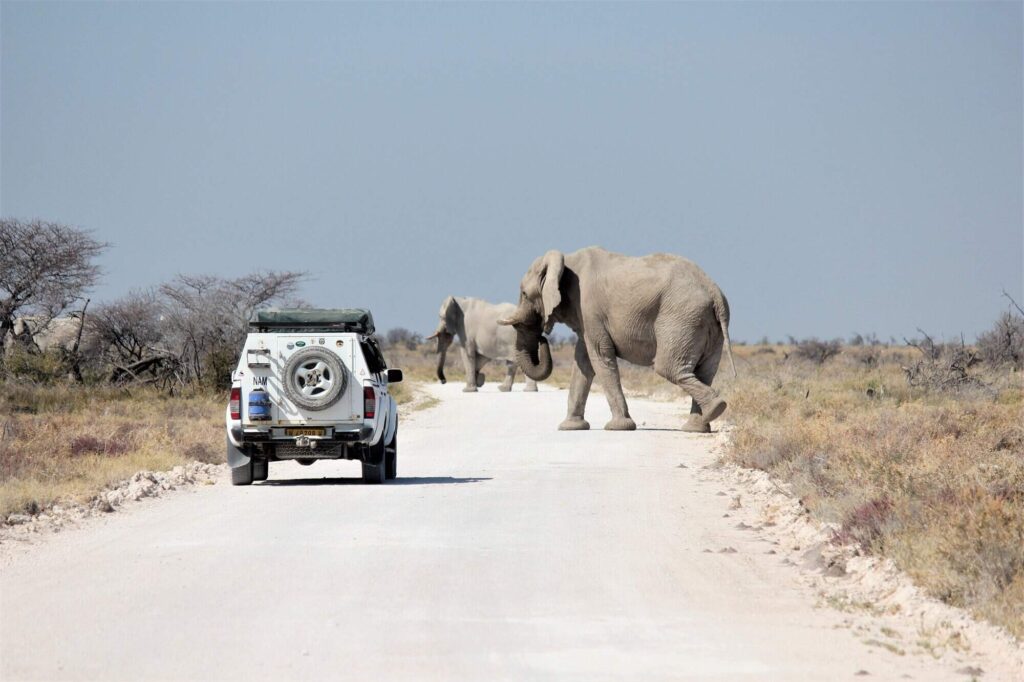
Prime game-viewing windows: 06:00–09:30 and late afternoon (around 16:00–18:30), when predators hunt and herbivores drink.
-
Dawn, right after gate opening, is often the most productive time: roads are cool, animals are active, and tour traffic is minimal.
-
Night drives are restricted in most of the park, but floodlit waterholes at major camps provide excellent nocturnal viewing of rhinos, elephants, hyenas, and bush babies without leaving safety.
Plan your daily drives around these windows to maximize sightings and photo opportunities.
Month-by-Month Snapshot (Temperature, Rainfall, Wildlife, Crowds)
(Data synthesized from 2026 Etosha planning resources.)
Top Wildlife to See in Etosha
Etosha’s waterhole-focused ecosystem makes it one of the best places in Africa to see large mammals in predictable settings.
Here’s what to target—and where.
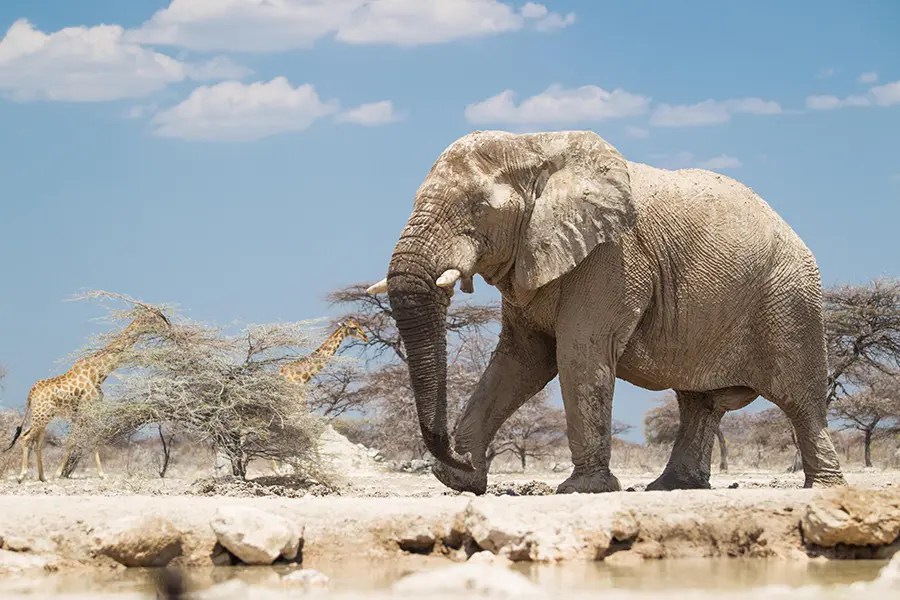
1. Elephant
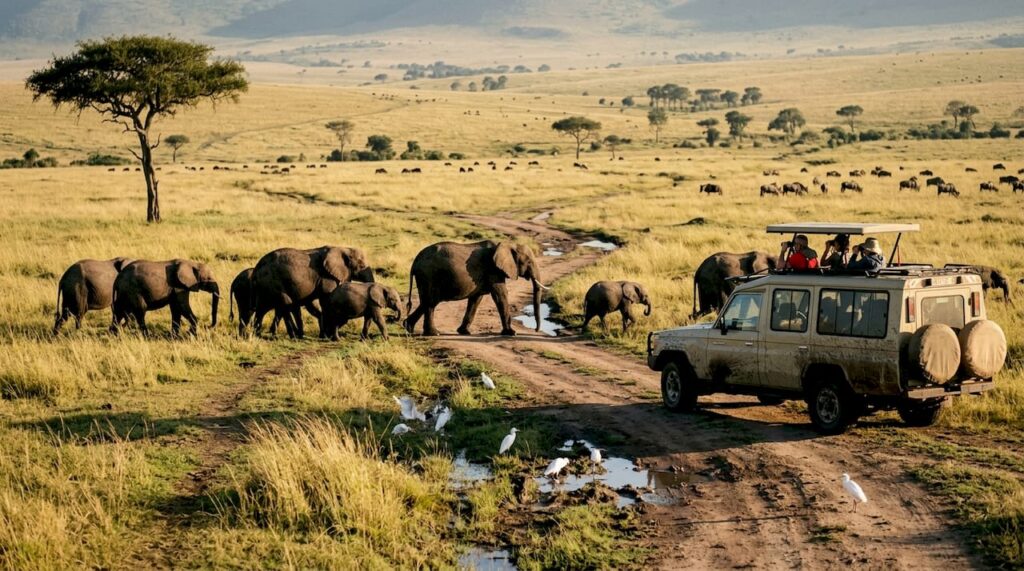
Etosha is home to some of Africa’s tallest elephants, roaming in large family herds that frequently visit waterholes across the park.
-
Best areas: Okaukuejo, Halali, Namutoni, and western waterholes.
-
Tip: Early morning and late afternoon offer the most active behavior and best light.
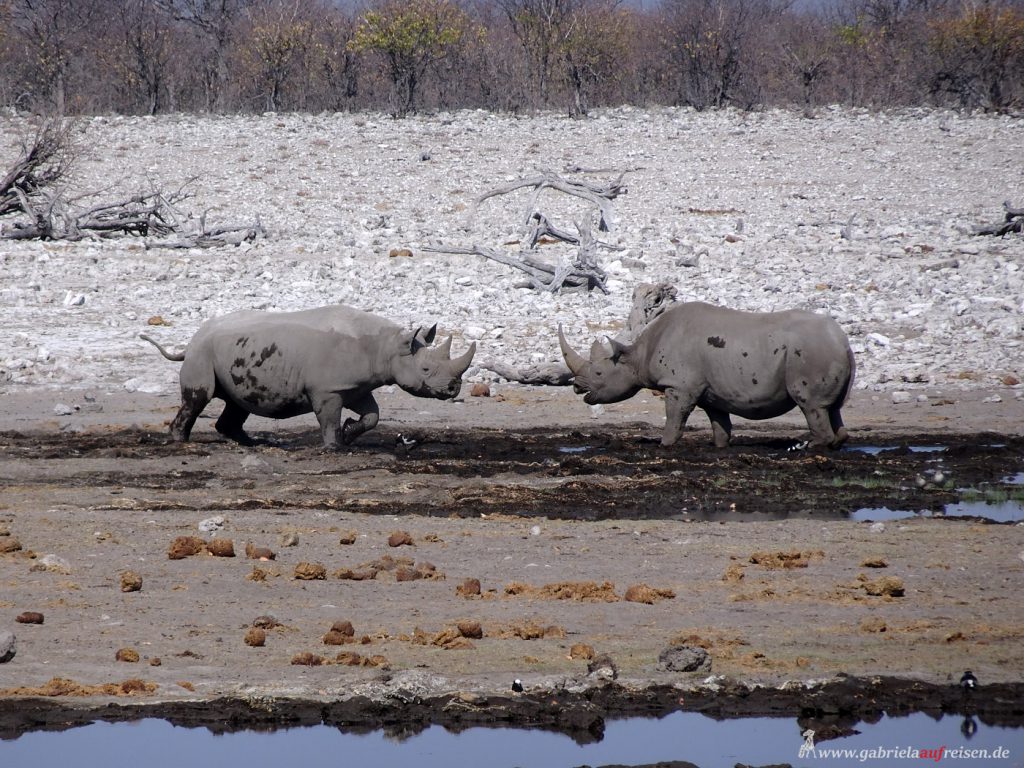
2. Black & White Rhino
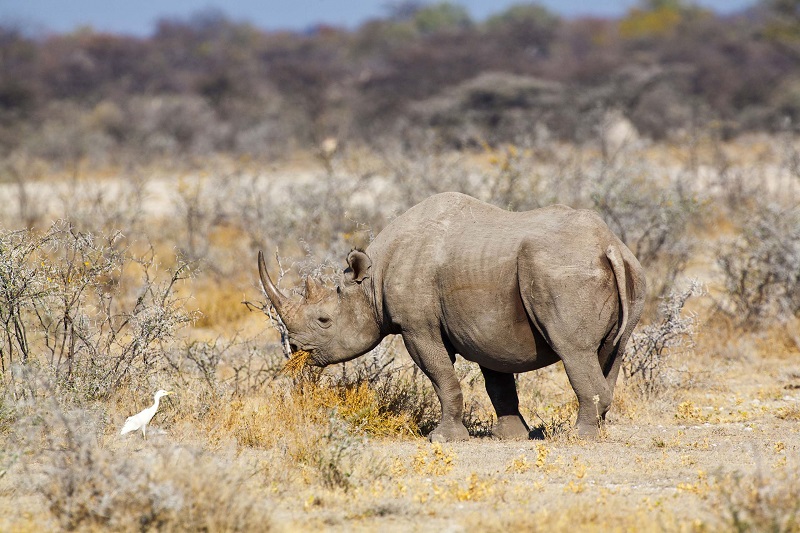
Etosha is a rhino conservation stronghold, with both black and white rhinos thriving under protection.
-
Best viewing: Okaukuejo’s floodlit waterhole at night is legendary for black rhino sightings; white rhinos are more common in western and central areas.
-
Tip: Ask camp staff about recent rhino sightings in the register book.
3. Lion, Leopard, Cheetah
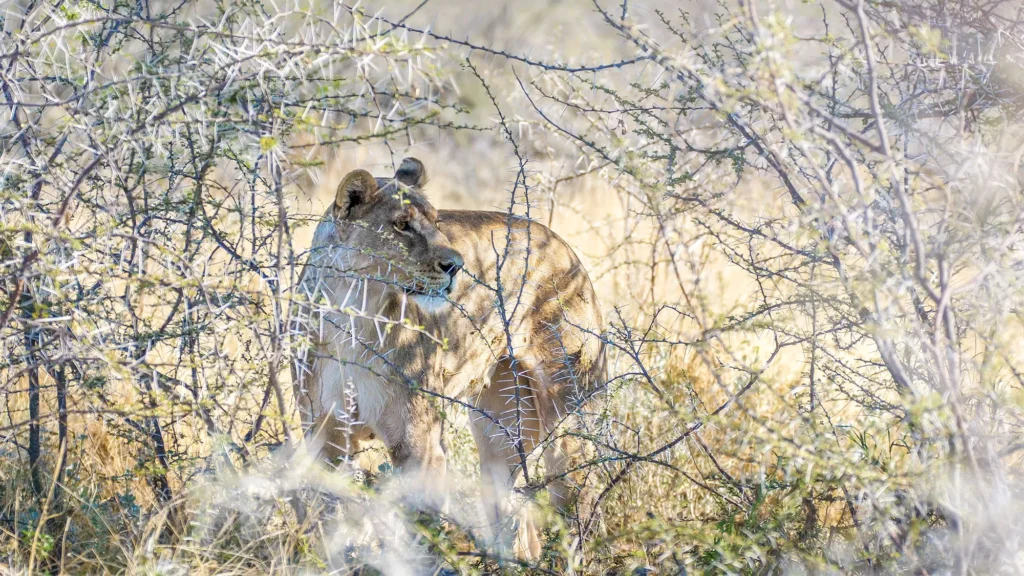
The big cats are present but vary in visibility.
-
Lions are relatively common, especially near waterholes where prey congregates.
-
Leopards are elusive but can be spotted in mopane woodlands and along drainage lines.
-
Cheetahs favor open plains, particularly in eastern Etosha around Namutoni.
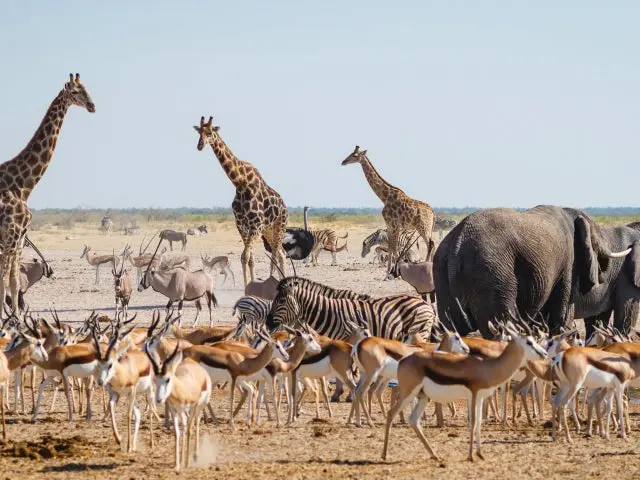
4. Giraffe, Zebra, Wildebeest, Oryx, Springbok
These are the backbone of Etosha’s herds.
-
Giraffes are abundant and often seen feeding near roads.
-
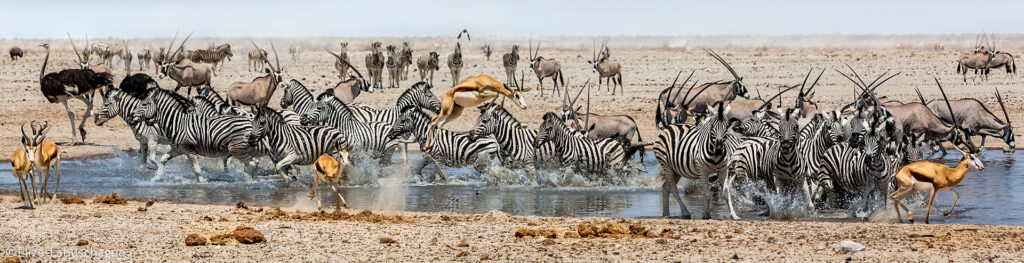
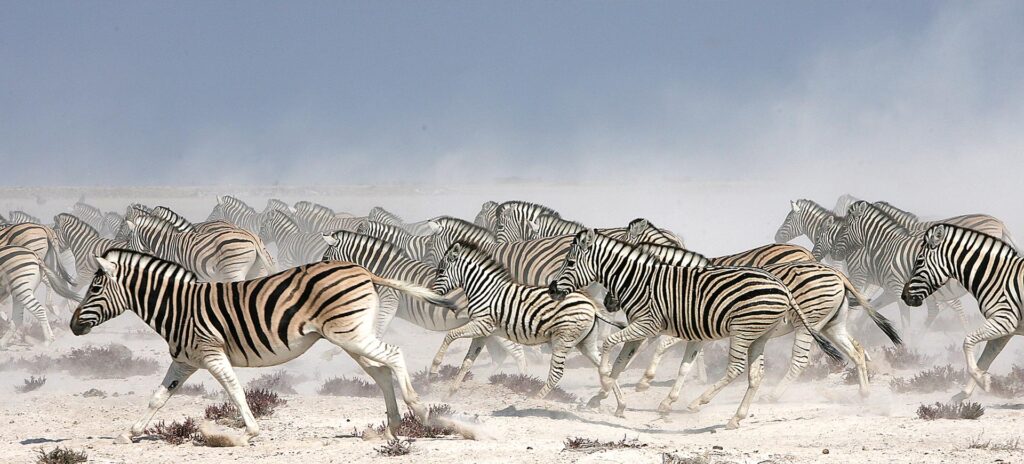
Zebra, blue wildebeest, gemsbok (oryx), and springbok form massive mixed herds, especially in the dry season.
5. Black-Faced Impala
A true Etosha specialty, the black-faced impala is an endemic subspecies and a conservation success, with protected populations inside the park.
-
Look for them in western and central mopane areas.
6. Birds
With over 400 recorded species, Etosha is a top birding destination in southern Africa.
-
Wet season highlights: migratory raptors, storks, flamingos on the pan, and colorful starlings.
-
Year-round: ostrich, kori bustard, various eagles, and hornbills.
Pro tips for wildlife viewing:
-
Focus on waterholes in the dry season—they act as natural stages for drama.
-
Check camp sighting registers each evening to plan the next day’s route.
-
Carry a good zoom lens (200–600mm) and binoculars for detailed observation.
Where to Stay in Etosha: Camps & Lodges
Your choice of Etosha accommodation shapes your entire safari: inside-park camps put you at the heart of the action, while outside lodges offer more comfort but require strict gate-time planning.
1. Inside-the-Park Camps (NWR)
All major camps are operated by Namibia Wildlife Resorts (NWR) and must be booked in advance, especially for peak season.
2. Okaukuejo Camp
-
Location: Near Andersson Gate (south-west), central-western Etosha.
-
Highlight: Famous floodlit waterhole with nightly visits by rhino, elephant, and lion.
-
Best for: First-time visitors, photographers, and wildlife maximalists who want maximum sightings.
-
Accommodation: Camping, bungalows, bush chalets, rooms, and family units.
-
Facilities: Restaurant, shop, swimming pool, fuel nearby, curio shop.
3. Halali Camp
-
Location: Central Etosha, between Okaukuejo and Namutoni.
-
Highlight: Quieter, beautiful mopane forest setting with its own floodlit waterhole.
-
Best for: Repeat visitors, solo travelers, and couples seeking a relaxed atmosphere.
-
Accommodation: Camping, bungalows, and family units.
-
Facilities: Restaurant, bar, small shop, pool.
4. Namutoni Camp
-
Location: Eastern Etosha, near Von Lindequist Gate, built around a historic German colonial fort.
-
Highlight: Unique fort architecture, great for exploring eastern waterholes and cheetah territory.
-
Best for: History lovers, cheetah seekers, and those combining Etosha with Khaudum or Caprivi.
-
Accommodation: Camping, rooms, fort rooms.
-
Facilities: Restaurant, bar, shop, pool.
5. Onkoshi Camp
-
Location: North-eastern edge, perched above the Etosha Pan.etoshanationalpark+1
-
Highlight: Luxury chalets on stilts with panoramic pan views and an exclusive feel.
-
Best for: Couples, luxury travelers, and photographers chasing dramatic pan landscapes.
-
Note: Higher rates, limited units, and more remote.
6. Dolomite Camp
-
Location: Western, exclusive section of the park.
-
Highlight: Modern eco-style tents and chalets in a low-density, less-visited area.
-
Best for: Off-the-beaten-path explorers wanting quiet game drives and rare sightings.
-
Facilities: Restaurant, bar, pool, shop.
7. Olifantsrus Camp
-
Location: Remote western Etosha, near Galton Gate.
-
Highlight: Camping-only site with a unique two-tier hide overlooking a waterhole.
-
Best for: Hardcore campers, solitude seekers, and those wanting a true wilderness experience.
Why stay inside Etosha?
-
You can start game drives at first light and continue until gate closure, maximizing time with active wildlife.
-
Access to floodlit waterholes for night viewing without night drives.
-
Less time commuting from outside lodges and more time on the road.
Booking: Reserve directly via the Namibia Wildlife Resorts (NWR) website or their Windhoek office; book 6–12 months ahead for July–October.
Lodges & Guest Farms Near Etosha Gates
Outside the park, you’ll find a range of private lodges, guesthouses, and farm stays near key gates:
-
Outjo/Andersson Gate area: convenient for western Etosha, with more comfort and dining options.
-
Tsumeb/Namutoni Gate area: good for eastern Etosha and combining with Khaudum or Waterberg.
These options can be ideal for travelers wanting self-catering facilities or higher comfort, but you must strictly respect gate opening and closing times or risk being locked out until morning.
How to Choose Your Etosha Camp
Use this quick checklist:
-
Budget: camping (lowest) → bungalows/rooms (mid) → Onkoshi/Dolomite (luxury).
-
Travel style: self-drive (Okaukuejo/Halali/Namutoni) vs. guided luxury (Onkoshi/Dolomite).
-
Wildlife priority: want guaranteed night rhinos/elephants? Choose Okaukuejo, Halali, or Namutoni.
-
Photography: want iconic pan views? Prioritize Onkoshi or a dedicated pan day from western camps.
Etosha Entry Fees, Gate Times & Practical Info
Clear, current information on fees and gate times is essential for a stress-free Etosha safari.
Below are the 2026 figures and procedures.
2026 Conservation & Entry Fees
Fees are charged per person per day and per vehicle per day, payable at the gate.
Important:
-
Fees apply for each calendar day you are in the park.
-
You must show ID (passport, driver’s license, or national ID) at the gate.
-
Payment is typically by cash (NAD/ZAR) or card at major gates.
Gate Opening & Closing Times (2026)
Gate times shift with sunrise and sunset; plan your drives accordingly.
Always verify current times on the official NWR website or with your lodge before travel.
Main Gates & How to Enter
Etosha has five main gates; most visitors use the first three.
-
Andersson Gate (Okaukuejo): South-west entrance from Outjo via the C38; ideal for western and central Etosha.
-
Von Lindequist Gate (Namutoni): Eastern entrance from Tsumeb; best for eastern waterholes and cheetah areas.
-
King Nehale Lya Mpingana Gate: South-east entrance from the Ondangwa direction; good for shorter itineraries from the north.
-
Galton Gate & Nehale Gate: Western gates, less used, suitable for specialized itineraries (e.g., Dolomite/Olifantsrus).
Entry process:
-
Queue at the gate with all passengers.
-
Present ID documents for each person.
-
Pay conservation fees and vehicle fees.
-
Receive your entry permit, which must be kept in the vehicle.
Self-drive tip: Carry cash and a card, a paper map or offline GPS, and stop at camp sighting registers to log recent wildlife activity.
Self-Drive vs Guided Safari in Etosha
Choosing between self-drive and a guided safari depends on your budget, confidence, and wildlife goals.
Self-Drive Etosha
Pros:
-
Flexibility: set your own pace, linger at sightings, and adjust routes on the fly.
-
Cost control: you manage accommodation, meals, and fuel.
-
Adventure: the freedom to explore backroads and hidden waterholes.
-
Excellent road network: main roads are well-maintained gravel and suitable for standard 4×4 or even sedans in dry conditions.
Cons:
-
You’re responsible for navigation, timing, and safety.
-
No expert tracker to interpret behavior or locate elusive species.
-
Need to plan gate times, fuel stops, and camp bookings carefully.
Ideal for: confident drivers, photographers, budget travelers, and those who enjoy hands-on trip planning.
Self-drive tips:
-
Enter the park at gate opening to catch animals at their most active.
-
Focus on waterholes in the dry season—they concentrate wildlife.
-
Do not drive at night; be inside your camp or out of the park before gate closure.
-
Carry sufficient water, fuel, snacks, and a spare tire; distances between camps can be long.
Guided Safari & Tour Packages
Pros:
-
Expert guides who know animal behavior, hotspots, and seasonal movements.
-
Optimized routes and schedules for maximum wildlife encounters.
-
Less stress: permits, camps, meals, and logistics handled for you.
-
Higher success rate for locating rhino, leopard, and rare birds.
Cons:
-
Less flexibility to deviate from the planned itinerary.
-
Higher upfront cost compared to basic self-drive.
Ideal for: first-time visitors, families, luxury travelers, birders, and anyone who wants a hassle-free, high-yield safari.
Considering a guided Etosha experience?
Muzungu Africa Safaris designs custom Namibia safari packages that include Etosha National Park, with expert guides, handpicked camps, and seamless logistics from Windhoek or international arrivals.
Prefer a fully planned Etosha experience? Our guided safaris handle permits, camps, routes, and game drives so you just enjoy the wildlife.
Suggested Etosha Itineraries (2–4 Days)
These Etosha itineraries are designed for international and local travelers flying into Windhoek or Ondangwa and can be adapted for self-drive or guided tours.
2-Day Etosha Express (Self-Drive)
Perfect for travelers combining Etosha with Sossusvlei or Damaraland.
-
Day 1:
-
Enter via Andersson Gate early in the morning.
-
Drive to Okaukuejo Camp; check in and relax.
-
Afternoon game drive to nearby waterholes (e.g., Mokonde, Nebrownii).
-
Evening: watch the floodlit waterhole from camp for rhino and elephant.
-
-
Day 2:
-
Early morning game drive west or central.
-
Optional move to Halali Camp or exit via King Nehale Gate toward Ondangwa.
-
Focus: maximize morning and evening drives; use midday for rest and camp activities.
3-Day Classic Etosha
A balanced introduction to western, central, and eastern Etosha.
-
Day 1:
-
Enter via Andersson Gate; head to Okaukuejo.
-
Afternoon drive to key waterholes; night at Okaukuejo.
-
-
Day 2:
-
Morning game drive west of Okaukuejo.
-
Afternoon transfer via Halali to Namutoni, stopping at waterholes en route.
-
Night at Namutoni; explore the historic fort.
-
-
Day 3:
-
Early morning drive around Namutoni and eastern plains.
-
Exit via Von Lindequist Gate toward Tsumeb.
-
Highlights: three major camps, diverse landscapes, and strong rhino/elephant/lion potential.
4-Day Deep Etosha (with Pan & West)
For photographers and wildlife enthusiasts wanting maximum variety.
-
Day 1–2: As per 3-day itinerary (Okaukuejo → Halali → Namutoni).
-
Day 3:
-
From Namutoni, head west to Onkoshi Camp for a night overlooking the Etosha Pan.
-
Dedicate time to pan photography and remote waterholes.
-
-
Day 4:
-
Morning exploration of western Etosha or transfer to Dolomite Camp for a final night in the exclusive western section.
-
Exit via Galton Gate or return to Okaukuejo for Andersson Gate departure.
-
Add-ons: combine with Khaudum National Park, Waterberg Plateau, or Skeleton Coast for a longer Namibia circuit.
Photography Tips for Etosha
Etosha’s stark light, dust, and concentrated wildlife demand specific techniques.
-
Best light: shoot in the early morning and late afternoon; avoid harsh midday sun when possible.
-
Waterholes as stages: set up at productive waterholes and wait; patience yields dramatic interactions.
-
Gear recommendations:
-
200–600mm telephoto lens for distant animals.
-
Bean bag or window mount for stable vehicle shots.
-
Dust protection for camera and lenses (blower, protective covers).
-
-
Night photography: use available floodlit waterhole lighting; avoid flash, which disturbs animals.
-
Composition: include the Etosha Pan or iconic mopane trees for context; use vehicles as blinds to get close without disturbing the wildlife.
Etosha Safety & Park Rules
Etosha is well-managed, but it remains wild country. Respect park rules to protect yourself and the animals.
Key rules:
-
Stay inside your vehicle except at designated areas (camps, hides, and picnic sites).
-
No off-road driving; stick to marked roads to protect habitat and avoid fines.
-
Respect speed limits (typically 40–60 km/h on main roads).
-
Do not feed animals; keep noise low at waterholes to avoid disturbing wildlife.
-
Gate closure is strict: you must be inside a camp or out of the park before closing time.
-
Carry ID at all times; conservation officers may check permits and documents.
Wildlife safety:
-
Maintain safe distances from elephant, rhino, and lion; never approach on foot outside designated areas.
-
If animals show signs of agitation (ears flared, head high, tail flicking), slowly retreat and give space.
How to Book Your Etosha Safari (Next Steps)
You now have the blueprint for an unforgettable Etosha National Park safari: when to go, where to stay, what wildlife to target, and how to navigate fees and gates.
The next step is turning this plan into a real, booked adventure.
Your options:
-
Self-drive Etosha:
-
Book your NWR camps (Okaukuejo, Halali, Namutoni, etc.) directly through the Namibia Wildlife Resorts website. etoshanationalpark+1
-
Arrange a 4×4 or SUV rental in Windhoek, plan your route, and set your own pace.
-
-
Guided Etosha safari with Muzungu Africa Safaris:
-
Let our experts handle permits, camps, routes, and game drives, tailoring everything to your budget and wildlife goals.
-
Benefit from local knowledge, optimized timing, and seamless logistics from arrival to departure.
-
Why book with Muzungu Africa Safaris?
-
We specialize in custom Namibia safaris for travelers from the USA, Canada, UK, Europe, Asia, China, Latin America, Oceania, and the Middle East.
-
Our itineraries combine Etosha National Park with other top destinations—Sossusvlei, Damaraland, Skeleton Coast, and more—for complete, high-impact journeys.
-
We work with trusted partners for flights, transfers, and luxury lodges, ensuring a smooth, safe, and memorable experience.
Ready to secure your Etosha adventure?
-
Contact Muzungu Africa Safaris today for a free, no-obligation Etosha safari quote.
-
Tell us your travel dates, group size, budget, and wildlife priorities, and we’ll craft a tailored Etosha National Park tour that maximizes sightings, comfort, and value.
Book your Etosha safari with Muzungu Africa Safaris now—and step into one of Africa’s most dramatic landscapes, where the pan meets the wildlife and every waterhole tells a story.