Great Migration Africa: The Complete Safari Guide
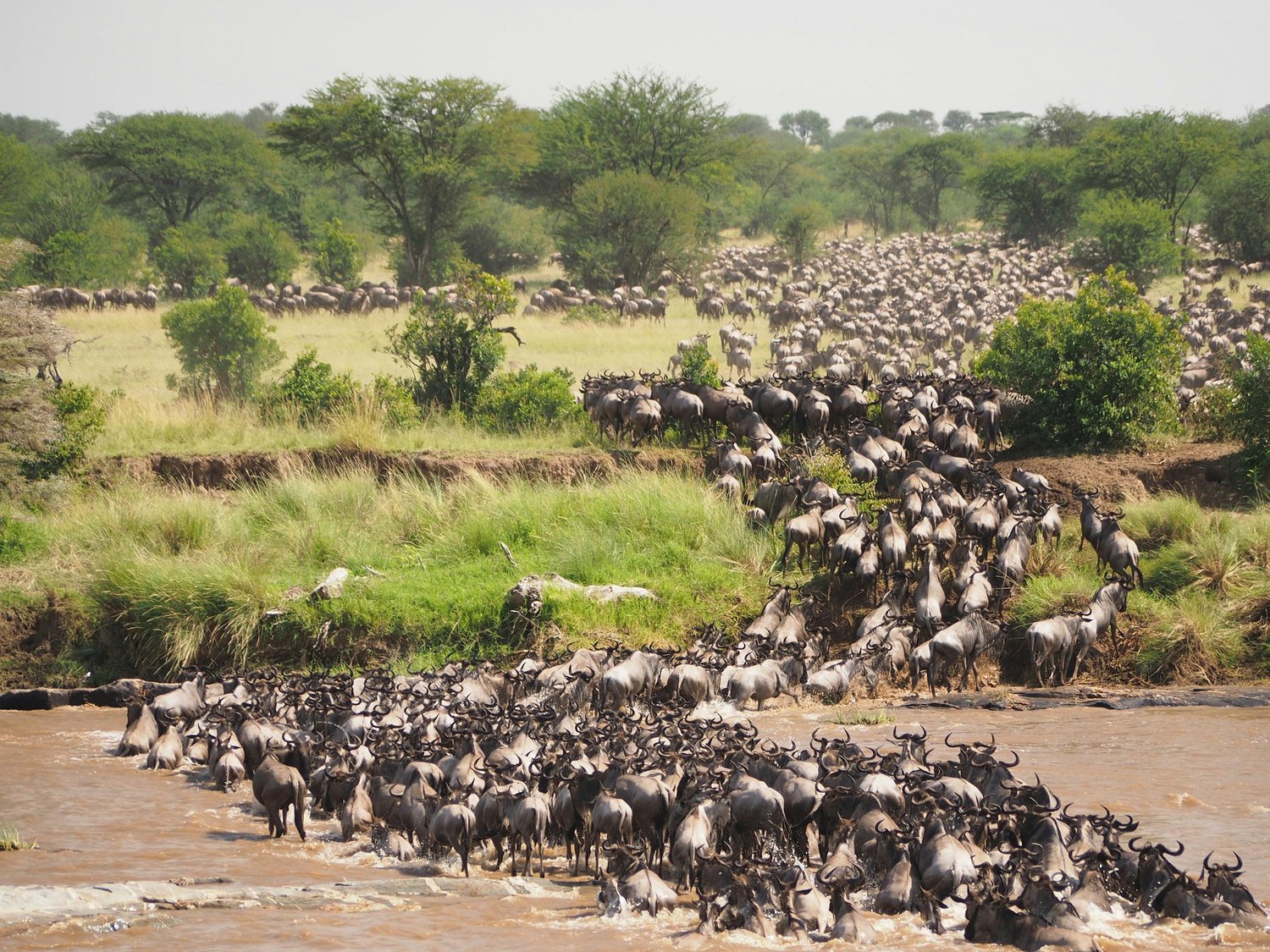
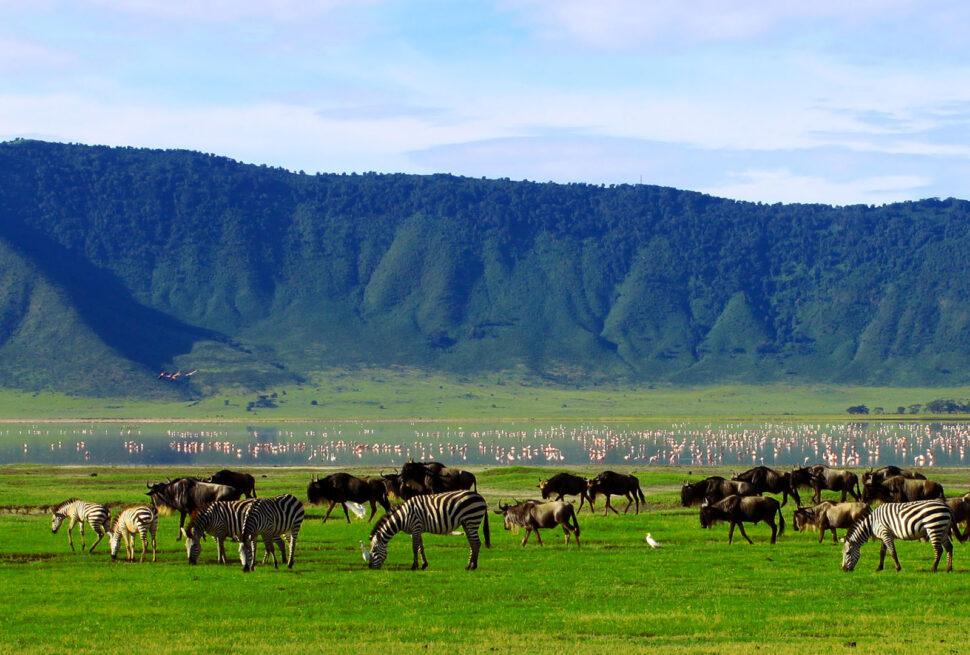
Every year, over 1.5 million wildebeest, joined by hundreds of thousands of zebras and gazelles, sweep across the Serengeti–Mara ecosystem in the greatest overland movement of animals on Earth.
Here’s the truth most guides won’t lead with: the Great Migration happens year-round — the “best time” depends entirely on what you want to witness, whether that’s wildebeest calving season on the southern plains, Mara River crossings in the north, intense predator action, or quieter, better-value months.
This guide covers the full migration route, a month-by-month location table, the best places to stay, realistic safari costs, a sample 8-day itinerary, a packing list and expert booking advice.
The Great Migration is the year-round circular movement of roughly 1.5 million wildebeest, 300,000 zebras and hundreds of thousands of gazelles through Tanzania’s Serengeti and Kenya’s Maasai Mara, following rain-fed grass. The best time to visit is July–October for Mara River crossings and January–March for calving season in Ndutu.
Ready to see it in person? [Get a tailor-made Great Migration safari quote] from Muzungu Africa Safaris — free, fast and obligation-free.
What Is the Great Migration in Africa?
The Great Migration is the year-round movement of roughly 1.5 million wildebeest, plus hundreds of thousands of zebra and gazelles, through the Serengeti National Park in Tanzania and the Maasai Mara National Reserve in Kenya.
It is not a single event — it’s a continuous, clockwise circular journey of approximately 800–1,000 km driven by one simple force: the search for rain-fed fresh grass and water.
The key drivers behind the movement:
- Rainfall patterns — the herds follow the rains across the ecosystem
- Fresh grazing — short, nutrient-rich grasses on the southern plains are essential for calving and nursing
- Water availability — rivers and permanent waterholes shape the route
- Predator pressure — lions, cheetahs, hyenas and crocodiles follow the herds, shaping behaviour on both a daily and seasonal scale
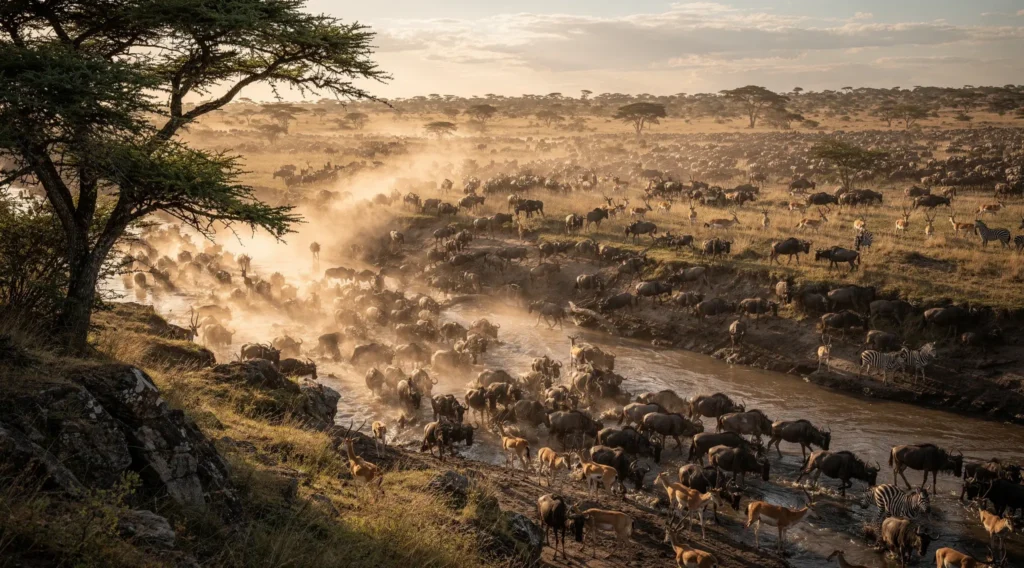
Together, the wildebeest, zebra and gazelles form a single grazing system: zebra eat the tall, coarse grass tops, wildebeest follow and feed on the shorter middle growth, and gazelles take the tender new shoots left behind.
It’s one of nature’s most efficient partnerships — and the reason a Great Migration safari delivers non-stop wildlife drama in every season.
Where Does the Great Migration Happen?
The Great Migration happens across the Serengeti–Mara ecosystem — a roughly 40,000 km² region spanning northern Tanzania and southern Kenya — moving between the southern Serengeti/Ndutu plains, the Western Corridor, the northern Serengeti and Kenya’s Maasai Mara.
Great Migration Africa Route Map
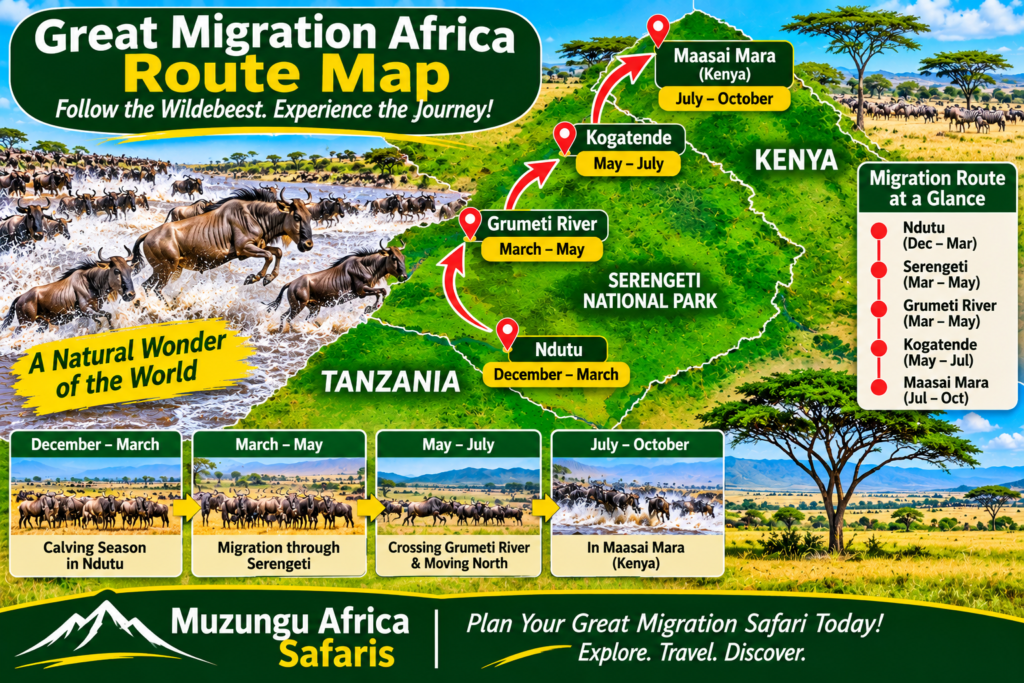
Key Migration Regions and What Each Is Known For
- Ndutu & Southern Serengeti / Ngorongoro Conservation Area — wildebeest calving season, predator drama, endless short-grass plains
- Central Serengeti (Seronera) — year-round game viewing, big cat capital, easy access
- Western Corridor & Grumeti River — early river crossings, remote and less crowded (May–July)
- Northern Serengeti / Kogatende — the legendary Mara River crossings (July–October)
- Maasai Mara, Kenya — river crossings from the Kenya side, Big Five game viewing, compact reserve
The herds don’t read maps — rainfall determines their exact position — so the smartest itineraries stay flexible rather than fixed.
Not sure which region fits your travel dates? [Tell us your dates and we’ll match you to the right migration region].
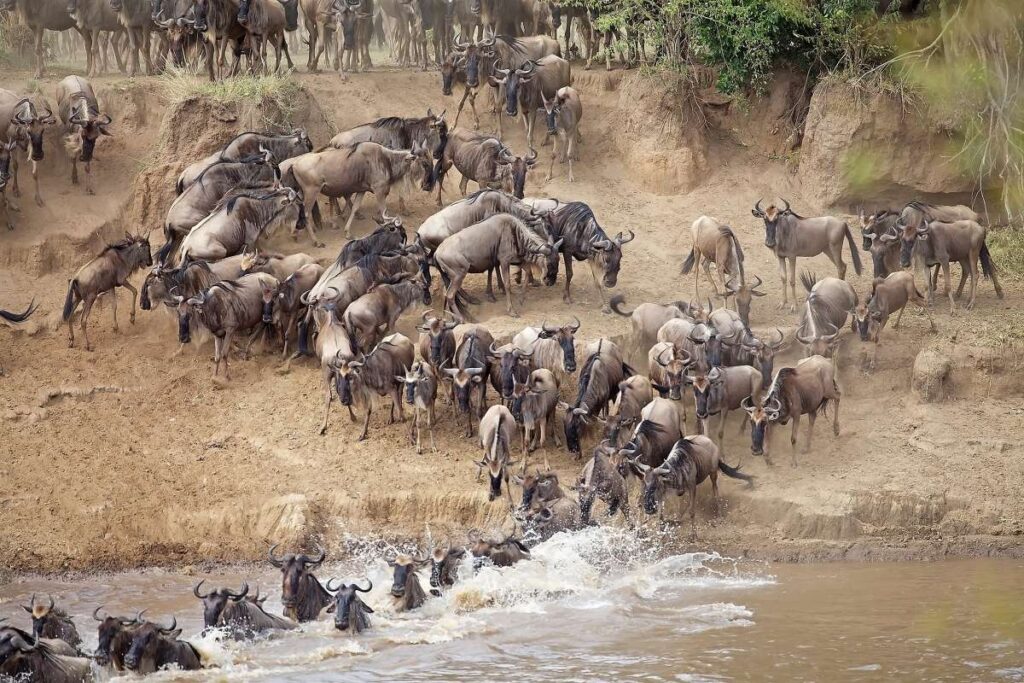
Great Migration Month-by-Month Guide
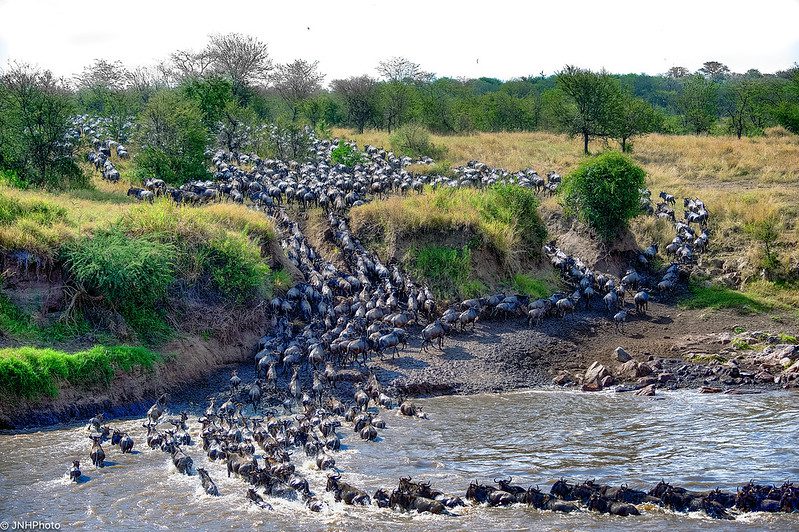
The Great Migration moves through the Serengeti–Mara ecosystem in a clockwise circle: calving in the southern Serengeti (January–March), moving west (April–May), Grumeti River crossings (June–July), Mara River crossings in the north (July–October), then returning south (November–December).
Great Migration Month-by-Month Table
The two headline events, per reputable guidance including TANAPA and Kenya Wildlife Service-backed reporting: calving is associated with January–March in the southern Serengeti and Ndutu, while July–October is associated with river-crossing opportunities in the northern Serengeti and Masai Mara.
Everything in between is movement — and movement is spectacular in its own right.
Important: these are patterns, not promises. Rainfall shifts timings by weeks each year. Any operator who guarantees an exact crossing date is telling you what you want to hear — choose one who tracks the herds instead.
When Is the Best Time to See the Great Migration?
The best time to see the Great Migration is July to October for the highest chance of Mara River crossings in the northern Serengeti and Maasai Mara, or January to February for wildebeest calving season and predator action in Ndutu and the southern Serengeti.
1. Choose July–October if you want:
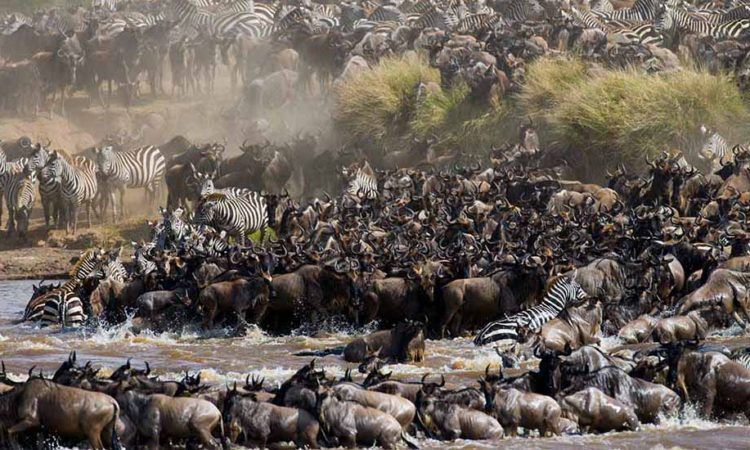
- The famous Mara River crossings — herds plunging past crocodiles
- Peak dry-season game viewing across East Africa
- Combine-able Tanzania + Kenya itineraries
- The trade-off: peak-season prices and more visitors — book 9–12 months ahead
2. Choose January–March (calving season) if you want:
- Up to 8,000 wildebeest calves born per day on the Ndutu plains
- The highest predator action of the year — cheetahs and lions with cubs
- Green-season photography with dramatic skies
- Lower rates and fewer vehicles than the river-crossing peak
- The trade-off: some rain — but rarely a washout, and the light is superb
The honest bottom line
Crossings are weather-dependent and cannot be guaranteed on any given day. What CAN be guaranteed: a well-positioned camp, an expert guide who reads herd movement daily, and weeks of exceptional game viewing around the main event.
Tell us your travel dates and we’ll match you to the right migration region — [request your free migration safari plan].
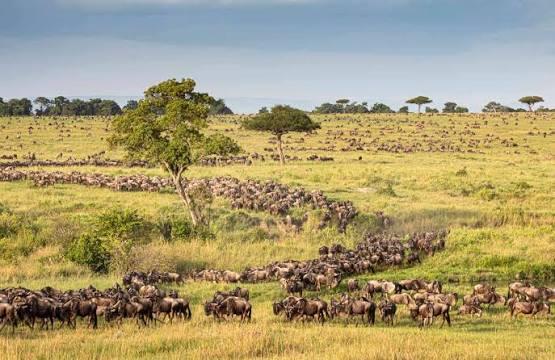
Mara River vs Grumeti River Crossings
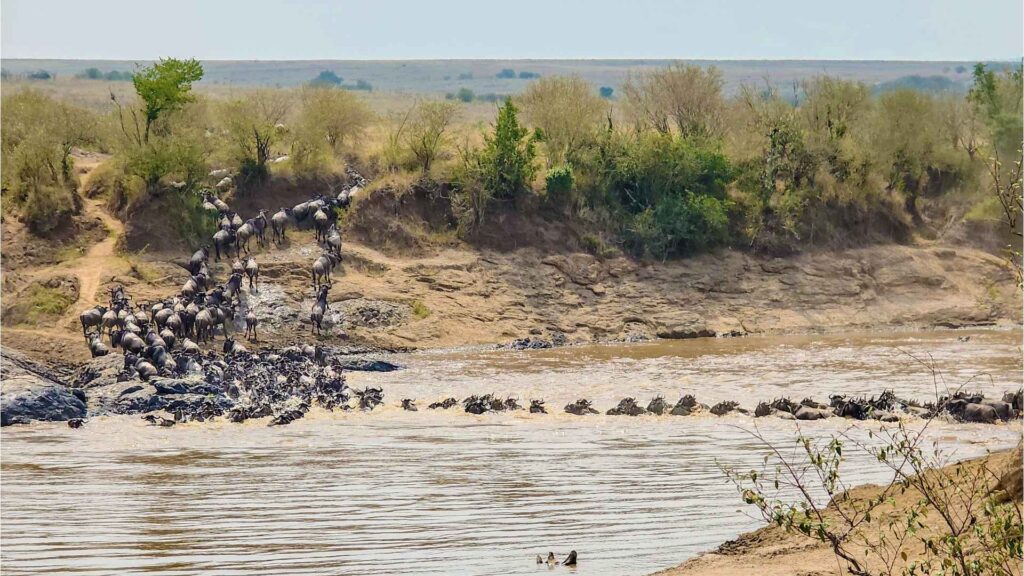
The Mara River crossings (July–October, northern Serengeti/Maasai Mara) are the most dramatic and famous; the Grumeti River crossings (May–July, Western Corridor) happen earlier and are typically far less crowded.
Mara River Crossings — The Main Event
- Where: Northern Serengeti (Kogatende, Tanzania) and the Maasai Mara (Kenya)
- When: Typically July–October, rainfall-dependent
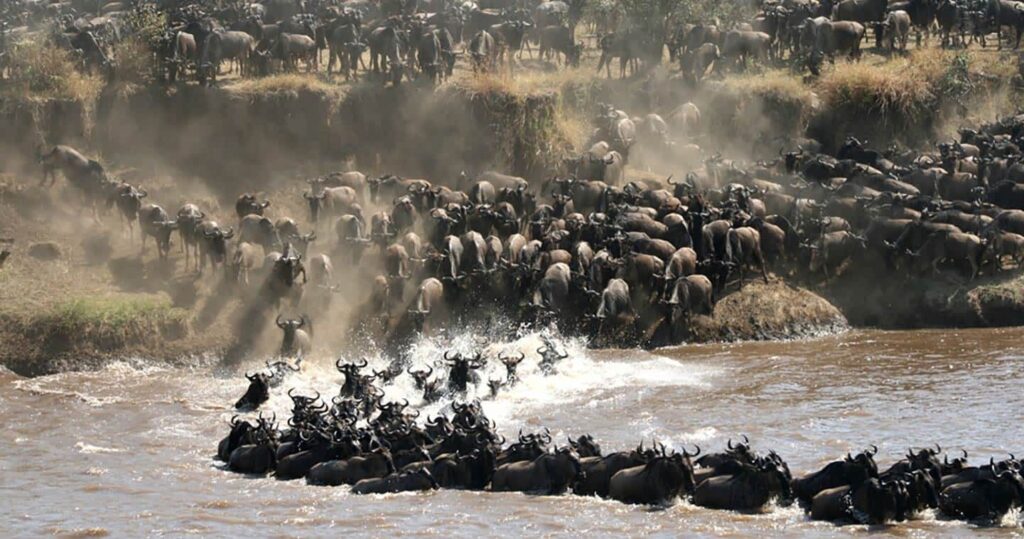
- Why it’s famous: sheer herd size, steep banks, fast water, massive Nile crocodiles, and the raw life-and-death drama photographers dream about
- Reality check: herds may mass on the bank for hours — or days — before the first animal commits. A crossing can last 90 seconds. Patience is part of the experience.
Grumeti River Crossings — The Insider’s Alternative
- Where: The Western Corridor of the Serengeti
- When: Typically May–July
- Why choose it: earlier crossings, dramatically fewer safari vehicles, excellent crocodile sightings, and a more remote, exclusive feel
- Bonus: June Western Corridor safaris pair beautifully with central Serengeti game viewing
Setting the right expectations
- Crossings may happen quickly — and may not happen at all on a given day
- Locations shift with rainfall and herd movement — flexibility wins
- The migration is spectacular even without a crossing — a million animals rarely stand still
Want your camp positioned where the action is? [Talk to a Great Migration safari specialist at Muzungu Africa Safaris].
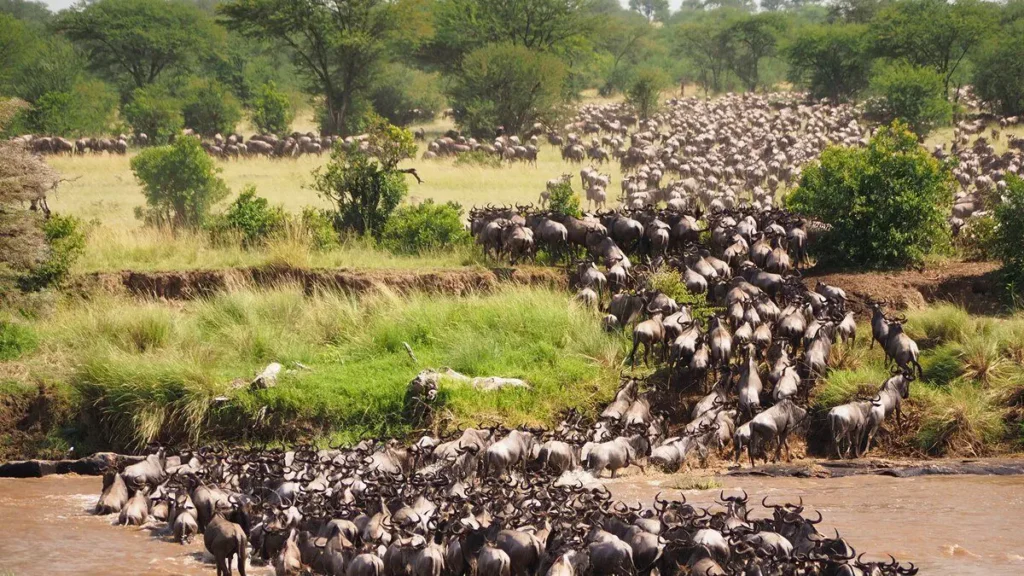
Best Places to Stay for the Great Migration
The best places to stay for the Great Migration depend on season: Ndutu and the southern Serengeti for calving (January–March), Central Serengeti year-round, the Western Corridor for Grumeti crossings (May–July), Kogatende/northern Serengeti for Mara River crossings (July–October), and the Maasai Mara for Kenya-side viewing.
1. Ndutu & Southern Serengeti — Calving Season
Purpose-positioned mobile camps follow the herds onto the Ndutu plains and Ngorongoro Conservation Area each January–March. Wake up to newborn wildebeest and cheetahs hunting at first light.
2. Central Serengeti (Seronera) — Year-Round Base
Excellent road and airstrip access, superb big cat viewing in every month, and a huge range of camps from mid-range to luxury. The logistical heart of most Serengeti safaris.
3. Western Corridor — Grumeti Season
Remote lodges and tented camps along the Grumeti River deliver the June crossing window with a fraction of the crowds.
4. Northern Serengeti / Kogatende — Mara River Season
July–October camps sit within minutes of the main crossing points. Staying here means first-in-line at dawn — when crossings are most likely.
5. Maasai Mara — The Kenya Side
Compact, wildlife-dense and ideal for Big Five safaris plus migration viewing. Pairs perfectly with the Masai Mara conservancies, where night drives and off-road viewing are permitted.
Expert tip: choose mobile or seasonally repositioning camps. The best operators physically move their camps with the herds — that’s the single biggest advantage money can buy on a Great Migration safari.
Explore our season-matched routes: [Tanzania Itineraries] · [Kenya Itineraries].
How Much Does a Great Migration Safari Cost?
A Great Migration safari typically costs $250–$700 per person per day (budget/mid-range), $700–$1,200 (premium) and $1,200–$2,500+ (luxury fly-in), depending on season, camp location, flights and group size.
What Drives the Cost?
- Season — July–October commands peak pricing; April–May is the value window
- Camp location — Kogatende and Mara crossing-zone camps sell out first and price highest
- Light-aircraft flights — typically $250–$400 per sector in Tanzania
- Park and conservation fees — Serengeti and Maasai Mara fees are set annually and change
- Private guide vs shared vehicle
- Group size — per-person cost falls as group size rises
- Duration — longer trips dilute fixed costs like international flights
Our recommendation: budget 6–10 days for a strong Tanzania or Kenya migration itinerary — enough time for two distinct migration regions plus Big Five game viewing, without rushing.
For a realistic, no-surprises price built around your dates, [request a personalized migration safari itinerary] — Muzungu Africa Safaris replies within 24 hours.
Sample 8-Day Great Migration Itinerary
A strong 8-day Great Migration safari allocates two days to arrival and transfer, three to four days in the prime migration region, and two days in the river-crossing zone or calving grounds — season-flexible rather than fixed.
This itinerary is deliberately season-flexible — the same skeleton works in February (Ndutu) and September (Kogatende).
Days 1–2: Arrive & Transfer
- Land at Kilimanjaro International Airport (JRO) (Tanzania) or Nairobi (NBO/Wilson) (Kenya)
- Overnight in Arusha or Nairobi; safari briefing
- Light-aircraft flight to the current prime migration region — Ndutu, Seronera, Kogatende or the Mara
- Afternoon game drive en route to camp
Days 3–5: Prime Migration Game Drives
- Full-day and split-day game drives with your specialist guide
- Follow the herds; focus on big cats, newborns or river-zone activity depending on season
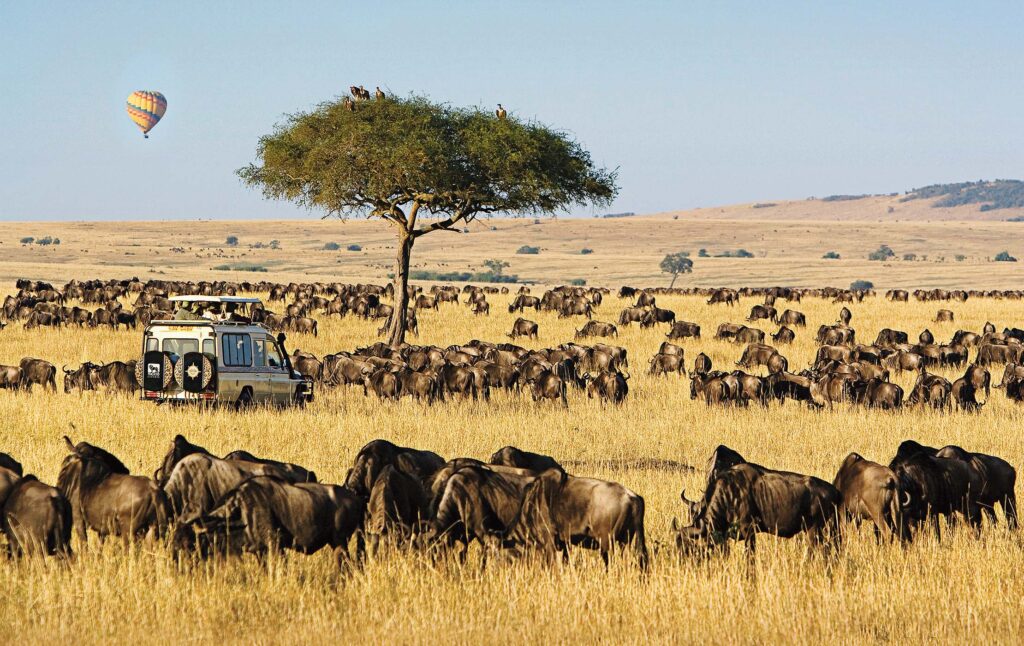
- Optional: balloon safari at dawn + bush breakfast (book ahead — limited baskets)
Days 6–7: The Main Event Zone
- July–October departures: dedicated days parked near Mara River crossing points in Kogatende or the Maasai Mara
- January–March departures: full days on the Ndutu calving grounds with predator focus
- Sundowners, photography time and flexible routing based on fresh herd reports
Day 8: Departure or Extension
- Fly back to Arusha/Nairobi for your international connection
- Popular extensions: Zanzibar beach escape, Ngorongoro Crater, a second Kenya/Tanzania park — or continue to Uganda or Rwanda for gorilla trekking (see below)
Want this itinerary tuned to your exact travel month? [Get your customized 8-day migration plan here].
Great Migration Safari Packing List
Pack neutral-coloured layered clothing, sun protection, binoculars, a camera with a 200–400mm lens, power adapters, personal medication and soft duffel luggage for light-aircraft flights (typically a 15 kg limit).
The complete Great Migration safari packing list:
- Neutral-coloured, layered clothing — khaki, olive, stone; mornings are cold, middays hot
- Soft-sided duffel bag — essential for light-aircraft luggage limits (~15 kg)
- Binoculars (8×42 or 10×42) — one per traveller, not one per couple
- Camera + telephoto lens (200–400mm) + spare batteries and dust-proof bags
- Sun protection: high-SPF sunscreen, wide-brimmed hat, sunglasses, lip balm
- Insect repellent and long sleeves for evenings
- Warm layers/fleece and beanie for dawn game drives
- Power adapters — Tanzania Type G/D, Kenya Type G; bring a power bank
- Personal medication + basic first-aid kit
- Sandals for camp + comfortable closed shoes
Practical Safari Tips
- Early starts are non-negotiable — predators hunt at first light
- Protect gear from dust — a scarf/buff doubles as a lens cover on dry tracks
- Respect wildlife distances — your guide enforces park rules; never ask for exceptions
How to Book the Best Great Migration Safari
To book the best Great Migration safari: book July–October camps 9–12 months in advance, choose an operator that tracks herd movement and adjusts routes, and confirm guide quality, vehicle access, park fees, internal flights and cancellation terms before paying.
5 Steps to Booking It Right
- Pick your spectacle first — calving (January–March) or river crossings (July–October) — then build dates around it
- Book northern Serengeti and Masai Mara camps early — the best-positioned Kogatende and Mara camps are fully booked up to a year ahead for peak season
- Choose an operator that tracks herd movement — real-time herd reports should shape your route and camp choices, not marketing brochures
- Ask the right questions: guide experience level? private vs shared vehicle? are park fees, flights and drinks included? what are the cancellation terms?
- Confirm total cost transparency — a professional quotation itemises accommodation, park fees, internal flights, transfers and extras
Why Book with Muzungu Africa Safaris?
- Specialist-guided, herd-tracking itineraries updated season to season
- Camp relationships across all five migration regions — we know which tents are closest to the action
- 24-hour quotation turnaround and full pre-trip support across every time zone
- Trusted by travellers from the USA, Canada, Latin America, the UK, Europe, Asia, China, Australia, New Zealand and the Middle East
Speak to a migration safari specialist today — [start your free enquiry here].
Great Migration Africa FAQs
What is the Great Migration in Africa?
The Great Migration is the year-round circular movement of roughly 1.5 million wildebeest, 300,000 zebras and hundreds of thousands of gazelles through Tanzania’s Serengeti and Kenya’s Maasai Mara, following rain-fed grass and water in a continuous clockwise cycle of about 800–1,000 km.
When is the best time to see the Great Migration?
July–October offers the highest chance of Mara River crossings in the northern Serengeti and Maasai Mara. January–February delivers calving season and peak predator action in Ndutu. Both are exceptional — choose by spectacle, and remember crossings can never be guaranteed.
Where is the Great Migration in January?
In January, the herds concentrate on the short-grass plains of the southern Serengeti and Ndutu region (bordering the Ngorongoro Conservation Area), preparing for calving. February brings the calving peak, with up to 8,000 wildebeest calves born daily and intense predator activity.
Where is the Great Migration in August?
In August, the herds are typically in the northern Serengeti (Kogatende) and Kenya’s Maasai Mara, with Mara River crossings at or near their peak. This is one of the most popular — and busiest — migration months; camps should be booked up to a year ahead.
Is the Great Migration in Tanzania or Kenya?
Both. The migration moves through a single cross-border ecosystem — roughly 80% in Tanzania’s Serengeti and the remainder in Kenya’s Maasai Mara during July–October. The herds cross the Kenya–Tanzania border freely; travellers can watch from either side.
Can you guarantee seeing a river crossing?
No — and be wary of anyone who says otherwise. Crossings depend on rainfall, herd position and timing. Reputable operators position you in the right region with expert guides who maximise your odds, but a crossing is a wild event, not a scheduled show.
How many animals take part in the Great Migration?
Approximately 1.5 million wildebeest, around 300,000 zebras, 400,000+ Thomson’s gazelles, plus eland and impala — over 2 million animals in total. It is the largest overland land migration on Earth.
Is the Great Migration worth it?
Unequivocally yes. The Great Migration offers the highest concentration of big-game drama anywhere in Africa — river crossings, calving, super-predator interactions — in two of the world’s finest park systems. With flexible routing and realistic expectations, it is a once-in-a-lifetime experience that reliably exceeds expectations.
Plan Your Great Migration Safari
Two choices define every Great Migration safari:
- 🐄 Calving season in the south — Ndutu, January–March: newborn herds, cheetahs and lions, green-season value
- 🐊 River crossings in the north — Kogatende & the Maasai Mara, July–October: crocodile-infested river drama at its rawest
Whichever you choose, the difference between a good migration safari and a career-highlight one comes down to where you sleep and who guides you.
🎯 Plan Your Great Migration Safari with Muzungu Africa Safaris
- 📝 [Get My Free Migration Safari Plan] — enquiry form, 24-hour response
- 💬 [WhatsApp a Migration Specialist Now] — instant answers while you plan
- 🌍 Browse: [Tanzania Itineraries] · [Kenya Itineraries]
Book Your Great Migration Safari — And Go Beyond
The herds are already moving. The only question is whether you’ll be there when they cross.
Book your Great Migration safari with Muzungu Africa Safaris today — and here’s our insider’s tip: the journey doesn’t have to end in Tanzania.
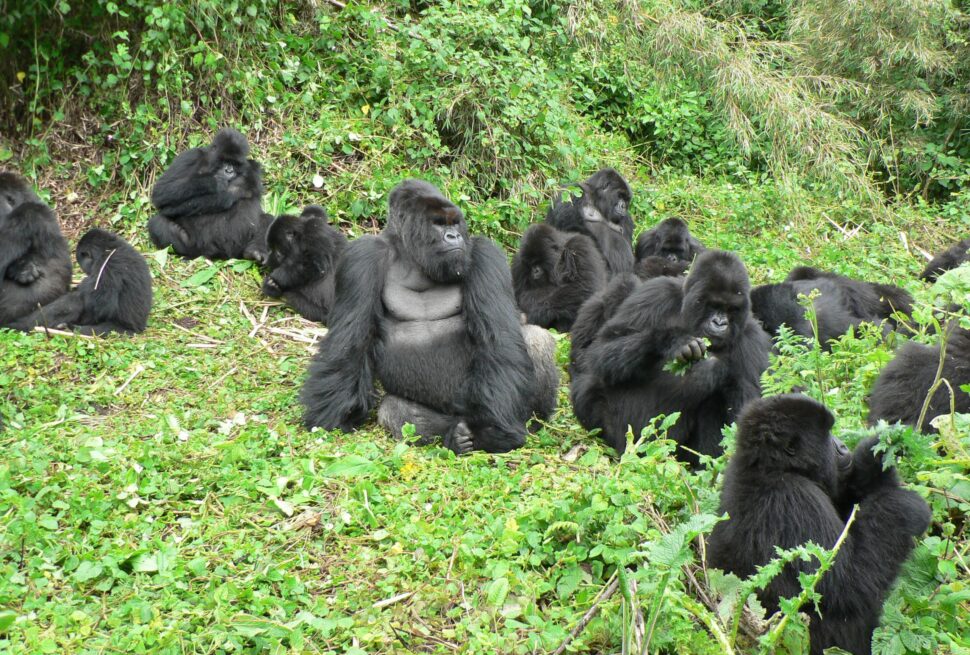
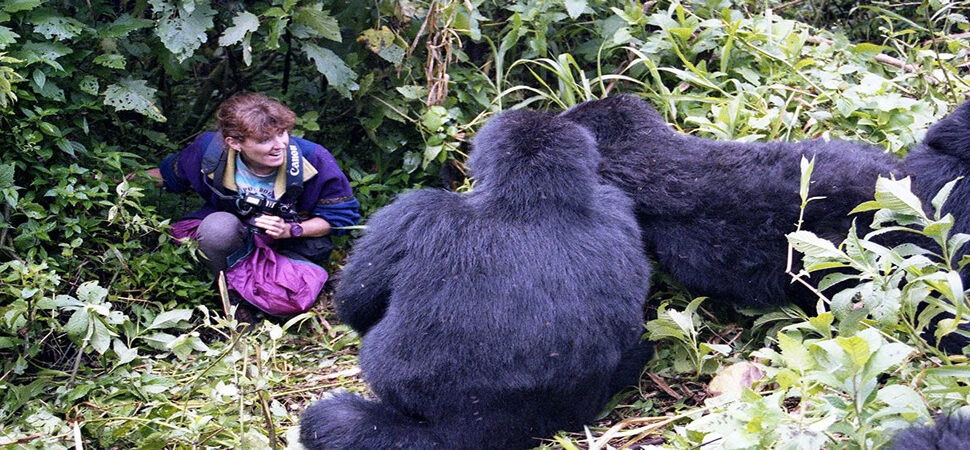
Muzungu Africa Safaris also operates in Uganda and Rwanda, where you can book your gorilla trekking permits and extend your East African adventure from the Serengeti plains to the misted Virunga slopes and Bwindi Impenetrable Forest.
One trip. The Great Migration AND mountain gorillas. Two of Earth’s greatest wildlife experiences, seamlessly combined.
Peak-season camps for July–October 2026 river crossings and February calving are booking out now. Don’t wait for the herds to beat you to it.
[Book My Great Migration Safari + Gorilla Permit] — request your free, tailored itinerary from Muzungu Africa Safaris today, and let a specialist team that tracks the herds and secures the permits turn your dream trip into a confirmed departure.
One message starts it all. Send it today.
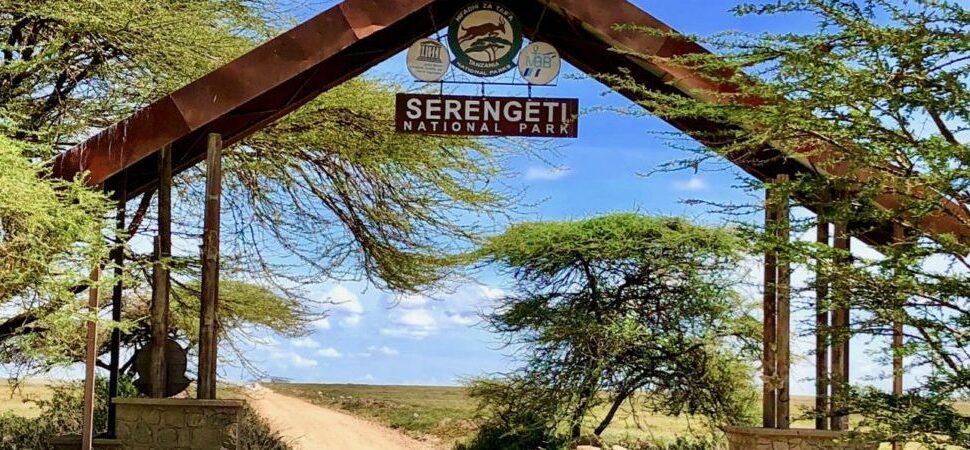
[…] National Park Tanzania, is one of Africa’s most iconic wildlife destinations, famous for the Great Wildebeest Migration, vast savannah plains, and exceptional game […]