Ngorongoro Crater Tanzania: The Complete 2026 Safari Guide
Few places on Earth pack as much wildlife, geology, and human history into a single natural amphitheatre as the Ngorongoro Crater in Tanzania.
This 8,000-year-old volcanic caldera is the world’s largest intact, unflooded caldera, a UNESCO World Heritage Site since 1979, and the only place in Tanzania where you can realistically tick off all Big Five — lion, leopard, elephant, buffalo, and black rhino — in a single morning’s game drive.
For travellers from the USA, UK, Canada, Europe, Latin America, Asia, the Middle East, and Oceania planning a 2026 East Africa safari, this guide explains everything: where the crater is, what lives inside it, when to go, what it costs, where to sleep, and how to book the right Ngorongoro safari package without overpaying.
Quick facts: Area 809,440 hectares · Crater floor 260 km² · Rim altitude ~2,200 m · Established 1959 · UNESCO-inscribed 1979 · Big Five status confirmed · Annual visitors ~600,000
Ready to turn this guide into a trip? Get your free safari quote from Muzungu Africa Safaris.
What Makes the Ngorongoro Crater a Must-Visit Safari Destination
The Ngorongoro Crater Tanzania earns its “eighth natural wonder of the world” nickname for one simple reason: nowhere else on the planet delivers such a concentrated wildlife spectacle inside a single geological bowl.
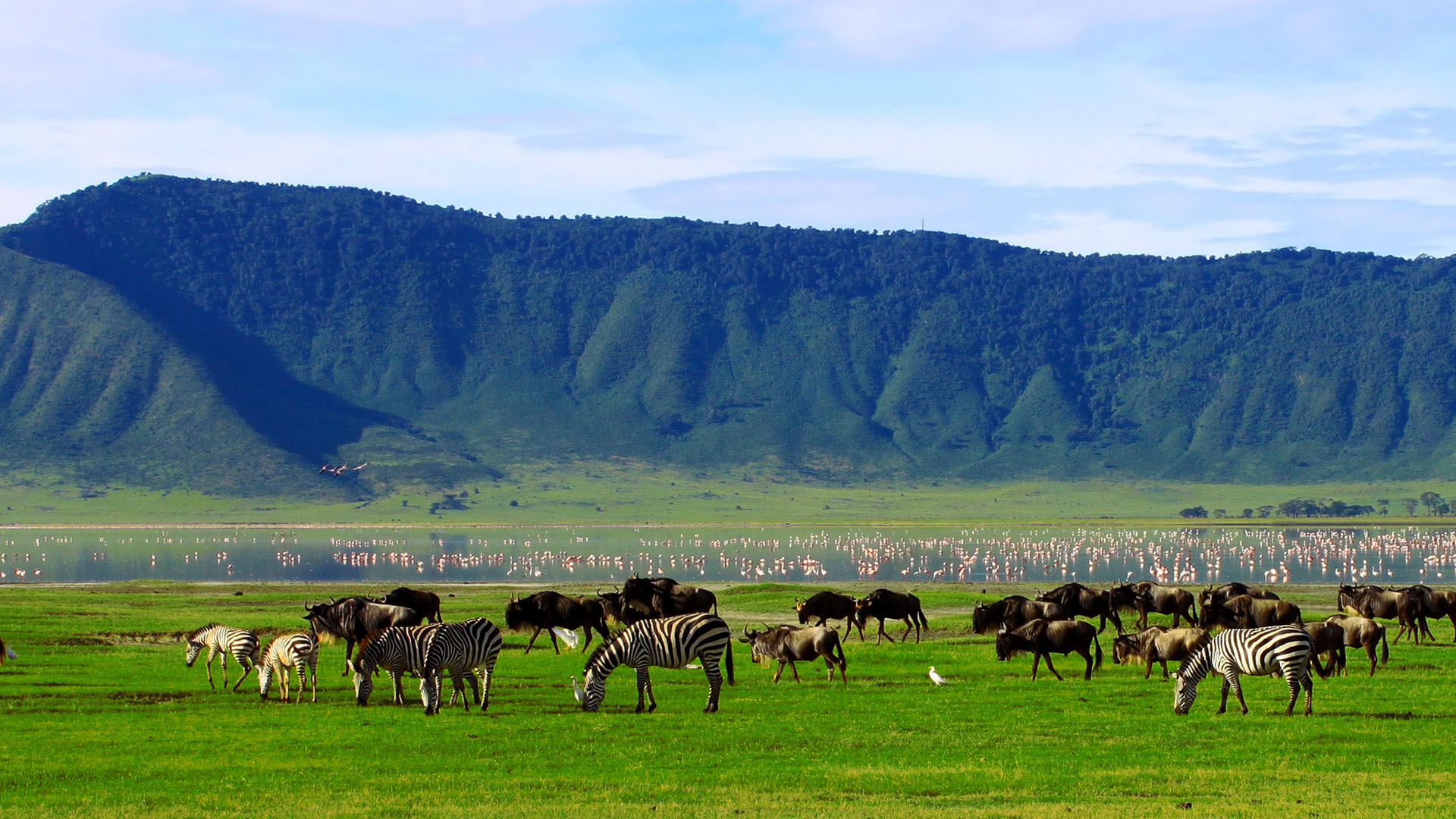
The caldera holds an estimated 25,000 large animals on a crater floor of just 260 km², giving visitors the highest density of megafauna of any safari destination in Africa.
Three things set Ngorongoro apart from every other Tanzanian park. First, it is the world’s largest intact volcanic caldera — a near-perfect circle 19 km across, ringed by walls 400–610 m high.
Second, it is the most reliable place in East Africa to see the endangered black rhinoceros, with a resident population of around 30 individuals.
Third, the crater sits inside the Ngorongoro Conservation Area (NCA), a multiple-use reserve where Maasai pastoralists graze cattle alongside wild lions — a rare model of coexistence that you will not find inside Serengeti or Tarangire national parks.
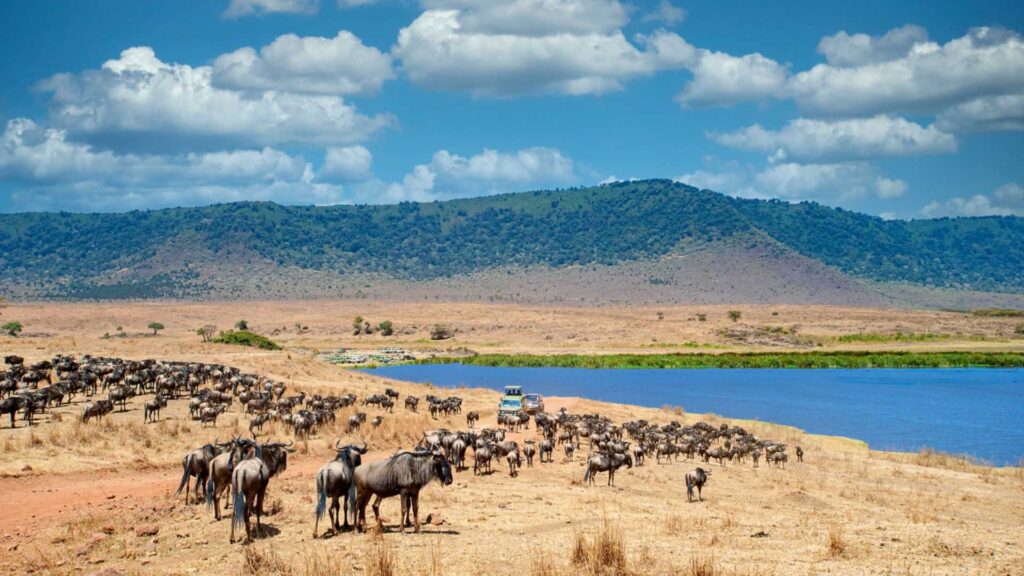
For international travellers, the practical payoff is unmatched: a single 6 am descent to the crater floor can produce lion kills, tower-high elephant bulls, thousand-strong wildebeest herds, hippos jostling in Mandusi Swamp, and a rhino sighting to cap the Big Five before lunch.
No other park in Tanzania can promise that.
Lock in your 2026 crater descent: book a Big Five game drive with Muzungu Africa Safaris.
Where Is the Ngorongoro Crater? Location & Geography
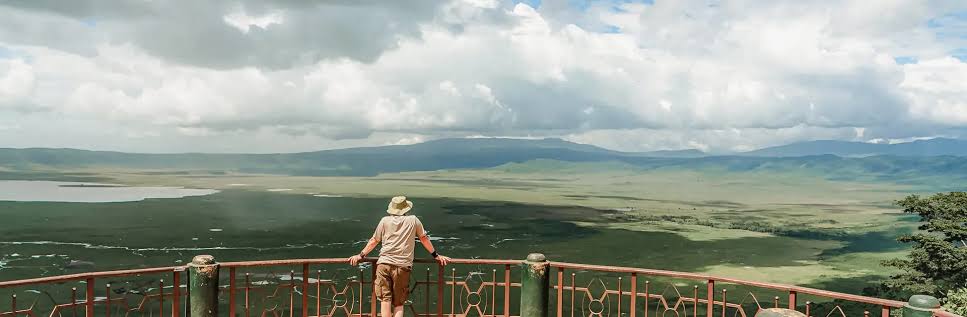
The Ngorongoro Conservation Area sits in northern Tanzania, 180 km west of Arusha, on the eastern arm of the Great Rift Valley.
The protected area covers 809,440 hectares of highland plains, savanna, montane forest, and three crater lakes, making it larger than Crete or Ibiza.
The crater itself forms the centrepiece, but the wider NCA also includes Olduvai Gorge, the Empakai Crater, the Ndutu plains, and the southern edge of the Serengeti ecosystem.
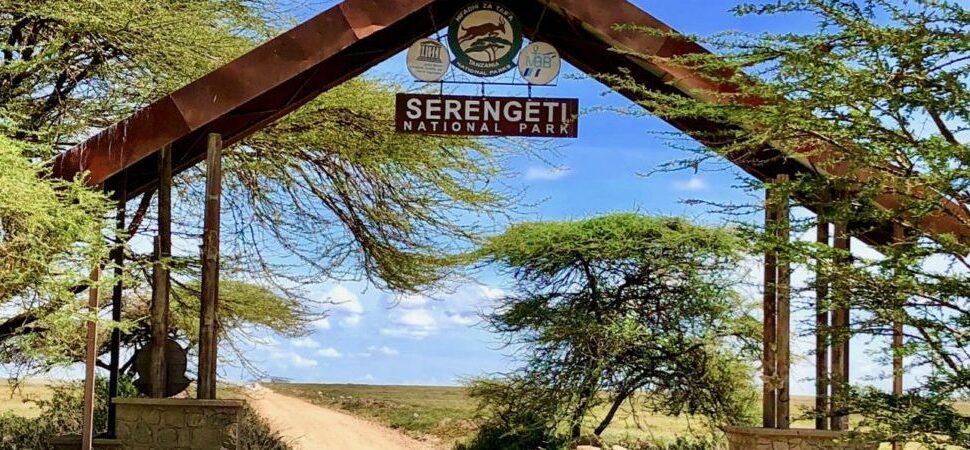
Geographically, Ngorongoro anchors the northern Tanzania safari circuit, the route most first-time visitors follow. The standard circuit pairs the crater with Serengeti National Park (140 km north-west), Lake Manyara National Park (130 km south), and Tarangire National Park (170 km south-east).
Drive times between parks range from two to four hours on largely unpaved roads, which is why most operators recommend a 4–7 day itinerary to cover the circuit comfortably.
The crater rim sits at ~2,200 m altitude, so expect cool mornings (10–15 °C) even when the floor bakes at 30 °C by midday. Pack layers — this altitude swing catches out travellers flying in from sea-level cities like London, Miami, or Dubai.
Combine Ngorongoro with Serengeti and Tarangire: browse Muzungu Africa Safaris’ northern-circuit itineraries.
The Geology & Formation of the Ngorongoro Crater
The Ngorongoro Crater is a volcanic caldera, not a meteorite impact crater or a rift valley. Roughly 2.5 million years ago, a volcano the size of Mount Kilimanjaro — estimated at 4,500–5,800 m tall — stood here.
When the magma chamber beneath it emptied in a cataclysmic eruption, the cone collapsed inward, leaving the 19 km-wide bowl we see today.
The collapse predates recorded human history, but the volcano’s last lava flows date to around 8,000 years ago.
The crater rim now rises to ~2,200 m, encircling a 260 km² floor that drops 400–610 m below.
Inside, five distinct habitats sustain the wildlife density: short-grass plains (grazers), freshwater and brackish lakes (waterbirds and hippos), Lerai Forest (elephants and yellow-barked acacia), Mandusi and Gorigor swamps (buffalo and predators), and Lake Magadi (a soda lake that turns pink with lesser flamingos in the dry season).
The Lerai Forest — Lerai is the Maasai word for the yellow-barked acacia — shelters elephant bulls that retreat into the shade at midday.
Geologically, Ngorongoro belongs to the Crater Highlands, a chain of eight calderas that includes Empakai (6 km wide, deep lake) and Olmoti (used by Maasai for grazing). Together they form the eastern wall of the Great Rift Valley in Tanzania.
Wildlife in the Ngorongoro Crater — The Big Five & Beyond
What animals can I see in the Ngorongoro Crater?
The Ngorongoro Crater hosts 25,000 large animals including all Big Five — lion, leopard, elephant, buffalo, and black rhino — plus cheetah, hippo, wildebeest, zebra, gazelle, hyena, jackal, and over 500 bird species.
It is the single most reliable spot in Tanzania for a one-day Big Five safari.
The Big Five, explained
- Black rhinoceros. The crater floor holds roughly 30 critically endangered eastern black rhinos, the densest population in East Africa. Spot them on the Lerai Forest edge and open plains near Lake Magadi. Rhinos are most active at dawn and dusk.
- Lion. Ngorongoro’s ~65 lions live in seven prides and are famously unfazed by vehicles, offering the best lion photography in Tanzania. The crater’s lions suffer from inbreeding — a genetic bottleneck — but remain the most easily observed anywhere.
- Elephant. Only bull elephants descend to the crater floor; breeding herds stay on the cooler rim. You will see large-tusked males in Lerai Forest and around Gorigor Swamp.
- Buffalo. Herds of ~4,000 Cape buffalo graze the long-grass plains. They are the lions’ preferred prey after dark.
- Leopard. The hardest Big Five member to see here; leopards favour the Montane forest on the crater rim rather than the open floor. Look up — they rest in acacia and yellow-bark trees.
Beyond the Big Five
The NCA is also a Ramsar wetland of international importance, with migratory birds including kori bustard, crowned crane, secretary bird, and African fish eagle.
Birders should not skip Empakai Crater and Lake Ndutu, which together add another 200+ species.
Want a private Big Five game drive with an expert guide? Book your Ngorongoro safari with Muzungu Africa Safaris.
Best Time to Visit Ngorongoro Crater Tanzania (Month-by-Month)
What is the best time to visit the Ngorongoro Crater?
The best time to visit the Ngorongoro Crater for wildlife viewing is the dry season, June to October, when animals concentrate around shrinking water sources and grass is short.
For fewer crowds and lower prices, the green season (November–May) is rewarding for birding, baby animals, and the wildebeest calving season in the Ndutu plains.
Month-by-month guide
- June–October (dry, high season). Crater floor is dusty, grass short, visibility excellent. Big Five sightings peak. Daytime 20–25 °C, nights cold. Rates highest; book lodges 6 months ahead.
- November–December (short rains). Afternoon showers green the plains; roads get slick but the crater rarely floods. Shoulder pricing kicks in. Calving begins in Ndutu.
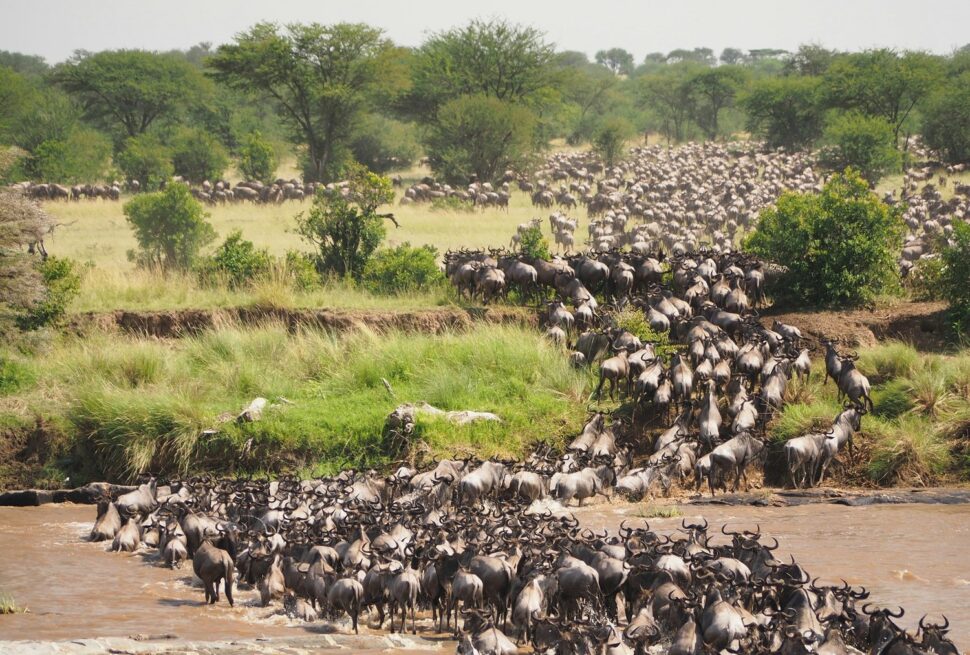
- January–February (calving season). The southern Serengeti herds drop ~8,000 wildebeest calves daily on Ndutu plains — the most dramatic predator action of the year. Combine Ngorongoro with a migration mobile camp.
- March–May (long rains). Heaviest rainfall; some lodges on the rim close in April. Muddy roads and thick vegetation reduce visibility, but rates drop 30–40% and the crater is at its most photogenic.
Why timing matters
- Crowds: Crater entry is capped at ~300 vehicles per day; arrive at the Lemala or Seneto descent gate by 6 am to beat queues.
- Photography: June and July offer the cleanest light and the least dust haze.
- Birding: November–April brings Palearctic migrants — the crater list can exceed 500 species.
Secure your 2026 dry-season dates now: check safari dates & prices with Muzungu Africa Safaris.
How to Get to the Ngorongoro Crater
How do you get to the Ngorongoro Crater? Fly into Kilimanjaro International Airport (JRO), transfer 45 minutes to Arusha, then drive 3 hours west to the crater rim.
Most visitors arrive on a guided 4×4 safari from Arusha as part of a multi-day Tanzania safari itinerary.
Step-by-step
- Fly into Kilimanjaro International Airport (JRO), 45 minutes east of Arusha. KLM/Qatar Airways/Ethiopian Airlines serve JRO from Amsterdam, Doha, Addis Ababa. Alternative: Arusha Airport (ARK) for domestic connections from Zanzibar, Dar es Salaam, Seronera.
- Overnight in Arusha. Most safari operators pick you up from Arusha Planet Lodge, Mount Meru Hotel, or Kibo Palace around 7:30 am.
- Drive west 3 hours (180 km) on the Makuyuni–Karatu road to the Loduare Gate, the main NCA entrance. Pass through acacia woodland and Maasai bomas.
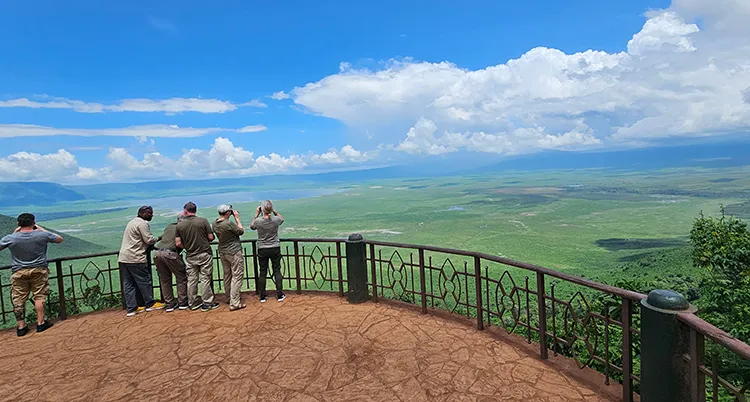
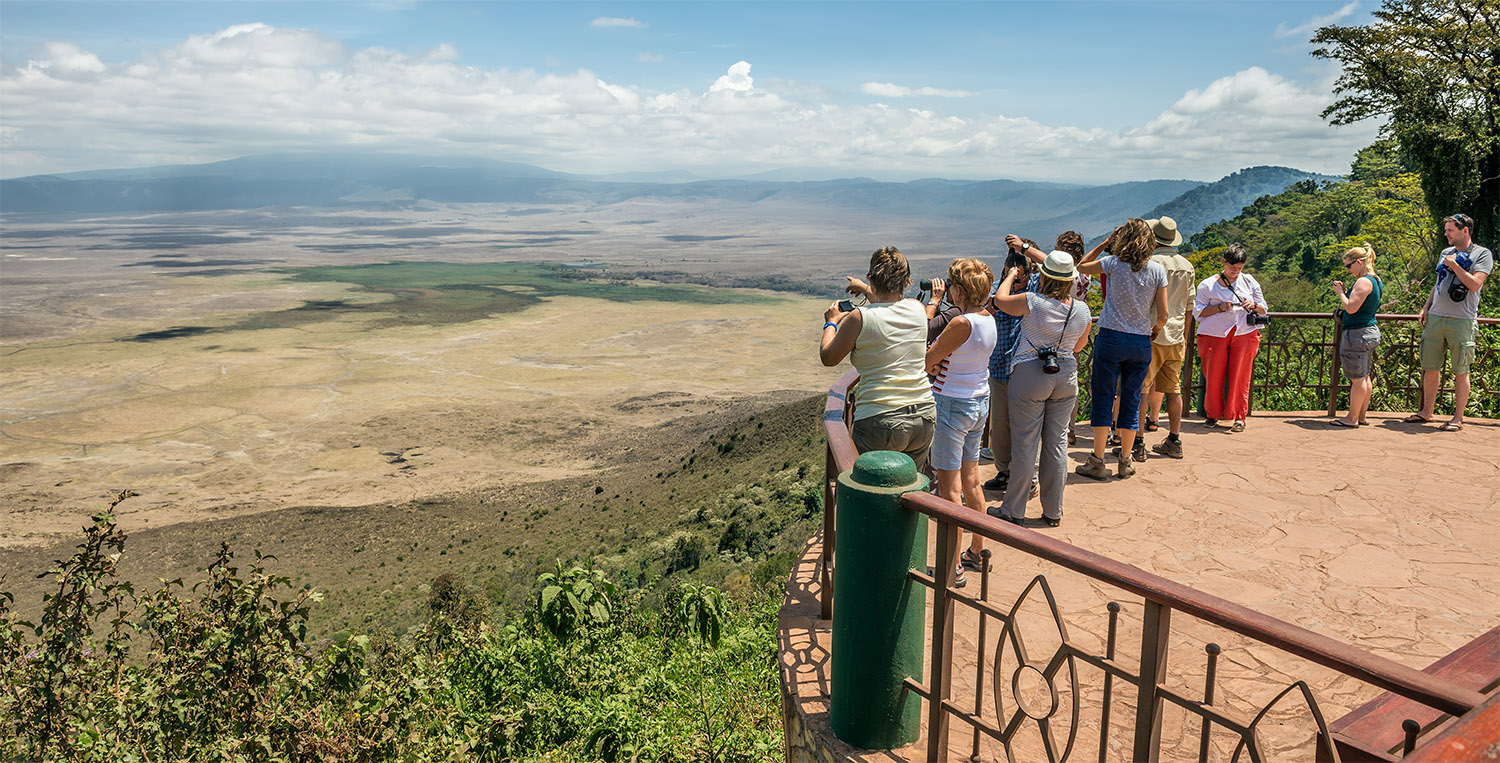
- Climb 30 minutes from the gate to the crater rim viewpoints. Stop at the viewpoint for your first panorama.
- Descend via Lemala (east) or Seneto (south) gate at 6 am the following morning. Descent takes 30–45 minutes on a steep, single-lane gravel track.
For international travellers
- From North America (USA, Canada): Fly JFK/IAD/YYZ → AMS/DOH → JRO via KLM or Qatar.
- From UK & Europe: Direct LHR/CDG/FRA → JRO on KLM (8.5 hours) or via DAR on British Airways.
- From Asia, China, Middle East: BOM/PEK/DXB → DAR on Emirates, Qatar, or Ethiopian, then connect to JRO.
- From Oceania & Latin America: Route through Johannesburg (JNB) or Addis Ababa (ADD), then onward to JRO.
Skip the logistics: arrange airport pickup and a private 4×4 with Muzungu Africa Safaris.
Top Things to Do in & Around the Ngorongoro Crater
The crater is the headline act, but the wider NCA offers Olduvai Gorge, Empakai Crater, Maasai cultural visits, and some of the best birding in East Africa.
Here are the top activities in and around the Ngorongoro Crater.
1. Half-day crater floor game drive
The essential Ngorongoro activity. Descend at 6 am with a packed breakfast, spend 6–7 hours on the 260 km² floor, and exit before the afternoon heat. You will cover Lerai Forest, Lake Magadi, Mandusi Swamp, and the Ngoitokitok picnic site.
2. Visit Olduvai Gorge
The “Cradle of Mankind” sits 50 km west of the crater. Mary and Louis Leakey’s excavations uncovered Homo habilis fossils dating back 1.9 million years. A small museum displays original finds; a guided walk takes 2 hours.
3. Maasai boma cultural visit
The Ngorongoro Conservation Area is the only major Tanzanian park where Maasai live inside the boundary. Visit a traditional boma near Nainokanoka to learn about cattle culture, jewelry, and the Maasai jumping dance. Tip the community directly — US$20–30 per group is fair.
4. Empakai Crater hike
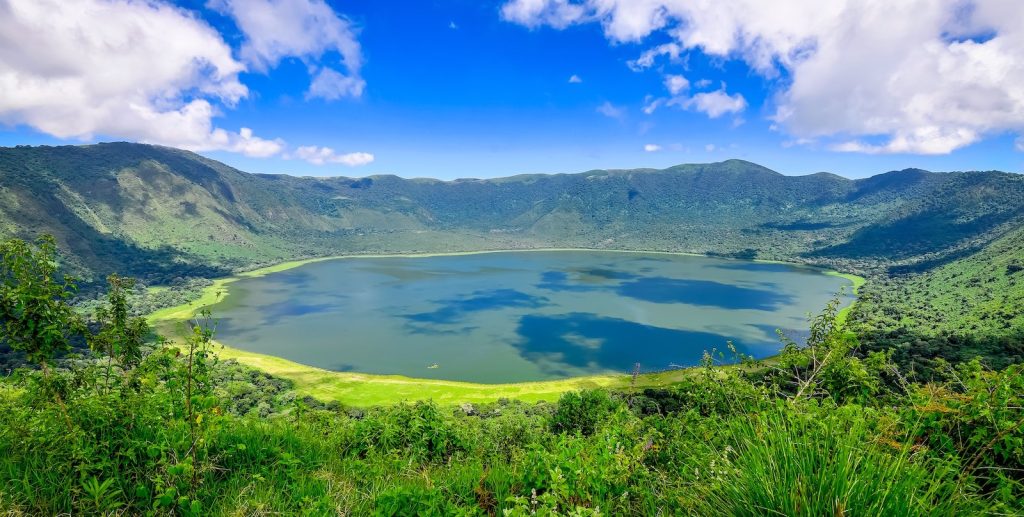
A 6 km-wide forested caldera with a soda lake at the bottom, Empakai is a 3-hour round-trip hike through montane forest — home to vervet monkeys, buffalo, and flamingos. Less crowded than Ngorongoro, and the rim walk offers views of Mount Kilimanjaro on clear days.
5. Birding the NCA
With 500+ species, the NCA rivals any East African hotspot. Target lesser flamingo at Lake Magadi, Abdim’s stork in the short rains, and raptors around the rim. A specialist birding guide is worth the upgrade.
6. Combine with Serengeti & Ndutu
December–May, the wildebeest migration thunders through Ndutu — within the NCA boundary. Pair a migration mobile camp with two Ngorongoro nights for the ultimate combo.
Add Olduvai, a Maasai boma, or Empakai hike to your itinerary: browse Muzungu Africa Safaris day tours.
Ngorongoro Crater Park Fees & Entrance Costs (2026)
What are the Ngorongoro Crater park fees for 2026? As of 2026, the Ngorongoro Conservation Area entrance fee is US$60 per person per day for adults (non-EAC), plus a US$295 vehicle entry fee per vehicle per 24 hours — the highest single park-fee in Tanzania.
Crater descent is included, but concession fees apply if your lodge sits inside the NCA.
Fee breakdown (2026, non-EAC, per 24 hours)
What this means for your budget
- A 2-day/1-night crater safari for two adults in one vehicle costs roughly US$415 in park fees alone ($60 × 2 × 2 days + $295 vehicle).
- Compare with Tarangere ($53) or Lake Manyara ($53) — Ngorongoro is the most expensive park in Tanzania.
- Book an all-inclusive package so fees, vehicle, guide, lodge, and meals are pre-paid; you avoid carrying hundreds in cash to the gate.
Skip the cash-handling at the gate: view all-inclusive Ngorongoro packages from Muzungu Africa Safaris.
Where to Stay — Best Lodges & Camps Near the Ngorongoro Crater
Where should I stay near the Ngorongoro Crater?
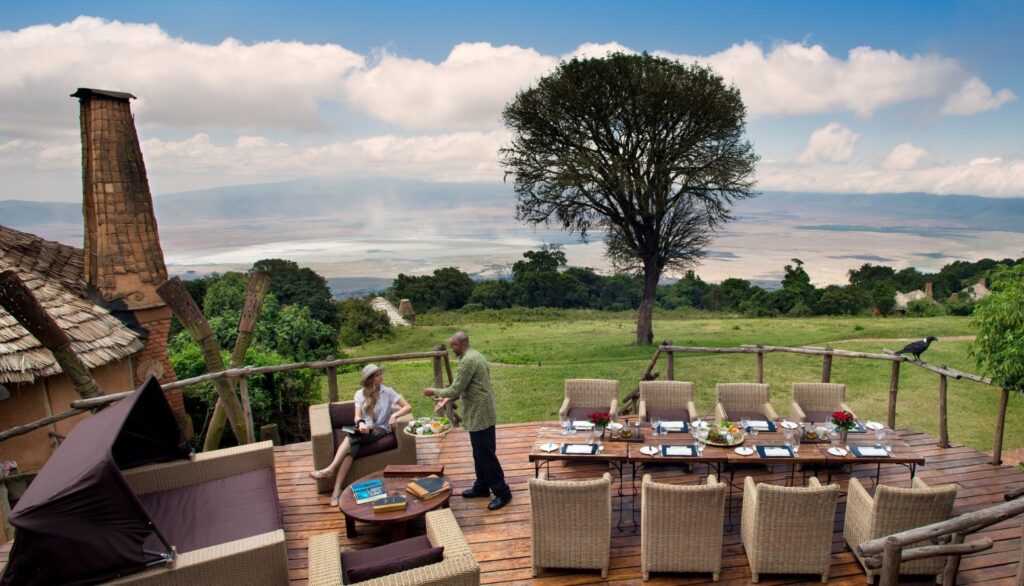
The best Ngorongoro accommodation falls into three tiers: luxury lodges on the crater rim (first in line for the 6 am descent), mid-range lodges in Karatu town (45 minutes from the gate), and mobile tented camps in Ndutu (December–May only).
Tier 1 — Luxury rim lodges (US$600–1,500/night)
- &Beyond Ngorongoro Crater Lodge. “Versailles meets Maasai” — butler service, rose-petal baths, panoramic rim views. The pinnacle of Ngorongoro luxury.
- Ngorongoro Lodge Meliá Collection. Five-star, terrace with crater views, modern rooms, US$600–900/night. Excellent value at the rim.
- Ngorongoro Sopa Lodge. The original rim lodge, positioned at the Seneto descent gate. Functional, dated but unbeatable for early descent.
- Ngorongoro Serena Safari Lodge. Built into the crater wall in Maasai-inspired style. Strong mid-luxury choice.
Tier 2 — Mid-range Karatu lodges (US$200–500/night)
- Plantation Lodge. A working coffee farm 30 minutes from the gate; great food, gardens, family-friendly.
- Gibb’s Farm. Historic coffee farm with cottage-style rooms, organic gardens, spa. A 2025 Travel + Leisure World’s Best pick.
- Rhotia Valley Tented Lodge. Tents on a hillside with views of the rift escarpment.
Tier 3 — Tented & mobile camps (US$250–700/night)
- Ndutu Safari Lodge / Nasikia Mobile Camp. Open December–May only, positioned for the wildebeest calving season.
- Lake Masek Tented Camp. Fixed tented camp on the NCA/Serengeti boundary.
- Pakulala Safari Camp. Budget-friendly tented camp near Karatu.
How to choose
- For first descent of the day: Book a rim lodge (Lemala/Sopa). You descend 30–45 minutes earlier than Karatu-based guests.
- For families: Karatu mid-range lodges have pools, lawns, and lower altitude (better for kids).
- For the migration: Mobile camp in Ndutu, December–May only.
Check live lodge availability and rack rates for 2026: enquire with Muzungu Africa Safaris.
Ngorongoro Crater Safari Tours & Packages
What Ngorongoro safari packages are available? Most travellers combine Ngorongoro with Serengeti and Tarangire in a 4–7 day northern-circuit itinerary.
Pure 3-day Ngorongoro safaris work for time-poor travellers flying into Arusha on a stopover.
Recommended Ngorongoro safari packages
- 3-Day Ngorongoro Crater Safari. Arusha → Ngorongoro crater descent → Tarangire → Arusha. Ideal for travellers connecting from Zanzibar or a Mount Kilimanjaro trek. US$890–1,500 pp.
- 4-Day Ngorongoro & Serengeti Safari. Adds one full day in central Serengeti for the migration. The classic first-timer trip. US$1,400–2,300 pp.
- 4-Day Ndutu Migration & Ngorongoro Crater Safari. December–May only; targets wildebeest calving and a rhino sighting. US$1,500–2,400 pp.
- 4-Day Tarangire Balloon & Ngorongoro Crater Safari. Adds a sunrise hot-air balloon flight over Tarangire. US$1,900–3,000 pp.
- 7-Day Northern Circuit Safari. Tarangire → Lake Manyara → Ngorongoro → Serengeti → Arusha. The complete Tanzania safari. US$2,400–4,500 pp.
What’s included in a package?
- Park & conservation fees (US$295 vehicle + US$60 pp/day)
- Private 4×4 Land Cruiser with pop-up roof
- English-speaking guide (French/Spanish/German/Mandarin on request)
- Full-board lodge accommodation
- Bottled water, packed breakfasts, all meals
- Airport transfers Arusha ↔ JRO
Reserve your Ngorongoro safari package before 2026 dates sell out: book now with Muzungu Africa Safaris.
Tips for First-Time Visitors to the Ngorongoro Crater
- Arrive at the descent gate by 5:45 am. Gates open at 6 am; the first 50 vehicles queue at the bottom. Be early to avoid dust and crowds.
- Pack layers. Rim altitude 2,200 m means 10 °C at dawn and 25 °C by noon. Bring a fleece, gloves, and a sun hat.
- Use a beanbag, not a tripod. Vehicle movement and bumpy roads make tripods useless. A beanbag on the window gives sharper wildlife shots.
- Bring US dollars (post-2009 series). Park fees, tips, and curio purchases use USD. Tip your guide US$20–30/day per vehicle — standard for Tanzania.
- Take altitude-altitude malaria precautions. The rim is above the 2,000 m malaria zone, but the floor and lowland parks are not. Consult a travel clinic 4–6 weeks before departure.
- Respect the 6-hour crater limit. Rangers track descent and exit times; overstaying risks fines and damages the ecosystem.
- Don’t expect leopards on the floor. They live in the rim forest; book a walking safari in Empakai if leopards are a must.
Why Book Your Ngorongoro Crater Tanzania Safari With Us
Muzungu Africa Safaris is a Tanzania-registered, ATDO-licensed safari operator with offices in Arusha and partnerships across East Africa.
We have been guiding travellers from the USA, UK, Canada, Europe, Latin America, Asia, and the Middle East through the northern circuit since 2014.
Our private 4×4 Land Cruisers, gold-licensed guides, and 24/7 Arusha-based support mean your Ngorongoro Crater Tanzania safari runs on schedule, on budget, and beyond expectation.
Every itinerary is tailor-made, not a cookie-cutter group tour.
Speak to a Tanzania safari specialist today: get my custom itinerary from Muzungu Africa Safaris.
Frequently Asked Questions (FAQs)
Is the Ngorongoro Crater safe to visit?
Yes — the crater is one of the safest safari destinations in Africa, with a permanent ranger presence, low crime, and well-maintained descent roads. Crime inside the NCA is virtually nil.
How many days do I need at Ngorongoro?
Two nights, one full crater day is the minimum. Add a second day to combine with Olduvai Gorge and Empakai Crater.
Is the crater suitable for children?
Yes — the smooth floor roads and short distances make Ngorongoro ideal for families with children aged 6+. Kids under 5 enter free.
Do I need a yellow fever certificate?
Only if arriving from an endemic country. Most travellers from the USA, UK, Europe, and Asia do not need one, but check with your safari operator.
Can I combine Ngorongoro with gorilla trekking?
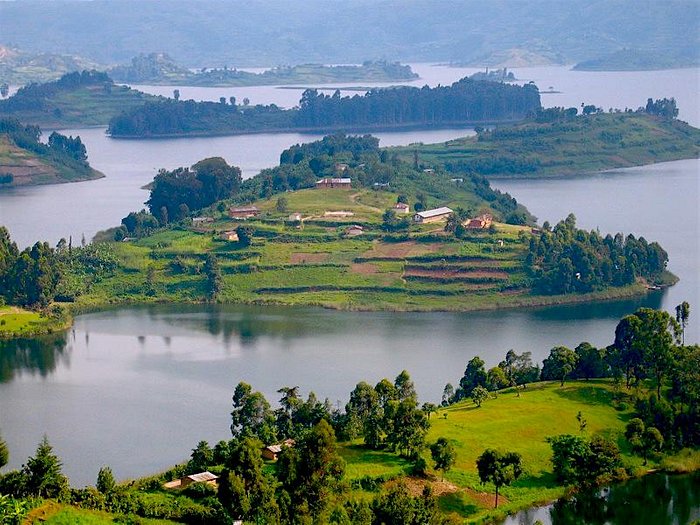
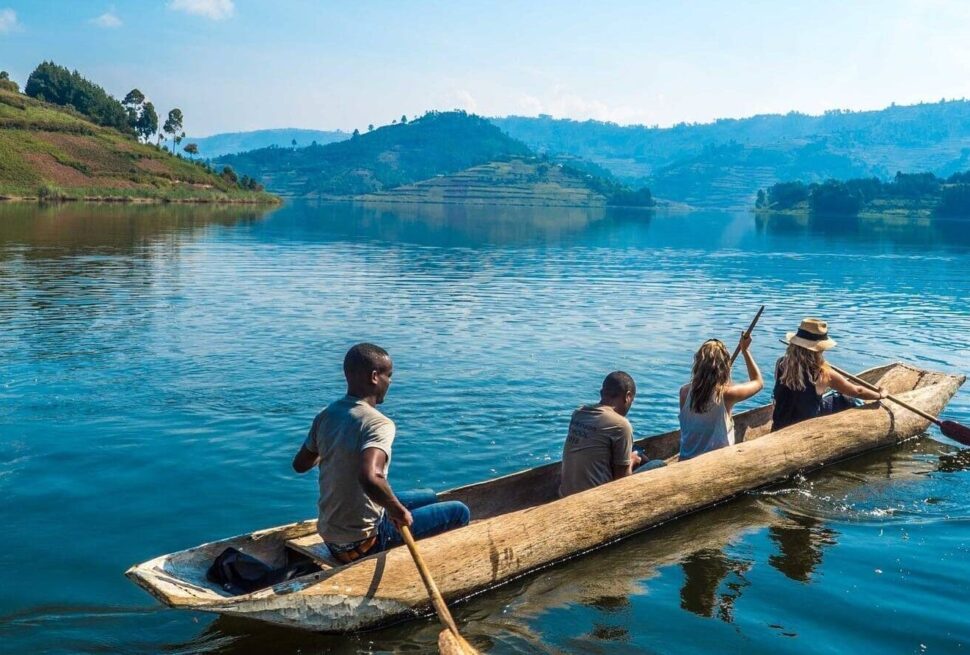
Yes — fly Arusha → Kigali (2 hours) or Arusha → Entebbe (3 hours) and add a 3- or 4-day gorilla trekking extension in Rwanda’s Volcanoes National Park or Uganda’s Bwindi Impenetrable Forest. Muzungu Africa Safaris arranges both Ngorongoro safaris and gorilla permits under one booking.
Book Your 2026 Ngorongoro Crater Tanzania Safari — or Combine With Gorilla Trekking
You now hold the complete blueprint: the world’s largest intact volcanic caldera, the Big Five in a single morning, the calving-season migration in Ndutu, the Maasai culture of the Conservation Area, and the park fees, lodges, and packages that make it all bookable.
The Ngorongoro Crater Tanzania is not a trip you wing — limited daily descent permits, a US$295 vehicle fee, and rim lodges that sell out 6 months ahead mean the travellers who plan early are the ones who get the best game drive of their lives.
Don’t leave your 2026 safari to chance. Whether you want a 3-day Ngorongoro crater escape, a 7-day northern-circuit safari, or the ultimate East Africa combo — Ngorongoro + Serengeti + gorilla trekking in Uganda or Rwanda — the team at Muzungu Africa Safaris will design it, book your permits, secure your lodges, and hand you a fully-supported itinerary in under 48 hours.
🦁 Three ways to start now
- Free quote: Request a tailor-made Ngorongoro itinerary — no deposit, no obligation.
- Permit check: Reserve your 2026 gorilla permit (only ~96 permits/day in Bwindi; they sell out 4–6 months ahead).
- Speak to a specialist: WhatsApp +256 755 295 561 or email info@muzunguafricasafaris.com.
Book your Ngorongoro Crater Tanzania safari — and your gorilla permit — with Muzungu Africa Safaris today. The crater floor is waiting; the lions are already there.