Endangered Mountain Gorillas: Facts, Habitat, Conservation & Gorilla Trekking Guide 2026
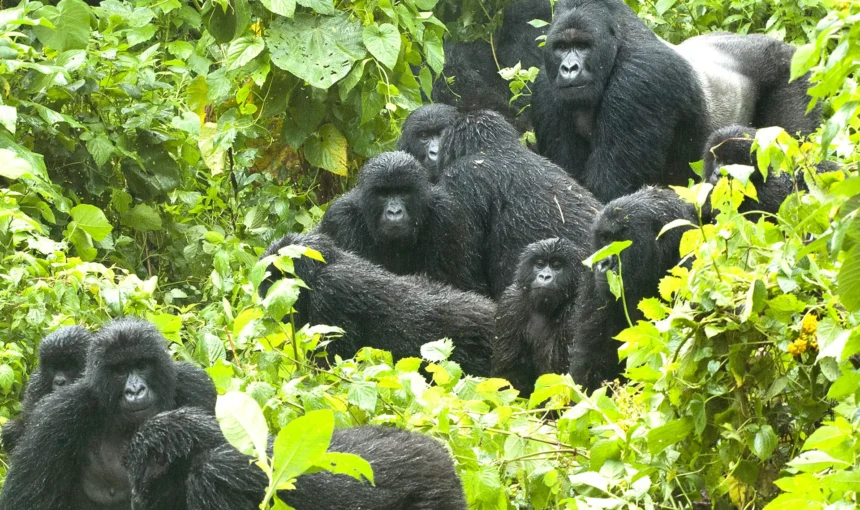
Deep in the mist-covered mountains of East Africa lives one of our closest genetic relatives—the endangered mountain gorilla.
Sharing approximately 98% of human DNA, these majestic primates recently achieved a rare and hard-won milestone.
Thanks to decades of rigorous conservation efforts, their official status transitioned from “Critically Endangered” to “Endangered” on the IUCN Red List.
This shift marks a conservation success story in progress, heavily fueled by sustainable eco-tourism and global support.
This comprehensive guide covers everything you need to know: from the unique ecology and persistent threats facing endangered mountain gorillas to exactly how international travelers can ethically observe them in their natural habitat.
Ready to meet them? Explore our exclusive gorilla trekking safaris and turn your dream African adventure into reality.
The State of Endangered Mountain Gorillas Today
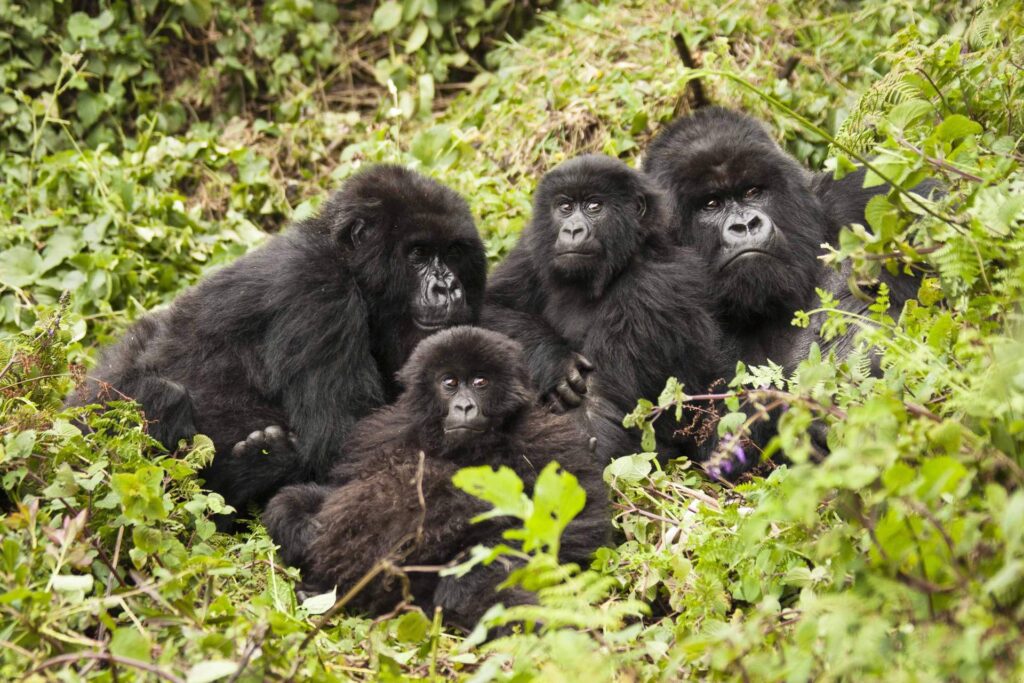
Endangered mountain gorillas (Gorilla beringei beringei) are one of only two great ape species whose wild population is actively increasing.
Today, the global population stands at an estimated 1,063 individuals, a remarkable recovery from a critical low of roughly 680 in the 1980s.
In 2018, the IUCN Red List officially downlisted the subspecies from “Critically Endangered” to “Endangered.”
This reclassification was driven by survey data confirming the Virunga population had surpassed the 250-mature-individual threshold for Critically Endangered status, now boasting approximately 600 mature individuals.
However, “Endangered” still signifies a very high risk of extinction in the wild, primarily due to their restricted geographic range.
These great apes survive exclusively in two isolated high-altitude habitats. The first is the Virunga Massif—a chain of volcanic peaks spanning Volcanoes National Park (Rwanda), Mgahinga Gorilla National Park (Uganda), and Virunga National Park (DRC).
The second, and largest, population resides in Uganda’s Bwindi Impenetrable National Park, a UNESCO World Heritage Site renowned for its dense, ancient rainforest.
Why Are Mountain Gorillas Endangered?
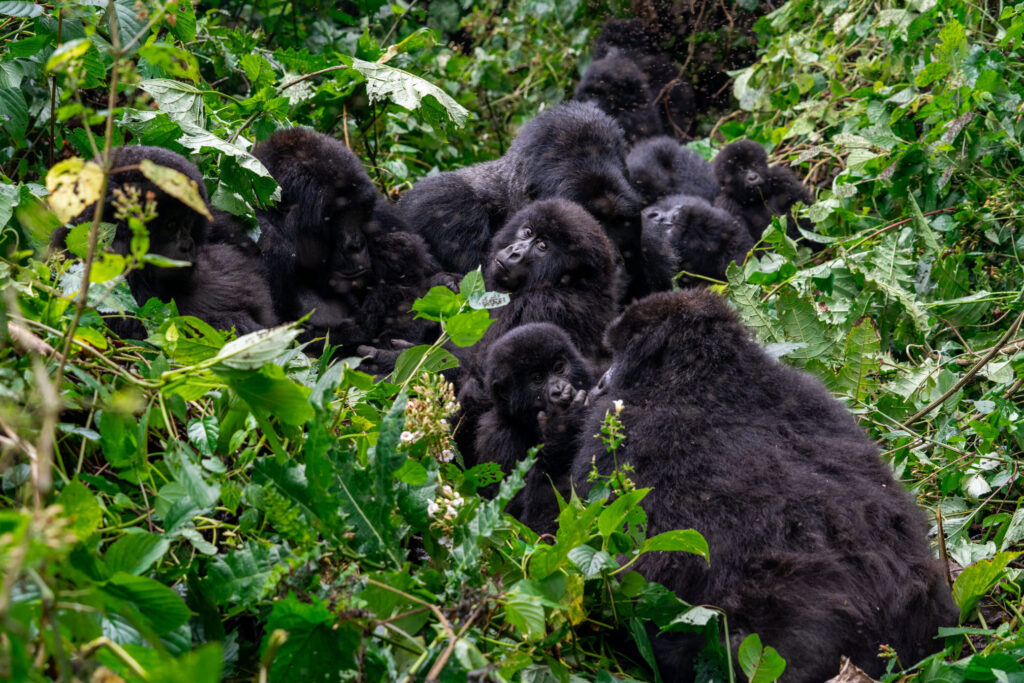
Despite population gains, endangered mountain gorillas face four persistent threats that demand ongoing, well-funded conservation intervention.
1. Habitat Loss
Rapid human settlement expansion, agriculture, and fuelwood harvesting severely fragment their high-altitude forest habitat.
As local populations grow, forests are cleared for farming, pushing gorillas into smaller, isolated zones. In 2004, illegal settlers cleared 3,700 acres of gorilla habitat inside Virunga National Park alone.
2. Poaching and Snares
Mountain gorillas are rarely targeted for bushmeat. Instead, they become tragic collateral damage—caught in crude wire snares set by poachers to catch antelope, bushbuck, and duiker.
The gorillas’ strength often allows them to break free, but the wire cuts deep into hands or feet, leading to infections, amputations, or death from gangrene.
3. Disease
Because gorillas share approximately 98% of human DNA, they are highly susceptible to human-borne pathogens. Respiratory illness accounts for a large proportion of mountain gorilla mortalities.
In 2009, a human metapneumovirus—essentially a common cold—infected 11 of 12 gorillas in one Rwandan group, killing an adult female and an infant male.
4. Climate Change & Conflict
Shifting rainfall and temperature patterns stress gorilla food sources and elevate stress-hormone levels, while historical regional instability in the DRC has disrupted conservation funding and ranger patrols.
Over 175 Virunga rangers have died protecting the park from armed conflict, habitat destruction, and poaching.
The Dian Fossey Legacy & Modern Conservation Success
The survival of the endangered mountain gorilla is inseparable from Dian Fossey, who founded the Karisoke Research Center in Rwanda’s Virunga Mountains on September 24, 1967.
Her pioneering anti-poaching patrols and long-term behavioral studies laid the foundation for modern mountain gorilla conservation.
After her murder in 1985, her work continued, and in 2022, Karisoke moved to the Ellen DeGeneres Campus of the Dian Fossey Gorilla Fund, now a global research hub.
Today, Fossey’s legacy lives on through community-led conservation. Rwanda’s revenue-sharing program allocates 10% of all national park tourism revenue to surrounding communities—funding schools, health clinics, and water infrastructure.
Uganda goes further still: the Uganda Wildlife Authority (UWA) directs 20% of gorilla permit fees to local communities living near Bwindi and Mgahinga.
This tangible economic benefit proves that tourism saves gorillas by giving local people a vested interest in protecting them.
Complementing this, Gorilla Doctors—the world’s only veterinary team providing hands-on care to wild mountain gorillas—operates across Rwanda, Uganda, and the DRC.
Founded at Fossey’s request in the mid-1980s, the team uses a One Health approach to treat snare injuries, respiratory infections, and monitor roughly 370 mountain gorillas across the region.
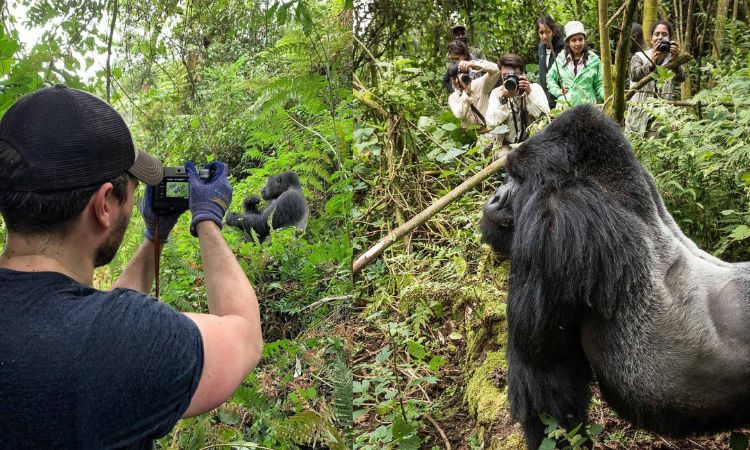
Gorilla Trekking: How Your Safari Saves Endangered Mountain Gorillas
Gorilla trekking is not a luxury vacation—it is the financial engine powering mountain gorilla conservation. The economics of conservation are straightforward: every gorilla permit fee directly funds the protection of these great apes.
Whether you pay $800 in Uganda or $1,500 in Rwanda, your money flows into a complex network of protection, research, and community development.
A significant portion of each permit funds anti-poaching patrols, park ranger salaries, GPS tracking of gorilla families, and daily health monitoring across Volcanoes, Bwindi, and Mgahinga National Parks. This boots-on-the-ground presence is the single greatest deterrent to illegal activity in the forest.
The ripple effect reaches local communities. Rwanda allocates 10% of gorilla permit revenue to surrounding villages, while Uganda’s Uganda Wildlife Authority (UWA) directs 20% of permit fees to communities living near Bwindi and Mgahinga—building schools, health clinics, clean-water projects, and small businesses.
When locals see tangible value in protecting gorillas, poaching declines and habitat encroachment slows.
By booking a safari, you become an active conservationist. Your presence gives the gorillas a living economic value—far greater alive than as bushmeat or poached trophies.
Without gorilla trekking tourism, the funding model collapses, and so does the species’ best line of defense.
Secure your spot and contribute to conservation. Inquire about our Rwanda Gorilla Trek packages today.
Speak to a Muzungu Africa Safaris specialist and design a trekking itinerary that fits your travel dates, fitness level, and budget.]
Where to See Endangered Mountain Gorillas: Uganda vs. Rwanda
Choosing where to track endangered mountain gorillas is the most critical step in planning your African safari.
Both premier destinations offer once-in-a-lifetime encounters, but they cater to distinctly different travel styles, budgets, and logistical preferences.
Uganda (Bwindi Impenetrable National Park & Mgahinga)
Uganda delivers a rugged, adventurous vibe. Gorilla trekking permits in Uganda cost $800 per person, making it the most accessible option for budget-conscious and adventurous travelers from Europe, Oceania, and North America.
The crown jewel, Bwindi Impenetrable National Park, is a UNESCO World Heritage Site offering incredible biodiversity and deeper, more physically demanding forest treks.
Mgahinga Gorilla National Park, part of the broader Virunga Massif, offers a more intimate, less crowded setting. If you want raw, untamed wilderness and exceptional value, Uganda is your destination.
Book your Ugandan adventure with Muzungu Africa Safaris today and secure your $800 permit.]
Rwanda (Volcanoes National Park)
Rwanda specializes in a luxury, high-accessibility experience. Rwanda gorilla permits cost $1,500 per person, reflecting the country’s premium, low-impact tourism model.
Highlights include incredibly easy access from Kigali International Airport (a scenic 2.5-hour drive to the park), shorter and well-maintained hiking trails, and some of Africa’s most plush, eco-friendly lodges.
It is the ideal choice for travelers from the USA, UK, Canada, Asia, and the Middle East seeking luxury, convenience, and shorter hike durations without sacrificing the emotional impact of the encounter.
Secure your luxury trekking experience. Inquire about our Rwanda Gorilla Trek packages today.]
DRC (Virunga National Park)
The Democratic Republic of the Congo is home to Virunga National Park, one of Africa’s most biologically diverse and raw wildernesses.
While it offers incredible off-the-beaten-path experiences, due to occasional security advisories and historical regional instability, Uganda and Rwanda remain the safest bets for international gorilla trekking tourists.
For travelers prioritizing safety, political stability, and guaranteed permit access, routing your journey through Uganda or Rwanda is highly recommended.
What to Expect on a Gorilla Trekking Safari
A gorilla trekking safari is a physical and emotional journey that requires preparation.
Here is exactly what to expect, step-by-step:
1. The Trek:
Be prepared for significant physical exertion. You will navigate muddy, steep, and dense forest terrain at altitudes often exceeding 2,000 meters.
Expert local trackers venture into the forest at dawn to locate the habituated gorilla families.
They communicate via radio to guide your group to the primates’ location. We highly recommend hiring a local porter—for a small fee, they carry your backpack and help you navigate the treacherous, slippery slopes, making the trek accessible even for those with moderate fitness levels.
Want to know if you are fit enough? Contact Muzungu Africa Safaris for a personalized trekking itinerary tailored to your physical capabilities.]
2. The Encounter:
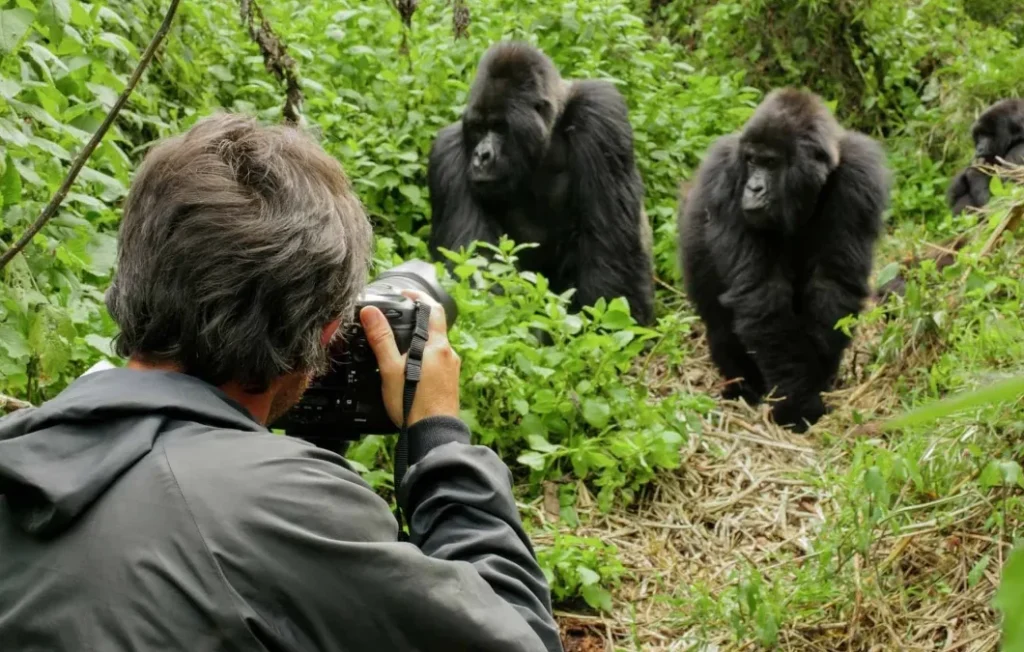
Once the family is located, the physical strain instantly vanishes. You spend strictly one hour observing them.
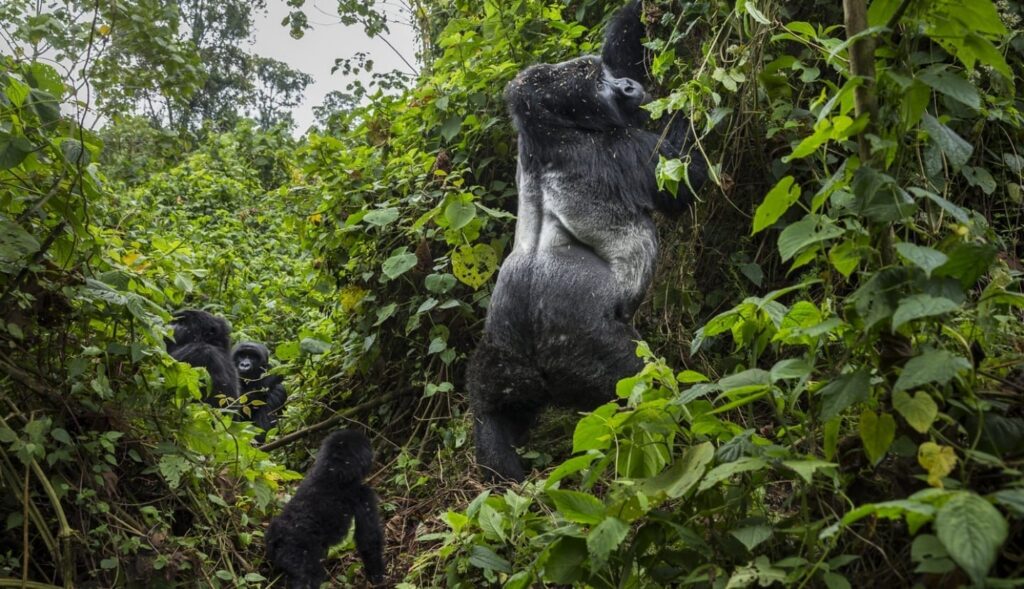
Picture a massive silverback watching over his domain, mothers gently nursing infants, and playful juveniles wrestling in the undergrowth.
Sitting just feet away from wild apes in their natural habitat is a profoundly moving, life-altering experience.
3. The Rules:
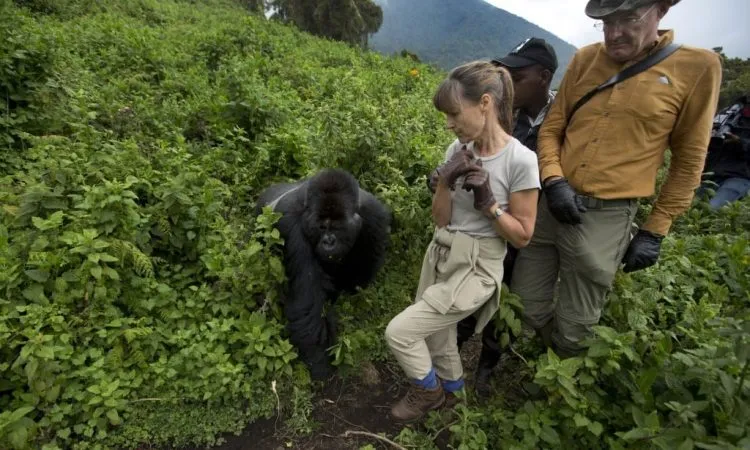
To protect these primates, you must maintain a strict 7-meter (23-foot) distance at all times. If a gorilla approaches you, you must slowly and calmly back away.
This rule is non-negotiable to prevent the transmission of human-borne diseases, which can be devastating to the troop.
Want to know if you are fit enough? Contact Muzungu Africa Safaris for a personalized trekking itinerary tailored to your physical capabilities.]
Planning Your Trip: Best Time, Costs, and Packing
Proper planning is essential for a seamless gorilla trekking safari.
Here are the core logistical details you need to know:
1. Best Time to Go:
The optimal trekking periods are during the East African dry seasons: June to September and December to February.
During these months, forest trails are significantly less muddy, reducing physical exertion and increasing your chances of a successful, comfortable trek.
2. Costs:
We believe in absolute transparency. Safari costs are comprehensive and include your gorilla permits, park entry fees, lodging, 4×4 transport, and professional guide fees.
A mid-range Uganda safari typically ranges from $1,500 to $2,500 per person (excluding international flights), while a high-end luxury Rwanda experience can exceed $4,000 per person, depending on the caliber of your eco-lodge.
- Packing List: To ensure comfort and safety in the dense jungle, pack these essential items:
- Gardening gloves (for gripping thorny vegetation and pulling yourself up steep slopes).
- Waterproof hiking boots and gaiters (to navigate muddy terrain).
- Long-sleeved shirts and pants in neutral, earthy colors.
- High-SPF sunscreen and insect repellent.
- A high-quality camera with a zoom lens (strictly no flash photography, as it agitates the primates).
Need help deciding which season or budget fits you best? Contact Muzungu Africa Safaris to customize your perfect itinerary.]
Frequently Asked Questions (FAQs)
Are mountain gorillas dangerous?
No. Despite their immense size, they are gentle giants. They are habituated to human presence and only display aggression if they feel severely threatened or provoked.
How close can I get?
Visitors must maintain a strict distance of 7 meters (23 feet) at all times to protect the endangered mountain gorillas from human-borne diseases.
Can I visit if I am sick?
Absolutely not. Because gorillas share 98% of human DNA, even a mild common cold can be fatal. Sick visitors will be turned away to protect the primates.
Conclusion
Seeing endangered mountain gorillas in the wild is a profound ecological and emotional experience that stays with you forever. Your journey directly funds the survival of the species. Don’t just read about them—experience them.
A portion of every booking goes directly to gorilla conservation.
Click here to customize your African Safari today and secure your gorilla permit with Muzungu Africa Safaris.
What are you most excited to see on your safari? Let us know in the comments below!