The Ultimate Okavango Delta Safari Guide: Plan Your Dream Botswana Trip 2026
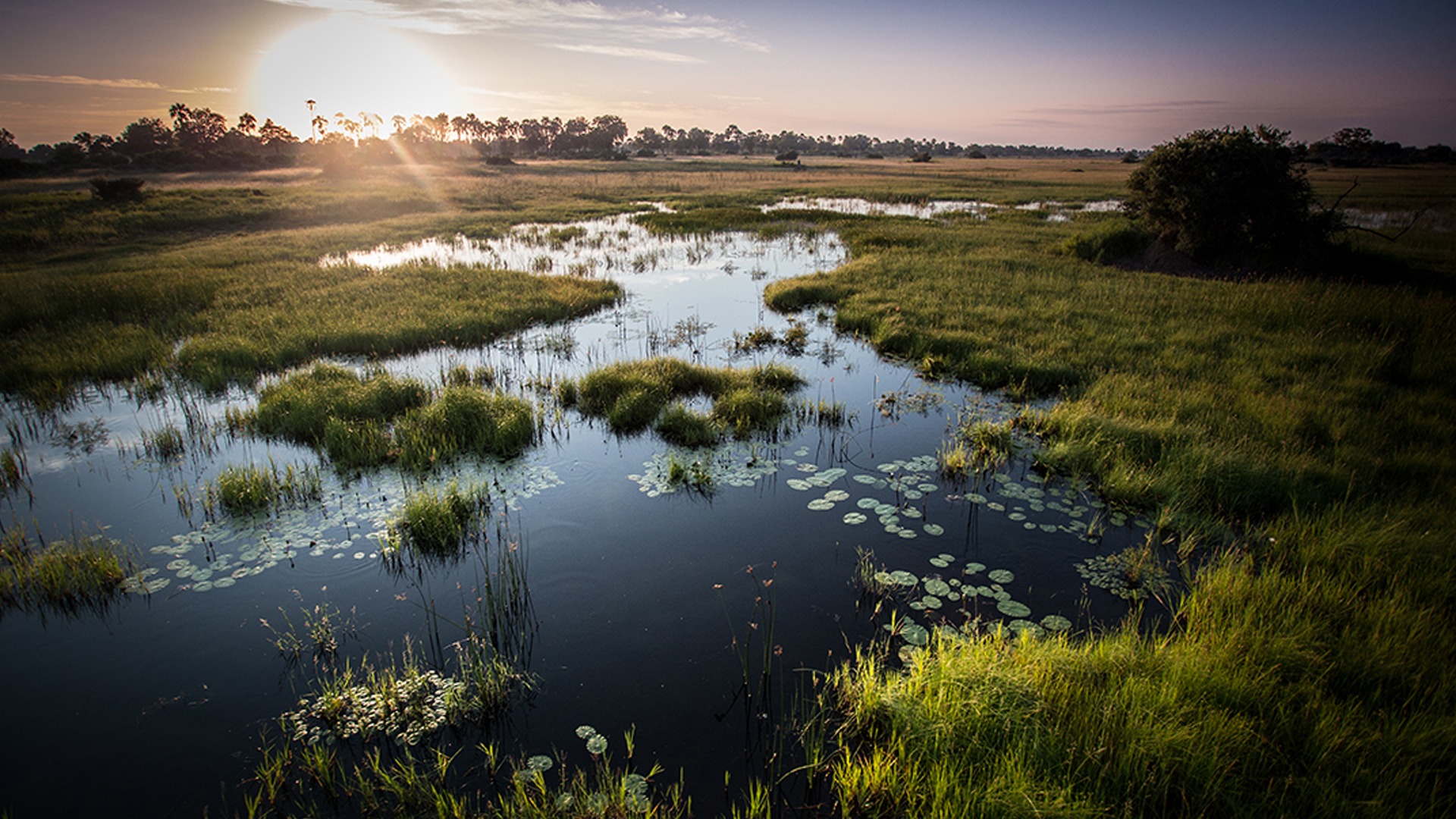
Welcome to the greatest African safari spectacle on earth. The Okavango Delta in Botswana is a shimmering mosaic of waterways, floodplains, and wildlife that delivers an unmatched Botswana safari experience.
As the world’s largest inland delta, this UNESCO World Heritage Site transforms a desolate corner of the Kalahari Desert into an lush oasis teeming with life.
Whether you are planning a luxury honeymoon, a family wildlife adventure, or a photographic expedition, this guide provides everything you need to know.
We cover the best time to visit, safari costs, Okavango Delta lodges, and the top activities to ensure your African safari is flawless.
Read on to plan your dream trip to the Okavango Delta.
What Makes the Okavango Delta Unique?
The Okavango Delta is a geographical anomaly. Unlike most rivers that flow to the sea, the Okavango River empties onto open land in the Kalahari Desert, creating a massive inland delta that fans out into a breathtaking labyrinth of channels, lagoons, and islands.
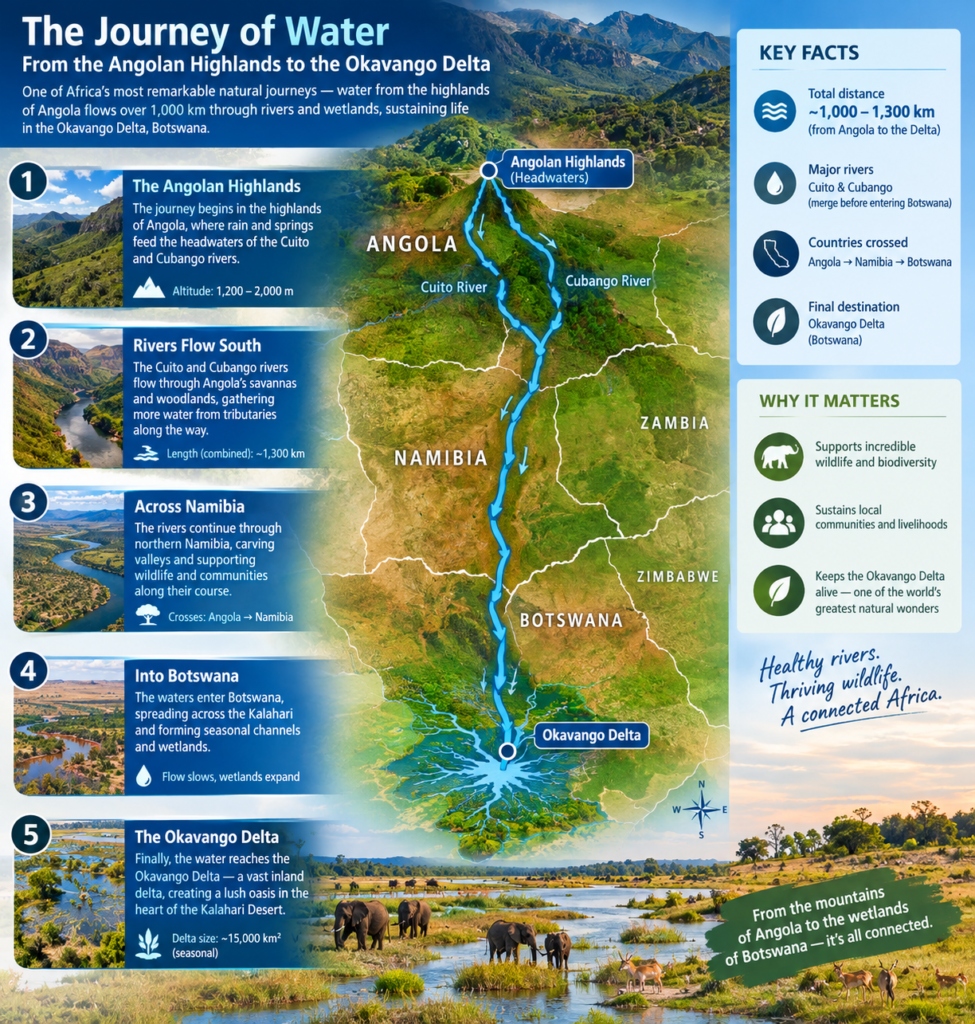
This life-giving phenomenon is driven by an annual flood. Rainwater falls on the Angolan highlands between November and March, taking roughly six months to travel over 1,200 kilometers down to Botswana.
By the time the water arrives in the Okavango Delta between June and August—during the peak of the dry season—it creates a thriving ecosystem that sustains millions of animals.
This counter-intuitive flooding cycle makes the Delta a year-round safari destination. The contrast of arid desert landscapes and deep, clear water is what sets a Botswana safari apart from any other wildlife destination on earth.
Conversion Tip: Want to witness the floodwaters firsthand? Check out our exclusive wet-season Okavango packages and book your water safari today!
Best Time to Visit the Okavango Delta
Choosing the best time to visit the Okavango Delta depends entirely on your travel goals. Whether you prioritize predator photography, birdwatching, or budget-friendly travel, Botswana offers two distinct safari seasons.
1. High/Water Season (May to October)
The High/Water Season (also known as the Dry Season) is the peak safari period. From May to October, the floodwaters from Angola reach their highest levels, allowing for iconic mokoro safari experiences.
Because water is scarce in the surrounding bush, animals congregate around the Delta’s channels and waterholes. This is the best time for game viewing, as vegetation is thin and wildlife visibility is exceptionally high.
Expect warm days and chilly mornings between June and August. Peak safari season runs from July to October.
2. Green/Shoulder Season (November to April)
The Green Season (November to April) transforms the Delta into a lush, vibrant paradise. This is the best time for birding, as migratory species arrive in drobes.
It is also the birthing season, offering dramatic predator-prey encounters as young antelope take their first steps. While afternoon thunderstorms are common, they provide spectacular photographic backdrops.
Crucially, this is the low season, meaning fewer crowds and significantly lower accommodation rates—a magnet for budget travelers.
Okavango Delta Quick Reference Table
Top Things to Do in the Okavango Delta
A Botswana safari is defined by its diversity of activities. You aren’t restricted to vehicles; the Delta allows you to engage with the wilderness on a multi-sensory level. Here are the top activities for your Okavango Delta safari:
1. Glide on a Traditional Mokoro Safari
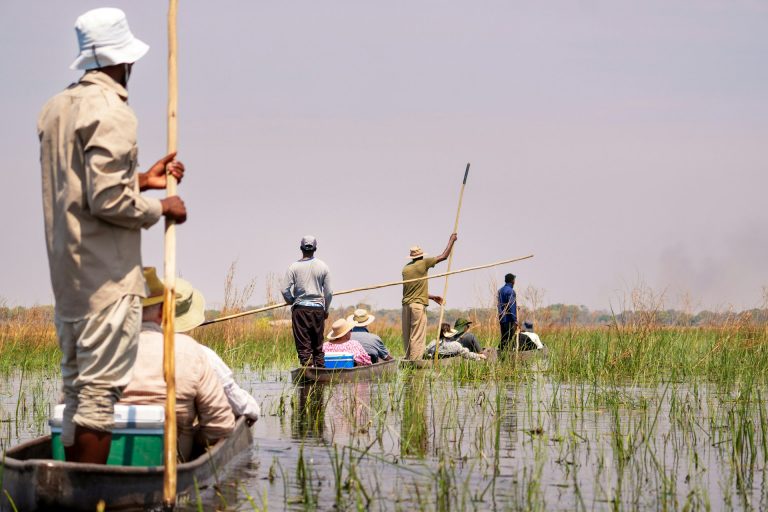
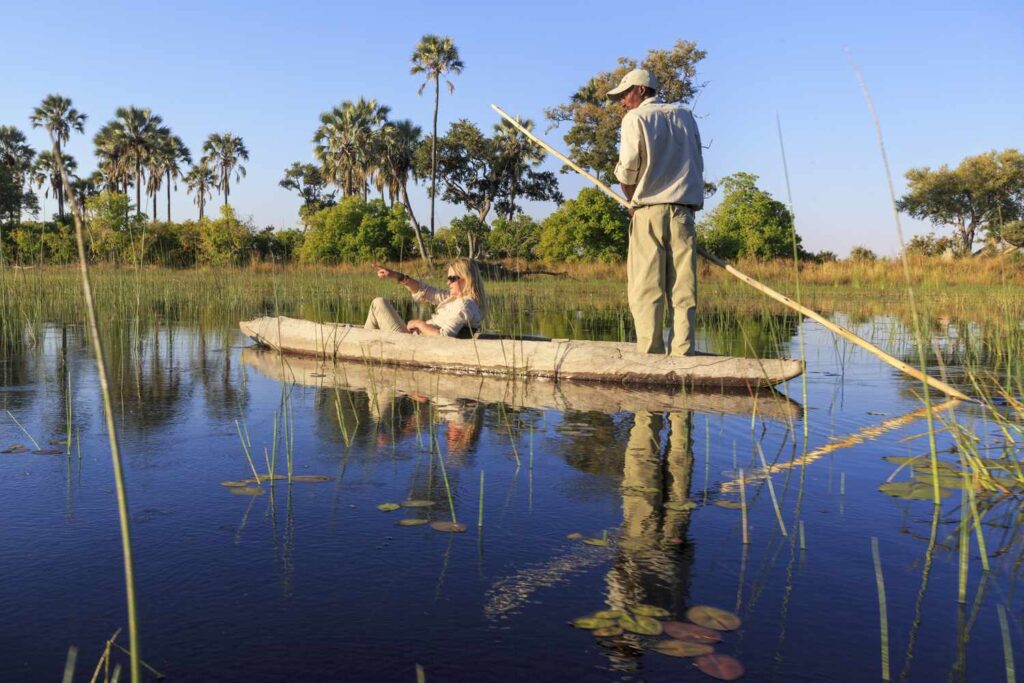
The quintessential Okavango Delta experience is the mokoro safari. A mokoro is a traditional dugout canoe historically carved from trees but now made of eco-friendly fiberglass.
Propelled by an expert guide using a long pole, you will silently glide through narrow channels and lily pads.
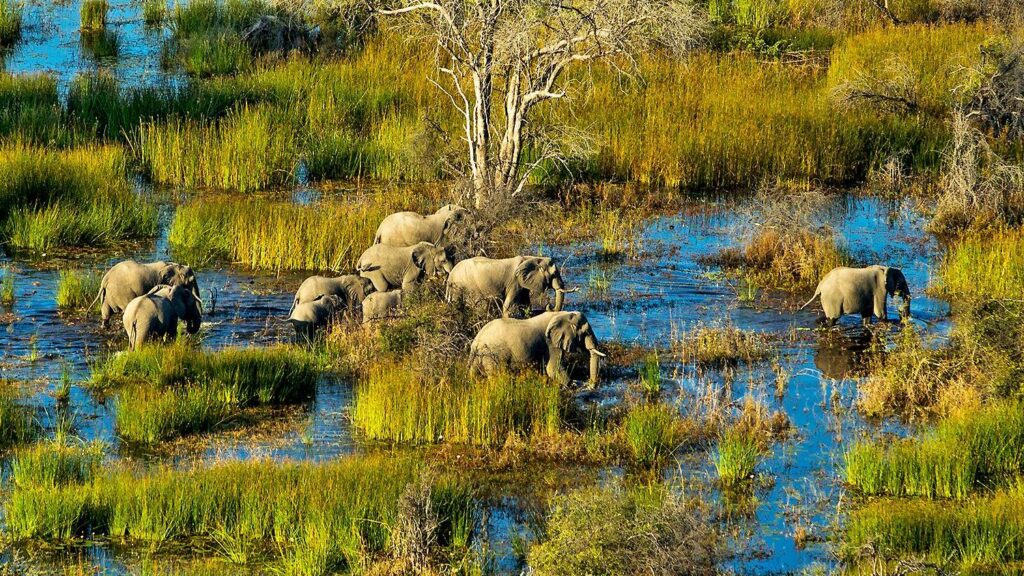
This silent approach offers an intimate, eye-level nature viewing experience, allowing you to spot tiny reed frogs, malachite kingfishers, and grazing elephants without disturbing them.
2. Guided Walking Safaris
Trade the vehicle for your own two feet on a guided walking safari. Accompanied by armed, professional guides, you will learn to track wildlife by identifying footprints, dung, and broken branches.
There is nothing more thrilling than approaching a herd of grazing zebra or tracking a herd of buffalo on foot. It shifts your perspective from a passive observer to an active participant in the African wilderness.
3. Scenic Helicopter Flights
To truly comprehend the massive scale of the Okavango Delta, you must see it from above. Helicopter flights offer a panoramic view of the winding waterways, vast floodplains, and sweeping animal migrations.
From the air, you can spot hippo paths carved into the land, elephants crossing channels, and massive buffalo herds moving in unison. Sales tactic: Book your scenic helicopter add-on today to elevate your safari experience!
4. Night Game Drives
When the sun sets, a different cast of characters emerges. Night game drives utilize spotlights to reveal the Delta’s nocturnal predators. This is your best opportunity to spot leopards, lions on the hunt, and elusive smaller cats like servals and civets.
Wildlife and Photography: What Animals Will You See?
The Okavango Delta is one of the Seven Natural Wonders of Africa, supporting an astonishing density of Botswana wildlife.
For predator photography and Big 5 enthusiasts, the Delta is an absolute paradise.
- The Big 5: The Delta is home to lions, leopards, cape buffalo, and massive herds of elephants. Rhino conservation efforts in Botswana have been incredibly successful, particularly in the Moremi Game Reserve region, making viewing the Big 5 highly possible.
- African Painted Dogs (Wild Dogs): The Okavango is one of the strongest strongholds for the highly endangered African wild dog. Witnessing a pack of these hyper-active, highly intelligent predators hunting in coordination is a once-in-a-lifetime wildlife sighting.
- Aquatic Life: The waterways are ruled by hippos and crocodiles. You will also see the agile red lechwe antelope, perfectly adapted to leaping through the shallow waters to escape predators.
For wildlife photographers, the combination of golden light, reflective water, and apex predators makes the Delta the ultimate destination for capturing award-winning African safari animals.
What is special about the Okavango Delta?
The Okavango Delta is special because it is the world’s largest inland delta—a rare geographical anomaly where the Okavango River never reaches the sea, instead emptying onto the arid Kalahari Desert in Botswana to create a lush oasis.
Designated a UNESCO World Heritage Site, its uniqueness lies in its counter-intuitive annual flood cycle: rainwater from the Angolan highlands travels over 1,200 kilometers and arrives during Botswana’s dry season (June–August), attracting massive concentrations of wildlife.
The Delta supports over 450 bird species, huge elephant herds, and rare predators like wild dogs, making it one of Earth’s most pristine wetland ecosystems.
Where to Stay: Best Okavango Delta Lodges & Camps
Accommodation in the Delta caters to every travel style, from ultra-luxurious fly-in lodges to rustic mobile camping safaris.
Here are the best options for your Okavango Delta stay:
1. Luxury Lodges
For unparalleled luxury, camps like Mombo Camp (often called the “place of plenty”) and Vumbura Plains offer world-class service, private plunge pools, and prime wildlife locations on private concessions.
These all-inclusive, fly-in options include charter flights, gourmet dining, and expert guiding. Pricing indicator: $1,000 – $3,000+ per person/night.
2. Mid-Range & Tented Camps
Camps like Khwai Tented Camp offer an authentic, classic safari feel without the luxury price tag. These camps are often located on the borders of the Moremi Game Reserve, offering excellent access to wildlife.
They feature spacious en-suite canvas tents, excellent food, and warm hospitality. Great for families and overlanders. Pricing indicator: $400 – $900 per person/night.
3. Budget-Friendly Options
If you want to experience the Delta affordably, consider joining a mobile camping safari. These involve moving campsites every few days, allowing you to explore different regions of the Delta.
You will sleep in dome tents, listen to the sounds of the bush, and have all meals cooked over an open fire. Pricing indicator: $150 – $350 per person/night.
Ready to book your stay? Compare lodge rates and availability on our booking portal [here] to secure the best price guaranteed.
Okavango Delta Safari Costs & Packages
Understanding the safari costs is crucial for international travelers. A trip to the Okavango is an investment, but the sheer quality of the wildlife and exclusivity justifies the price.
Cost Breakdown
- Accommodation: This is your largest expense, ranging from $150 to $3,000+ per night depending on luxury level.
- Park Fees: Moremi Game Reserve and private concession fees cost approximately $50 to $150 per person per day.
- Charter Flights: Most lodges require light aircraft transfers, adding roughly $300 to $600 per flight segment.
- Activities: Most lodge rates are fully inclusive of game drives, mokoros, and meals.
Land Only vs. Fly-In Safaris
A Land Only safari involves driving your own 4×4 or joining a guided overland truck. It is significantly cheaper but requires navigating rugged terrain.
A Fly-In Safari uses light aircraft to transport you directly from Maun to your lodge’s airstrip. This is highly recommended for international travelers from the USA, UK, Europe, and Asia who want to maximize wildlife viewing time rather than spending days driving.
Our Top 3 Okavango Delta Safari Packages for 2026/2027
- The Luxury Delta Fly-In (5 Days): Experience a high-end fly-in lodge with daily mokoro and helicopter safaris.
- Wildlife & Waterways Overland (8 Days): A mid-range guided 4×4 adventure covering Moremi and Khwai. Perfect for families.
- Mobile Bush Camping (6 Days): An affordable, immersive camping experience deep in the Delta.
How to Get to the Okavango Delta
Reaching the Okavango Delta is a multi-step process, but the journey is part of the adventure.
- International Flights: Fly into Sir Seretse Khama International Airport (GBE) in Gaborone, Botswana, or OR Tambo International Airport (JNB) in Johannesburg, South Africa. Travelers from the UK, Europe, Oceania, and North America typically route through Johannesburg.
- Domestic Transit: From Gaborone or JNB, take a connecting flight to Maun Airport (MUB), the gateway to the Okavango Delta. Another popular entry point is Kasane Airport (BBK), near Chobe National Park.
- Light Aircraft Transfers: From Maun, you will board a light aircraft (Cessna or Caravan) for a scenic 15 to 45-minute flight directly to your lodge’s dirt airstrip.
CRITICAL Trust Tip: Light aircraft in Botswana have strict luggage restrictions. You are strictly limited to 15kg (33 lbs) of soft-sided luggage per person. Hard-shell suitcases are strictly prohibited as they cannot fit into the small baggage pods.
Essential Packing List for an Okavango Safari
Packing correctly is vital for an enjoyable Botswana safari.
Follow this step-by-step list:
- Neutral-Colored Clothing: Pack khaki, olive, and brown clothing. Bright colors scare wildlife and attract tsetse flies.
- Layering System: Mornings on game drives are freezing (even in Africa), while middays are scorching. Bring a fleece, windbreaker, and moisture-wicking t-shirts.
- Camera Gear & Binoculars: A camera with a zoom lens (at least 200mm) and high-quality binoculars (8×42 or 10×42) are non-negotiable for predator photography.
- Soft Duffel Bags: As mentioned, only bring soft duffel bags to comply with light aircraft regulations.
- Sun Protection: High-SPF sunscreen, polarized sunglasses, and a wide-brimmed hat will protect you from the equatorial sun.
Is the Okavango Delta in Namibia?
No, the Okavango Delta is located in Botswana, specifically in the northwest region of the country, within the Kalahari Desert basin. However, the source of the Delta—the Okavango River—originates in the Angolan highlands and flows through the narrow Caprivi Strip of Namibia before crossing the border into Botswana.
The Delta’s “panhandle” begins near the Namibian border, where the river passes through Mahango Game Reserve. While the Okavango River Basin spans Angola, Namibia, and Botswana, covering approximately 125,000 square miles, the actual flooded Delta ecosystem is entirely within Botswana’s borders.
Okavango Delta Safari Frequently Asked Questions
Where is the Okavango Delta located?
The Okavango Delta is located in the northwest region of Botswana, Southern Africa. It empties into the Kalahari Desert, with the Moremi Game Reserve occupying the eastern section of the Delta.
Is the Okavango Delta safe?
Yes, the Okavango Delta is extremely safe for tourists. Botswana is a stable, democratic country with low crime rates. However, because you are in a wild environment, it is crucial to always follow the instructions of your professional safari guides and never wander alone at night.
How many days do you need in the Okavango Delta?
To get the most out of your trip, we recommend spending 3 to 5 nights in the Okavango Delta. This allows enough time to experience both land-based game drives and water-based mokoro safaris, giving the floodwaters and wildlife time to reveal themselves to you.
Can you swim in the Okavango Delta?
Generally, no, you should not swim in the Okavango Delta. The waterways are heavily populated with aggressive hippopotamuses and Nile crocodiles, which pose extreme danger. Swimming is strictly prohibited unless your specific luxury lodge has a designated, fenced-off, predator-safe swimming pool.
Conclusion: Is an Okavango Delta Safari Worth It?
The Okavango Delta is the pinnacle of the African safari. It is rare, dynamic, and utterly breathtaking.
Despite the high cost of travel and accommodation, the sheer density of wildlife, the exclusivity of the private concessions, and the unique water-based activities like the mokoro safari offer an unparalleled return on investment.
Whether you are a first-time traveler from the USA, Canada, or China, or an experienced safari-goer from the UK or Europe, the Delta delivers an experience that transcends ordinary travel.
It is a raw, beautiful, and deeply moving encounter with nature.
Don’t just dream about Africa—experience it. Contact our Botswana safari experts today to craft your custom Okavango Delta itinerary, or browse our hand-picked safari packages below.
And for the ultimate African adventure, why stop in Botswana? Combine your Delta water safari with a once-in-a-lifetime primate trek in East Africa. Book your gorilla permit through Muzungu Africa Safaris today and secure your place in the misty jungles of Uganda to witness majestic mountain gorillas in the wild.