10 Best African Safari Destinations (2026 Expert Guide)
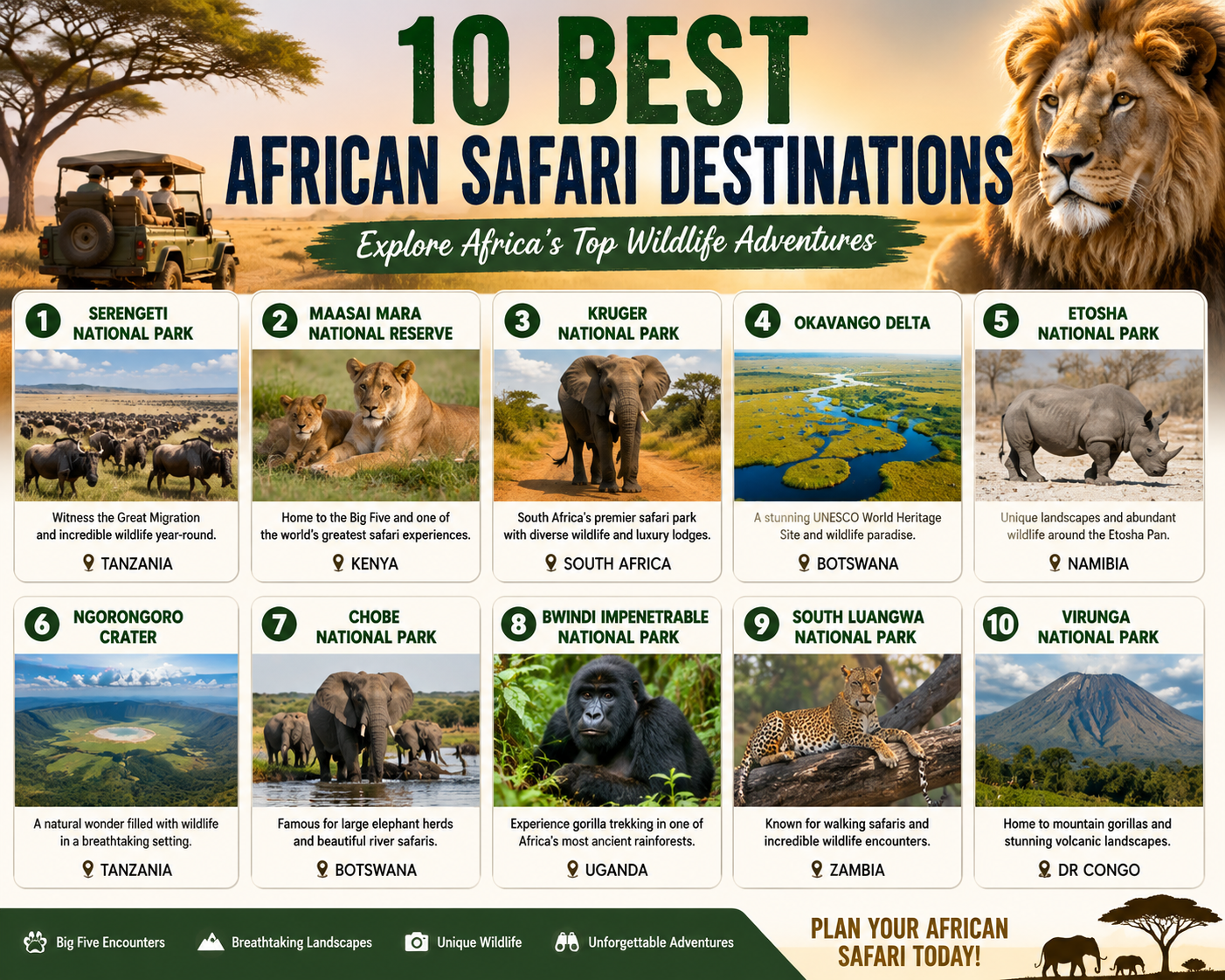
African Safari Destinations offer some of the world’s most extraordinary wildlife experiences, combining iconic national parks, diverse ecosystems, and unforgettable adventures.
Explore Uganda for mountain gorilla trekking and chimpanzee tracking, Rwanda for luxury gorilla safaris, Kenya for the Great Migration in the Maasai Mara, and Tanzania for the Serengeti National Park and Ngorongoro Crater.
Discover the Okavango Delta in Botswana, Big Five safaris in South Africa’s Kruger National Park, the desert wildlife of Namibia, and the spectacular walking safaris of Zambia and Zimbabwe.
Whether you’re planning a luxury safari, family holiday, honeymoon, or budget adventure, Africa offers incredible opportunities to see lions, elephants, leopards, rhinos, buffaloes, gorillas, and countless other wildlife species in their natural habitats. Choose the destination that matches your interests for an unforgettable African safari experience.
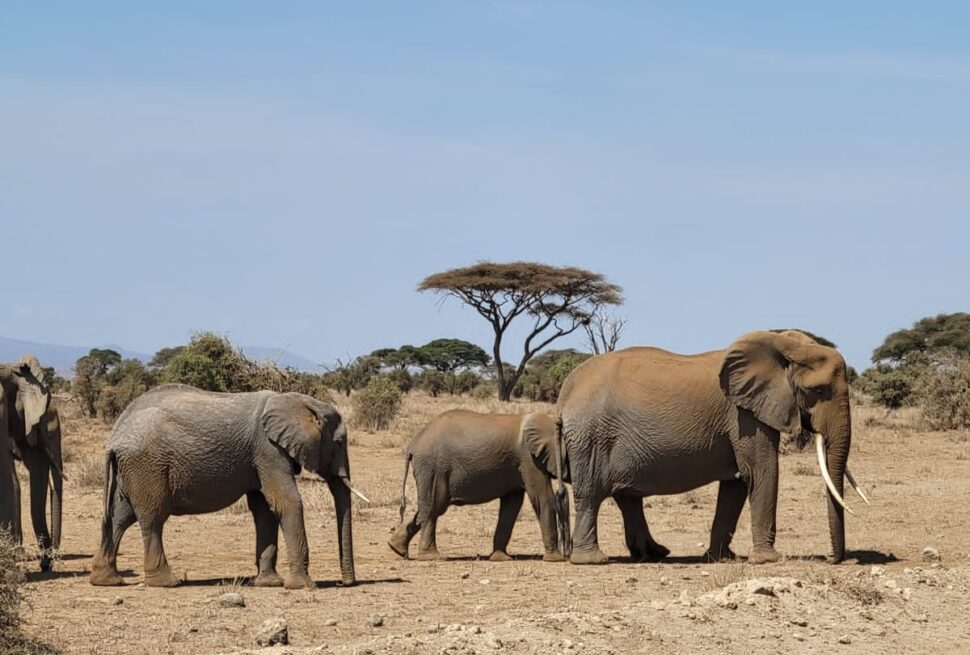
There’s a moment on every first safari that stays with you forever. Maybe it’s a lion emerging from the morning mist metres from your open-sided 4×4, or a herd of elephants crossing a river beneath a blood-orange sky.
Whatever it is, Africa stops being a destination — and becomes a feeling.
But with 54 countries and hundreds of national parks to choose from, picking between the best African safari destinations can feel overwhelming, especially when a safari is a once-in-a-lifetime investment.
That’s where this guide comes in.
Drawing on years of on-the-ground experience across East and Southern Africa, we compare the 10 best safari destinations in Africa for 2026 — where to go, when to visit, what it costs, and who each destination suits best.
Whether you’re travelling from the USA, Canada, the UK, Europe, Latin America, Asia, China, the Middle East, Oceania, or within Africa itself, you’ll leave this page with a clear plan.
Short on time? [Speak to a safari expert at Muzungu Africa Safaris →] and get a free, no-obligation itinerary.
The Best African Safari Destinations at a Glance
Quick answer: the best African safari destinations are Tanzania’s Serengeti, Kenya’s Masai Mara, South Africa’s Kruger, Botswana’s Okavango Delta, and Uganda’s Bwindi Impenetrable Forest for gorilla trekking.
Here’s how all ten compare:
Table
|
Destination |
Best for |
Best months |
From $/day (per person) |
|
Serengeti & Ngorongoro, Tanzania |
Great Migration, Big Five |
Jun–Oct |
$350 |
|
Masai Mara, Kenya |
River crossings, first-timers |
Jul–Oct |
$300 |
|
Kruger & Sabi Sand, South Africa |
Easy logistics, leopards |
May–Oct |
$400 |
|
Okavango Delta & Chobe, Botswana |
Exclusive water safaris |
Jun–Oct |
$450 |
|
Bwindi, Uganda |
Gorilla trekking |
Jun–Sep, Dec–Feb |
$450 |
|
Volcanoes NP, Rwanda |
Luxury gorilla trekking |
Jun–Sep |
$650 |
|
Etosha & Sossusvlei, Namibia |
Self-drive, desert scenery |
May–Oct |
$250 |
|
South Luangwa, Zambia |
Walking safaris |
Jun–Oct |
$400 |
|
Hwange & Victoria Falls, Zimbabwe |
Elephants, the Falls |
Mar–May (Falls); Jul–Oct (game) |
$350 |
|
Zanzibar, Tanzania |
Safari-and-beach combo |
Jun–Oct, Dec–Feb |
$150 |
1. Tanzania — Serengeti National Park & Ngorongoro Crater
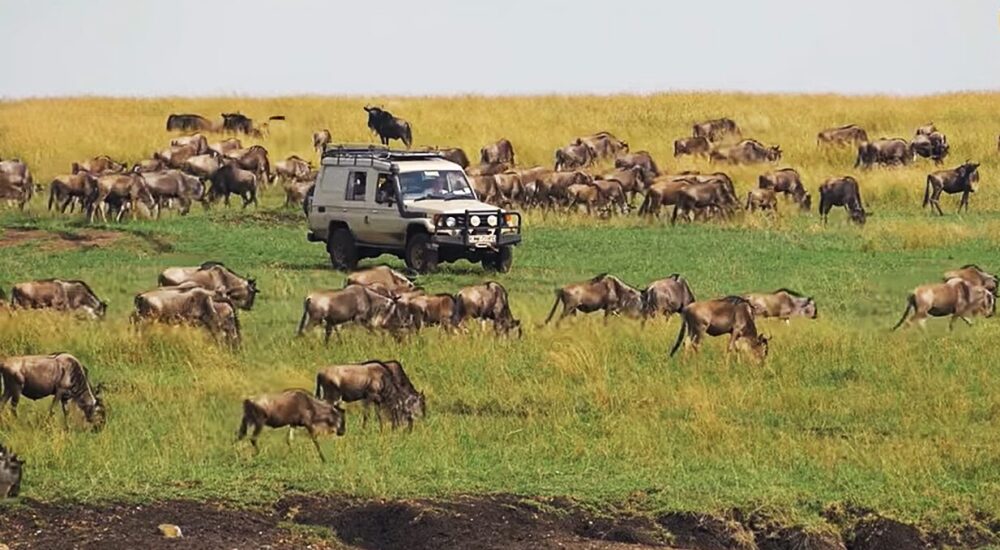
If you only take one safari in your life, take it in Tanzania. The Serengeti stages the Great Migration — over two million wildebeest, zebra and gazelle circling the plains in search of fresh grass — alongside some of the highest predator densities in Africa.
Next door, the Ngorongoro Crater, the world’s largest intact volcanic caldera, packs roughly 25,000 large animals into a single natural amphitheatre, including the rare black rhino.
Nowhere else offers such reliable Big Five viewing in such a compact area.
- Signature experience: watching the migration herds stretch to the horizon at sunrise
- Best time: June–October; late January–February for the calving season
- From: ~$350 per person per day
- Best for: first-timers, photographers, wildlife purists
2. Kenya — Masai Mara National Reserve
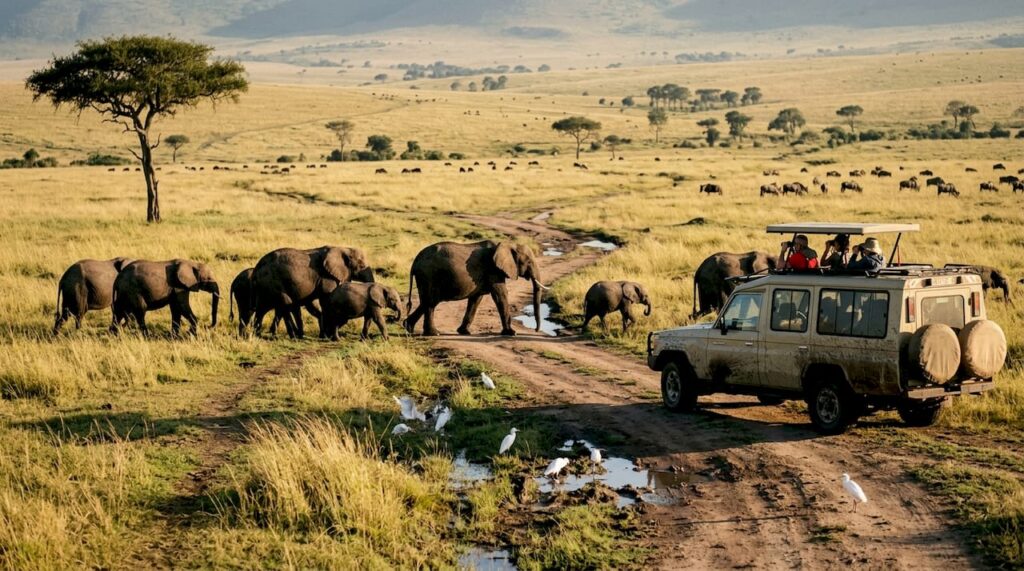
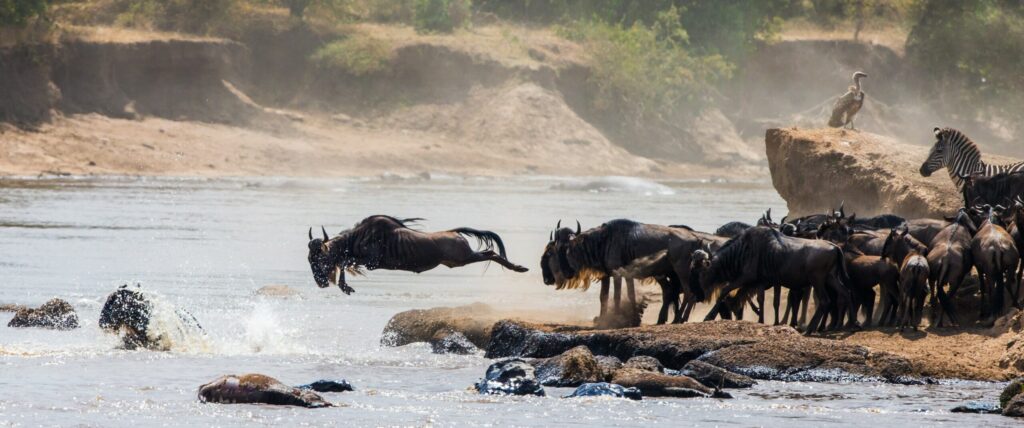
The Masai Mara is where the migration’s most dramatic chapter unfolds: the Mara River crossings of July to October, when wildebeest plunge past waiting crocodiles while lions patrol the banks.
The reserve offers one of the highest big-cat densities in Africa, sunrise hot-air balloon safaris, and genuine cultural encounters with the Maasai people.
Nairobi’s Jomo Kenyatta International Airport — with direct and one-stop flights from New York, London, Dubai, Doha, Mumbai and Guangzhou — makes the Mara one of the most accessible African safari destinations for international travellers.
- Signature experience: a balloon safari drifting over the herds at dawn, followed by a bush breakfast
- Best time: July–October
- From: ~$300 per person per day — the best-value big-game safari on this list
- Best for: first-timers, families, photographers
→ [See our 5-Day Masai Mara Migration Safari]
3. South Africa — Kruger National Park & Sabi Sand
For the easiest safari in Africa, head to Kruger National Park: nearly 20,000 km² of savannah, excellent roads perfect for self-drive safaris, and dependable Big Five sightings — lion, leopard, elephant, rhino and buffalo.
Next door, the private Sabi Sand Game Reserve delivers arguably the best leopard viewing on the continent, with off-road driving permitted for close-up sightings.
Fly into Johannesburg’s OR Tambo — Africa’s best-connected airport — and pair your safari with Cape Town and the Winelands.
Travelling with children? Nearby malaria-free reserves such as Madikwe make family safaris simple.
- Signature experience: a leopard draped over a marula branch on a Sabi Sand night drive
- Best time: May–October
- From: ~$400 per person per day (guided); self-drive for far less
- Best for: first-timers, families, independent travellers
→ [Browse our Kruger & Cape Town packages]
4. Botswana — Okavango Delta & Chobe National Park
Botswana wrote the book on exclusive safaris. The Okavango Delta, a UNESCO World Heritage Site, floods the Kalahari each year, creating a watery Eden best explored by mokoro (traditional dugout canoe) as elephants wade past your prow.
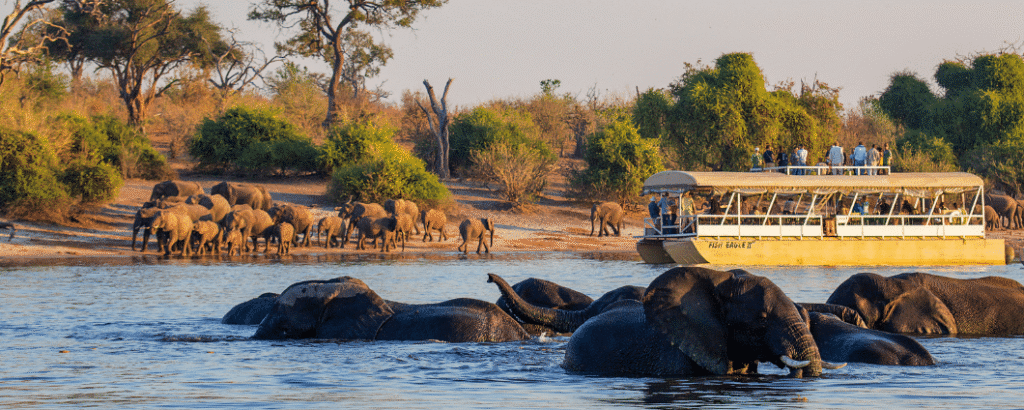
To the north, Chobe National Park protects some of the largest elephant herds on Earth, tens of thousands strong.
Botswana’s deliberate “high-value, low-volume” tourism policy means fewer vehicles, vast private concessions — and premium prices that buy genuine solitude.
- Signature experience: gliding silently through lily-covered channels on a mokoro at golden hour
- Best time: June–October
- From: ~$450 per person per day
- Best for: honeymooners, luxury travellers, repeat safari-goers
→ [View our Okavango Delta fly-in safaris]
5. Uganda — Bwindi Impenetrable National Park
Nothing on Earth compares to gorilla trekking in Uganda. Bwindi Impenetrable National Park shelters roughly half of the world’s remaining mountain gorillas, and spending one hour with a habituated family — watching a silverback shepherd his young through the mist — is widely described as the most moving wildlife encounter on the planet.
Uganda’s gorilla permit costs $800, just over half the price of Rwanda’s $1,500 permit, making Uganda the best-value gorilla trekking destination in Africa.
Add tree-climbing lions in Queen Elizabeth National Park and you have a complete safari circuit.
- Signature experience: locking eyes with a wild mountain gorilla, an arm’s length away
- Best time: June–September, December–February
- From: ~$450 per person per day, plus the $800 permit
- Best for: wildlife lovers seeking something beyond the Big Five
→ [Gorilla permits sell out months ahead — reserve yours with Muzungu Africa Safaris →]
6. Rwanda — Volcanoes National Park
Rwanda offers Africa’s most effortless — and most luxurious — gorilla experience. Volcanoes National Park lies just a 2.5-hour drive from Kigali, one of the cleanest and safest capitals on the continent, so you can land on Friday and sit with gorillas on Saturday.
Permits cost $1,500, but that premium buys superbly organised treks, ultra-luxury lodges such as Bisate and Singita Kwitonda, and the living conservation legacy of Dian Fossey.
Golden monkey tracking makes an easy second-day add-on.
- Signature experience: gorillas by morning, a Kigali rooftop dinner by night
- Best time: June–September
- From: ~$650 per person per day, plus the $1,500 permit
- Best for: time-poor luxury travellers, honeymooners
→ [Plan your Rwanda gorilla trek with our experts]
Feeling spoilt for choice? Tell us your dates and budget, and a Muzungu Africa Safaris expert will match you to the right destination — completely free. [Get my free safari quote →]
7. Namibia — Etosha National Park & Sossusvlei
Namibia is the best self-drive safari destination in Africa: safe, scenically staggering and superb value.
At Etosha National Park, game viewing revolves around floodlit waterholes set on a salt pan so vast it’s visible from space — park up, wait patiently, and the wildlife comes to you, including desert-adapted elephants and black rhinos.
Then drive south to Sossusvlei, where some of the world’s tallest dunes glow crimson at sunrise above the skeletal camelthorn trees of Deadvlei.
- Signature experience: sunrise from the crest of a 300-metre dune, then oryx at an Etosha waterhole
- Best time: May–October
- From: ~$250 per person per day
- Best for: independent travellers, landscape photographers, road-trippers
8. Zambia — South Luangwa National Park
South Luangwa is where the walking safari was born — and it remains the finest place on Earth to track wildlife on foot, guided by some of Africa’s most rigorously trained rangers.
The park also boasts extraordinary leopard densities and a fraction of the crowds of East Africa’s famous reserves.
Many camps close during the November–April rains, which only sharpens the sense of true wilderness — though a handful reopen for the “emerald season,” when the lagoons fill and crowd-free boating safaris come into their own.
- Signature experience: approaching a giraffe herd on foot, heart pounding, camera ready
- Best time: June–October
- From: ~$400 per person per day
- Best for: repeat safari-goers, serious wildlife enthusiasts, photographers
→ [See our South Luangwa walking safaris]
9. Zimbabwe — Hwange National Park & Victoria Falls
Zimbabwe delivers heavyweight wildlife without heavyweight crowds. Hwange National Park, the country’s largest, roars with elephant herds hundreds strong and is famed for guides whose training is the toughest in Africa.
A short hop away, Victoria Falls — Mosi-oa-Tunya, “The Smoke That Thunders” — crashes at full flood from March to May, while July to October brings peak game viewing and low-water adventures like white-water rafting through the Batoka Gorge.
Hwange’s pumped waterholes sustain wildlife right through the dry season, creating some of Africa’s most reliable elephant viewing from August to November.
- Signature experience: elephants at a Hwange waterhole, then the Falls’ rainbow mist on your face
- Best time: March–May for the Falls; July–October for wildlife
- From: ~$350 per person per day
- Best for: value seekers, adventurers, repeat visitors
10. Zanzibar — The Classic Safari Beach Add-On
Zanzibar isn’t a safari destination — it’s the perfect full stop after one. Just over an hour’s flight from the Serengeti, the “Spice Island” pairs UNESCO-listed Stone Town and fragrant spice farms with powder-white beaches, warm Indian Ocean water and world-class diving.
Safari-and-beach combinations are among the fastest-growing trends in African travel, and Zanzibar is the easiest way to end a dusty adventure in a hammock with a cold drink.
- Signature experience: a sunset dhow cruise off Stone Town after a week in the bush
- Best time: June–October, December–February
- From: ~$150 per person per day
- Best for: honeymooners, families, anyone with three spare days
Best Time to Visit African Safari Destinations
The best time for an African safari is the dry season — June to October — when wildlife congregates around rivers and waterholes and the vegetation thins for easy spotting. That said, “best” depends on what you want to see:
Table
|
Months |
Season |
Safari highlights |
|
January–February |
Green season / calving |
Hundreds of thousands of wildebeest calves born on the Ndutu plains; lush landscapes; superb birding; good gorilla trekking |
|
March–May |
Long rains (East Africa) / Falls flood |
The year’s lowest rates; Victoria Falls at full power; dramatic skies; some camps close |
|
June–October |
Dry season (peak) |
The best general game viewing across Africa; migration river crossings July–October; driest, easiest gorilla trails |
|
November–December |
Short rains / shoulder |
Fewer crowds, green-season value, resident game still excellent |
Peak season (June–October, Christmas–New Year): the best sightings and the highest prices — book 6–12 months ahead.
Shoulder season (November, January–March): strong wildlife at noticeably lower rates.
Low season (April–May): the cheapest safaris of the year and a photographer’s dream — but heavy rain in East Africa.
Bottom line: if it’s your first safari, go between June and October. If it’s your second, gamble on the green season — you’ll be richly rewarded.
How Much Does an African Safari Cost?
An African safari costs anywhere from $1,500 to $3,500+ per person per day, depending on comfort level, country and season:
Table
|
Safari style |
Cost per person per day |
What you get |
|
Budget |
$1,500–$3,000 |
Camping or basic lodges, group departures, self-drive options |
|
Mid-range |
$3,500–$6,000+ |
Comfortable tented camps and lodges, expert shared 4×4 guiding |
|
Luxury |
$4,500–$15,000+ |
Premium lodges, private guides, fly-in transfers, fine dining |
Budget for one-off extras too: gorilla permits ($800 in Uganda / $1,500 in Rwanda), hot-air balloon safaris (~$500), internal flights and park fees.
What drives the price: park and conservation fees, accommodation level, travel season, private versus group departures, and how much you fly versus drive.
Five proven ways to save:
- Travel in the shoulder or green season — same parks, far lower rates.
- Choose lesser-known parks such as Tarangire, South Luangwa or Hwange.
- Join a small-group departure instead of a private safari.
- Stay longer in fewer parks to cut expensive transfers.
- Book with a local operator — you’ll pay African rates, not Western overheads.
→ [Request a free, itemised quote from Muzungu Africa Safaris →]
Which African Safari Destination Is Right for You?
Still torn? Match yourself to a traveller type and the choice makes itself:
- First-timers: Kenya’s Masai Mara or South Africa’s Kruger — easy logistics and near-guaranteed Big Five sightings.
- Families: South Africa’s malaria-free reserves, or Kenya’s private conservancies with family suites and flexible drives.
- Honeymooners: a Tanzania safari plus Zanzibar, or Botswana’s intimate, lantern-lit Okavango camps.
- Photographers: the Masai Mara for big cats, South Luangwa for leopards, the Okavango for water-reflection shots.
- Budget travellers: a Namibia or Kruger self-drive, or a group camping safari in Kenya or Tanzania.
- Repeat safari-goers: Zambia, Zimbabwe or Botswana — wilder, quieter and deeper than anywhere you’ve been before.
And gorilla trekking? It belongs on every traveller’s list — and it slots effortlessly into any East African itinerary.
→ [Tell us who you’re travelling with, and we’ll design the perfect route — free →]
Planning & Booking: 7 Steps to Your Perfect Safari
- Pick your dates. Allow 5–10 days — long enough for two parks or a safari-and-beach split.
- Choose one or two countries, maximum. Distances in Africa are vast; depth beats breadth every time.
- Set a realistic budget using the cost table above, and add a 10% buffer for extras.
- Book early. Peak-season lodges and gorilla permits sell out 3–6 months in advance — and even earlier for July to October.
- Choose your operator wisely. A reputable local operator beats an overseas agent on both price and on-the-ground knowledge; always check reviews, licences and financial protection.
- Sort the paperwork. Most nationalities arrange visas online or on arrival; some countries require a yellow fever certificate; comprehensive travel insurance is essential, and your doctor may recommend malaria prophylaxis.
- Pack smart. Neutral colours, warm layers for cold morning game drives, good binoculars, and soft-sided bags for light-aircraft flights.
Frequently Asked Questions About African Safari Destinations
Which African country is best for a first safari?
Tanzania and Kenya are the best African safari countries for first-timers, thanks to the Great Migration, dense Big Five populations and well-developed tourism infrastructure. South Africa is the easiest alternative, offering excellent roads, malaria-free reserves and direct international flights.
How much does an African safari cost?
African safaris cost $1,500–$3,500+ per person per day. Budget camping safaris start around $1,500–$3,000+, comfortable mid-range safaris average $3,500–$6,000+, and luxury safaris run from $800 upwards. Gorilla permits cost an additional $800 in Uganda or $1,500 in Rwanda.
When is the best time to go on an African safari?
June to October — the dry season — is the best time to visit most African safari destinations, as animals concentrate around water sources. Visit in January–February for the Serengeti calving season, and July–October for the Mara River crossings.
Is an African safari safe?
Yes. Millions of travellers enjoy safe safaris every year. Wildlife encounters are managed by trained professional guides, and Africa’s main safari countries have mature, well-regulated tourism industries. Follow your guide’s instructions, take normal precautions in cities, and buy comprehensive travel insurance.
How many days do you need for an African safari?
Plan for 5–10 days. Spend at least three or four nights in one major park, or split seven to ten days between two parks or a safari-and-beach combination. Add two to three days if you’re including gorilla trekking.
Kenya or Tanzania: which is better for safari?
Both are exceptional. Tanzania offers the vast Serengeti and the January–February calving season, while Kenya’s Masai Mara hosts the dramatic July–October river crossings and is generally cheaper and easier to reach. With ten days, you can comfortably combine both in one trip.
The Bottom Line — and Your Next Step
Africa’s greatest safari destinations — from the Serengeti’s endless plains to Bwindi’s mist-draped mountains — are closer and more affordable than most travellers ever imagine. The only real mistake is waiting.
Ready to Book Your Gorilla Permit?
Mountain gorilla permits are strictly limited to eight visitors per gorilla family per day, and peak-season dates sell out months in advance.
At Muzungu Africa Safaris, we secure your $800 Uganda gorilla permit — or Rwanda’s $1,500 permit — and build your complete safari around it: hand-picked lodges, private 4×4 transport, expert local guides and every border crossing handled for you.
Whether you’re flying from New York, London, Toronto, Dubai, Singapore, Beijing, Sydney or São Paulo — or travelling from within Africa — your gorilla encounter begins with a single message.
[Book your gorilla permit with Muzungu Africa Safaris today →] — or [request your free, no-obligation safari quote]. The gorillas are waiting.