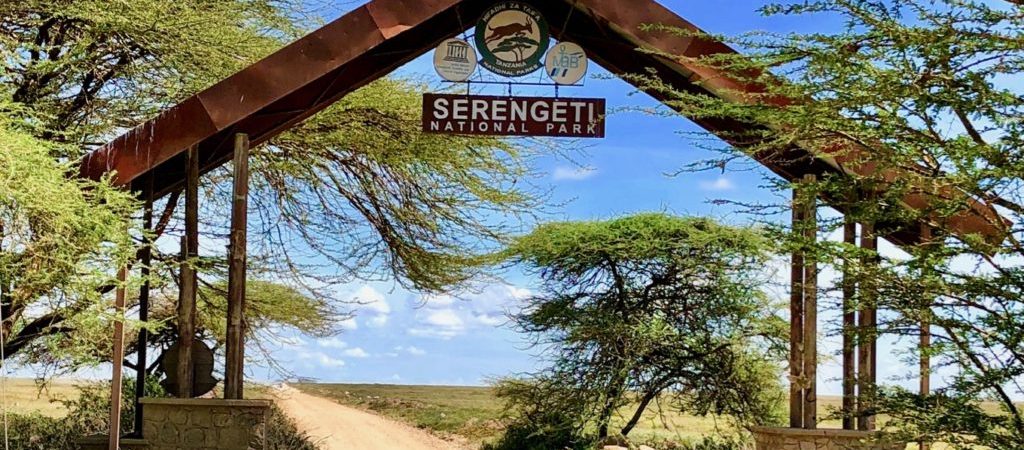
Serengeti National Park Tanzania: The Ultimate Safari Guide for 2026
Why Serengeti National Park is a Must-Visit
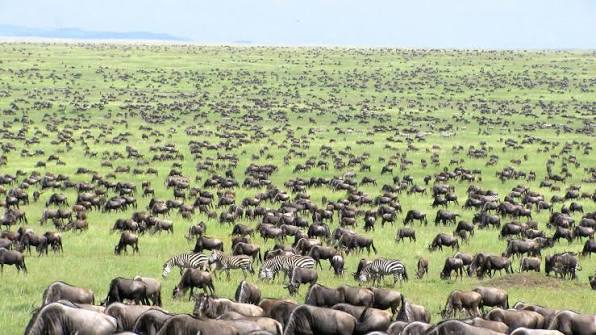
Imagine standing on the edge of an endless, golden savanna as a herd of over a million wildebeest thunders past, kicking up dust against the backdrop of a fiery African sunset.
This is Serengeti National Park Tanzania—the undisputed crown jewel of African safaris.
A UNESCO World Heritage site, the Serengeti boasts a global reputation for hosting the most spectacular wildlife show on earth: the Great Migration.
It is also one of the few places on the planet where you can reliably spot the Big Five—lion, leopard, elephant, buffalo, and rhino—in a single day.
Whether you are a first-time visitor from the USA or UK, a seasoned naturalist from Europe or Canada, or an emerging traveler from Asia, China, Oceania, Latin America, or the Middle East, the Serengeti delivers an unmatched, life-changing experience.
To navigate this vast wilderness seamlessly, Muzungu Africa Safaris is your trusted local partner, crafting bespoke, hassle-free journeys into the heart of wild Africa.
Where is Serengeti National Park? Map
Understanding the Serengeti location is crucial for planning your trip. The park is located in northern Tanzania and shares its northern border with Kenya’s Maasai Mara National Reserve.
Covering a massive area of approximately 14,750 km², the park is divided into three key ecological zones:
- Central Serengeti (Seronera): The year-round hub for wildlife viewing.
- Western Corridor: Grumeti River region, famous for dramatic crocodile crossings.
- Northern Serengeti: The Mara River region, peak territory for migration river crossings.
- Southern Plains: Ndutu region, the calving grounds for wildebeest.
How to get to Serengeti: Most international travelers fly into Kilimanjaro International Airport (JRO), near Arusha.
From there, you can take a domestic flight to one of the park’s many airstrips (like Seronera Airstrip) or embark on a scenic 4×4 drive.
Reviewing a Serengeti map before your trip helps visualize the planning process.
Best Time to Visit Serengeti National Park
Knowing the best time to visit Serengeti depends entirely on what you want to see.
1. The Great Migration Calendar
The Great Migration months are a year-round cycle, but the action shifts constantly:
- January–March: Calving season in the Southern Serengeti. Over 500,000 wildebeest calves are born daily, attracting massive predator action.
- April–May: The Green season. Fewer crowds, lower rates, and lush, photographic landscapes.
- June–July: The herds move north into the Western Corridor. This is when the first grueling river crossings begin.
- August–October: Peak drama in the Northern Serengeti. Millions of animals attempt the perilous Mara River crossings, braving giant Nile crocodiles.
- November–December: Short rains return. The herds move southward, offering excellent photography and birding.
2. Dry vs. Wet Season Safari
- Dry Season (June–October): The Serengeti dry season is peak safari time. Vegetation is thin, and animals congregate around shrinking water sources, making wildlife visibility exceptional.
- Wet Season (November–May): The landscape transforms into a vibrant green paradise. It is budget-friendly, prime birding season (migratory birds arrive from Europe), and ideal for avoiding crowds.
Contact Muzungu Africa Safaris to align your travel dates with the Migration!]
Wildlife & Safari Experiences in Serengeti
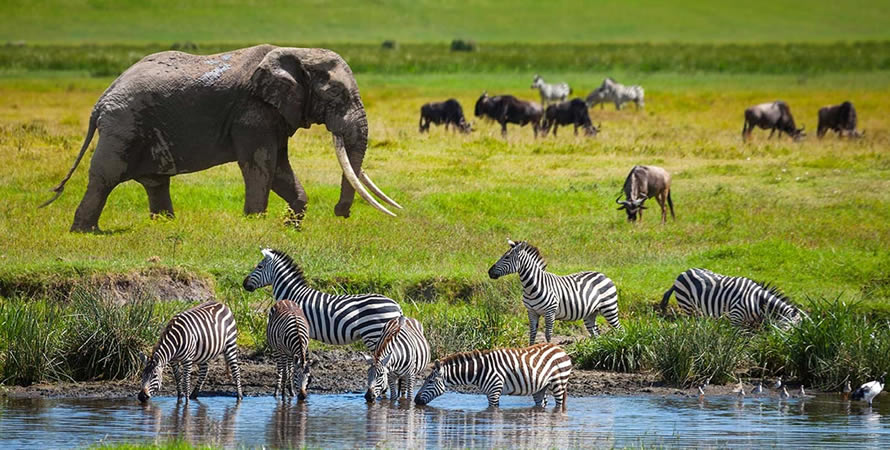
The sheer volume of Serengeti wildlife is staggering.
Here is what awaits you:
1. The Big Five Serengeti
The Serengeti is a stronghold for the Big Five Serengeti. You will easily spot massive herds of elephants, dense populations of lions, solitary leopards, and formidable buffalo herds.
Rhinos are rare and mostly found in the remote Moru Kopjes.
2. The Great Migration
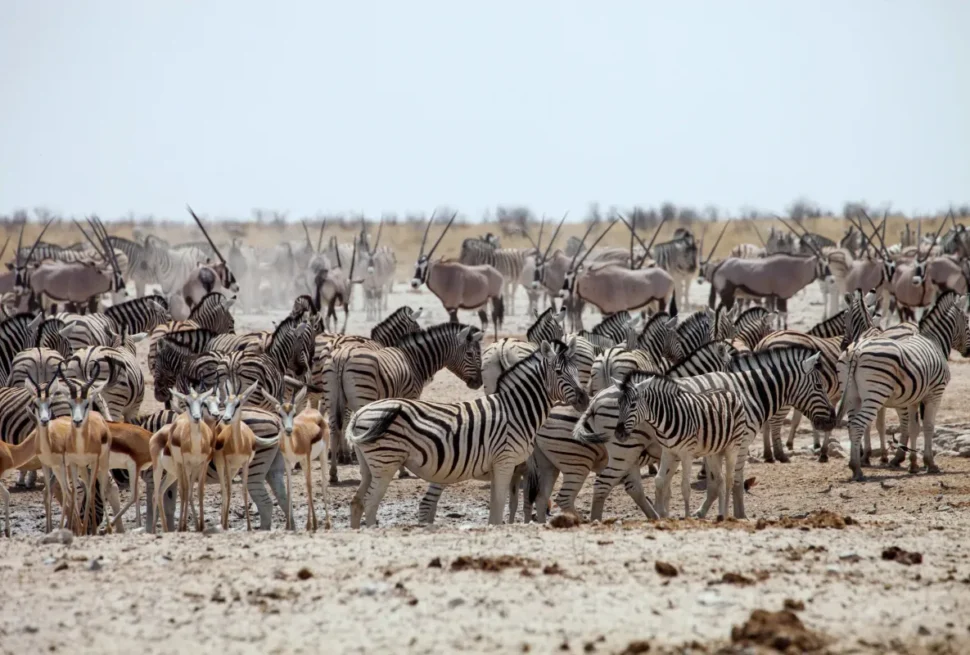
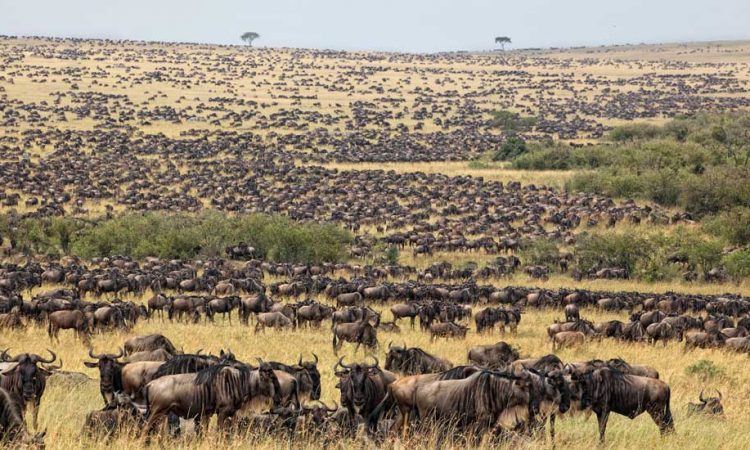
This is the world’s largest overland migration, featuring 1.5+ million wildebeest, alongside hundreds of thousands of zebras and gazelles.
The highlight is the Mara River crossings in the north, where panicked herds plunge into crocodile-infested waters.
3. Other Wildlife Highlights
Beyond the herds, expect to see cheetahs utilizing the open plains for high-speed hunts, spotted hyenas, towering giraffes, wallowing hippos, and massive Nile crocodiles.
The park is also a birder’s paradise with over 500 bird species, including the lilac-breasted roller and martial eagle.
4. Unique Serengeti Safari Activities
To maximize your Serengeti safari activities, consider these options:
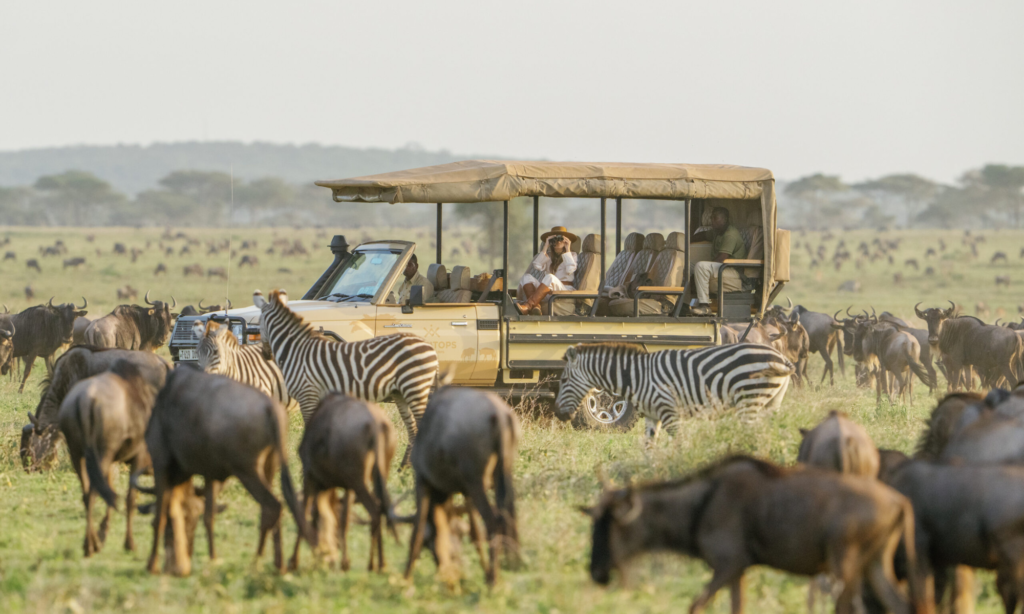
- Game Drives: Morning and evening game drives in custom 4×4 safari vehicles.
- Hot Air Balloon Serengeti: Float silently over the plains at dawn, followed by a champagne bush breakfast.
- Walking Safaris: Explore the bush on foot with an armed ranger in designated areas.
- Cultural Visits: Engage with the indigenous Maasai people in their traditional bomas (villages).
Serengeti Safari Costs & Park Fees 2026
Planning your budget requires understanding the Serengeti safari cost 2026.
Here is a transparent breakdown to help you prepare.
1. Park Entry Fees (Non-Residents)
The Tanzania National Parks Authority (TANAPA) regulates Serengeti park fees:
- Peak Season (May 16 – Mar 14): $70 per adult per day (includes 18% VAT).
- Low Season (Mar 15 – May 15): $60 per adult per day.
- Children (5–15 years): $23 per day.
- Children under 5: Free.
2. Concession & Vehicle Fees
- Concession Fees: If you stay inside the park boundaries, expect to pay $70 per adult per night, depending on the season.
- Vehicle Fees: $30–$40 per private safari vehicle per day (valid for 24 hours).
3. Sample 4-Day Safari Budget (Mid-Range)
How much does a Serengeti safari cost? A standard 4-day mid-range safari (including park fees, accommodation, meals, transport, and a professional guide) typically ranges from $1,500 to $1,700 per person, excluding international flights.
Contact Muzungu Africa Safaris for a customized, all-inclusive quote with zero hidden fees.]
Where to Stay: Lodges & Camps in Serengeti
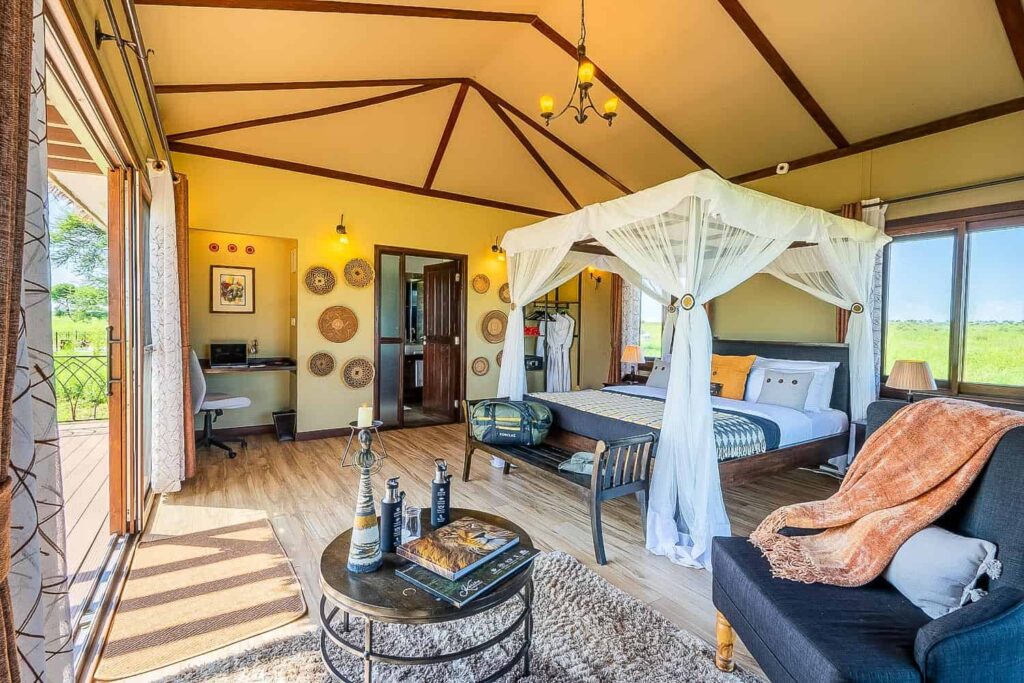
Choosing where to stay in Serengeti depends on the season and your budget.
‘Here are the top zones:
- Central Serengeti (Seronera):
- Best for: Year-round wildlife viewing and Big Five sightings.
- Best lodges in Serengeti: Seronera Wildlife Lodge, Kubu Kubu Tented Lodge.
- Western Corridor:
- Best for: Migration viewing (June–July) and riverine forests.
- Serengeti accommodation: Grumeti Serengeti Tented Camp.
- Northern Serengeti:
- Best for: Mara River crossings (August–October).
- Top Lodges: Four Seasons Serengeti, Migration Camp.
- Southern Plains:
- Best for: Calving season (January–March) and landscape photography.
- Top Lodges: Ndutu Camp, Kusini Migration Camp.
Muzungu Africa Safaris partners with top-rated lodges for seamless bookings and exclusive rates.]
Sample Serengeti Safari Itineraries
To capture the true essence of the park, here are ready-to-book Serengeti safari itinerary options:
4-Day Serengeti Express
- Day 1: Fly/drive from Arusha to Central Serengeti. Afternoon game drive.
- Day 2–3: Full-day game drives in Central Serengeti and Western Corridor.
- Day 4: Morning game drive, then return to Arusha.
- Ideal for travelers with limited time wanting a classic 4 day Serengeti safari.
Discover more about this tour here.
6-Day Great Migration Safari Package
- Day 1–2: Tarangire National Park & Ngorongoro Crater.
- Day 3–5: Serengeti National Park (following the exact migration route based on the season).
- Day 6: Game drive en route to Lake Manyara, then return to Arusha.
- The ultimate Great Migration safari package.
Discover more about this tour here.
8-Day Luxury Serengeti & Zanzibar
- Day 1–5: Fly into the Serengeti for 5 days of luxury lodge stays, hot air balloon rides, and private game drives.
- Day 6–8: Fly to Zanzibar for a 3-day beach extension to unwind on white-sand beaches.
- Perfect for honeymooners and luxury travelers.
Discover more about this tour here.
Customize your itinerary with Muzungu Africa Safaris—get a free quote today!]
What to Pack for a Serengeti Safari
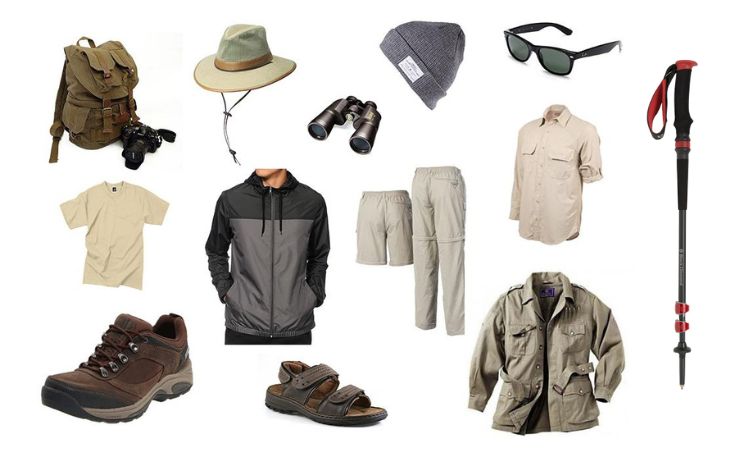
Packing smart is essential. Here is your ultimate Serengeti safari packing list:
- Clothing: Stick to neutral colors (khaki, olive, brown). Pack layers for cool mornings and hot afternoons. Avoid dark blue (attracts tsetse flies) and bright colors.
- Footwear: Sturdy walking shoes for game drives and sandals for relaxing at camp.
- Gear: High-quality binoculars (8×42 or 10×42), a camera with a telephoto lens (200mm+), and a high-capacity power bank.
- Health: Malaria prophylaxis, broad-spectrum sunscreen, and strong insect repellent (DEET-based).
- Documents: Passport (valid for 6+ months), Tanzania visa, and comprehensive travel insurance.
Knowing what to wear on Serengeti safari ensures you remain comfortable and focused on the wildlife.
Why Choose Muzungu Africa Safaris?
When searching for the best Serengeti safari company, local expertise makes all the difference.
- Local Expertise: We are born and raised in East Africa. Our guides know the Serengeti’s hidden corners better than anyone.
- Personalized Itineraries: We don’t do cookie-cutter trips. We tailor every safari to your budget, physical abilities, and wildlife interests.
- Transparent Pricing: No hidden fees. What we quote is exactly what you pay. Check our Muzungu Africa Safaris reviews for proof of our integrity.
- Eco-Conscious Tourism: We practice Leave No Trace principles and support local Maasai communities through revenue sharing.
- 24/7 Support: From the moment you land to the moment you fly home, our team is on call around the clock.
Ready to experience the Serengeti? Contact Muzungu Africa Safaris today to book Serengeti safari packages.]
Frequently Asked Questions (FAQs)
Q: How many days do I need in Serengeti?
A: To truly experience the park’s diverse regions and wildlife without rushing, we recommend a minimum of 3 to 4 nights. This allows time for Central Serengeti and a visit to either the Western or Northern zones.
Q: Is Serengeti safe for families?
A: Yes, the Serengeti is incredibly safe for families. We provide private guides, family-friendly lodges with pools, and tailored game drive schedules to keep children engaged and comfortable.
Q: Can I see the Great Migration year-round?
A: Yes! The migration is a continuous, year-round cycle. However, the location changes. You must plan your travel dates based on where the herds will be (e.g., South in Feb, North in Aug) to witness the best action.
Q: What’s included in a Serengeti safari package?
A: Our all-inclusive packages cover park fees, accommodation, all meals, drinking water, game drives in a 4×4 safari vehicle, and an English-speaking guide. International flights and tips are typically excluded.
Q: How far in advance should I book?
A: For peak season (July–October), book 6 to 12 months in advance to secure the best lodges. For the low/green season, 3 to 6 months is sufficient.
The Ultimate East African Adventure Awaits
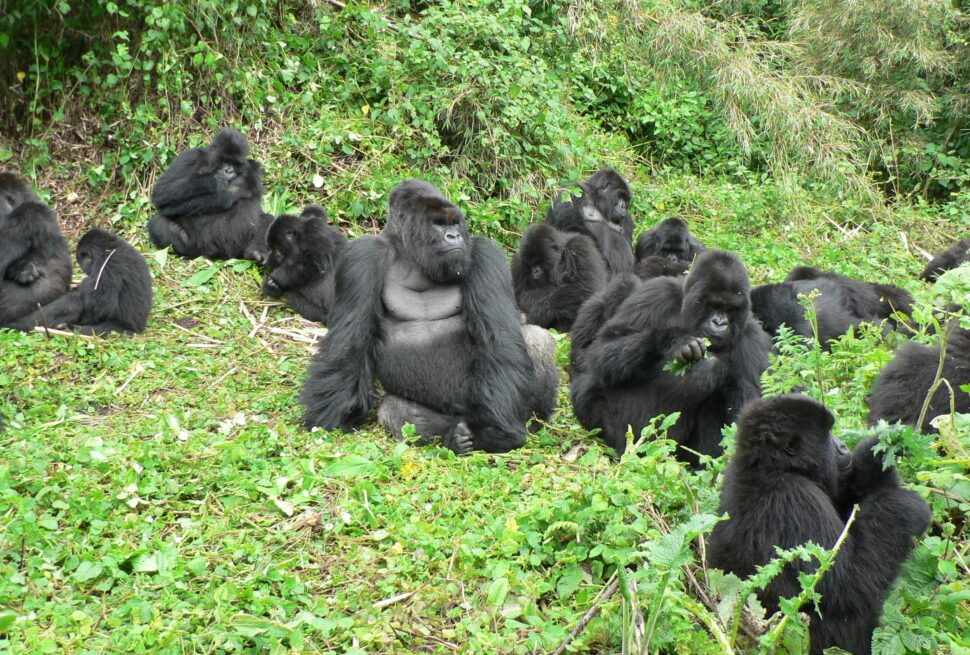
While the endless plains of the Serengeti offer the world’s greatest terrestrial wildlife spectacle, no East African adventure is truly complete without meeting the gentle giants of the forest.
Combine your Tanzanian safari with the ultimate primate trek. Book your gorilla permit through Muzungu Africa Safaris today and witness the majestic mountain gorillas in the wild!