The Ultimate African Wildlife Safari Guide (2026): Best Destinations, Costs & Big 5 Tips
Few experiences on earth rival the primal thrill of an African wildlife safari—the golden light of dawn breaking over the savannah, a lion’s resonant roar echoing through the darkness, and a million wildebeest thundering across the Mara River.
Whether you are a first-time traveler from the USA or Canada, a seasoned explorer from the UK or Europe, or an adventure seeker from Asia, China, Oceania, or the Middle East, this comprehensive African safari guide covers everything you need to plan the journey of a lifetime.
In the following sections, you will learn about the best safari destinations, safari costs and pricing tiers, best seasons to travel, Big Five wildlife viewing tips, and a complete safari packing list.
Dreaming of Africa? [Get a free custom safari quote from our experts →]
Related Read | African Safari
What is an African Wildlife Safari?
An African wildlife safari is a guided journey into Africa’s national parks and game reserves to observe wild animals in their natural habitat.
The word “safari” derives from the Swahili word for “journey,” and modern safaris range from vehicle-based game drives to immersive walking safaris and exclusive fly-in safaris that whisk you directly to remote luxury lodges via light aircraft.
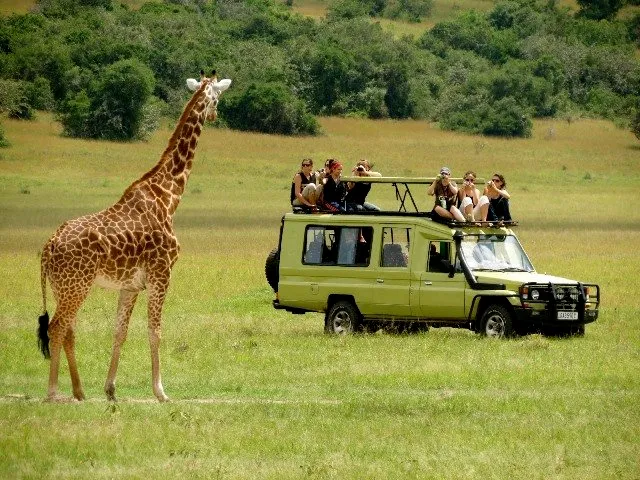
A game drive is the most common safari activity—typically conducted in open 4×4 vehicles at dawn and dusk when predators are most active.
A walking safari, by contrast, strips away the buffer of a vehicle, allowing you to track animals on foot, read spoor, and experience the bush at ground level.
A fly-in safari connects multiple remote camps via chartered light aircraft, maximizing your time in the wilderness rather than on bumpy roads.
Beyond wildlife, an authentic Big Five safari incorporates rich cultural encounters.
The Maasai people of Kenya and Tanzania share their ancestral lands with the great herds, while the San people of the Kalahari offer ancient tracking knowledge passed down through millennia.
Engaging with these communities transforms a wildlife trip into a profound cultural journey.
Want to combine wildlife and culture? [Explore our Maasai Mara cultural safari packages →]
Best African Wildlife Safari Destinations Compared
Choosing the right destination is the single most important decision in planning your African wildlife safari.
The best safari destinations in Africa span two distinct regions: East Africa (Kenya, Tanzania, Uganda, Rwanda) and Southern Africa (South Africa, Botswana, Namibia, Zambia, Zimbabwe). Each offers unique landscapes, wildlife densities, and price points.
1. Serengeti National Park, Tanzania — The Great Migration
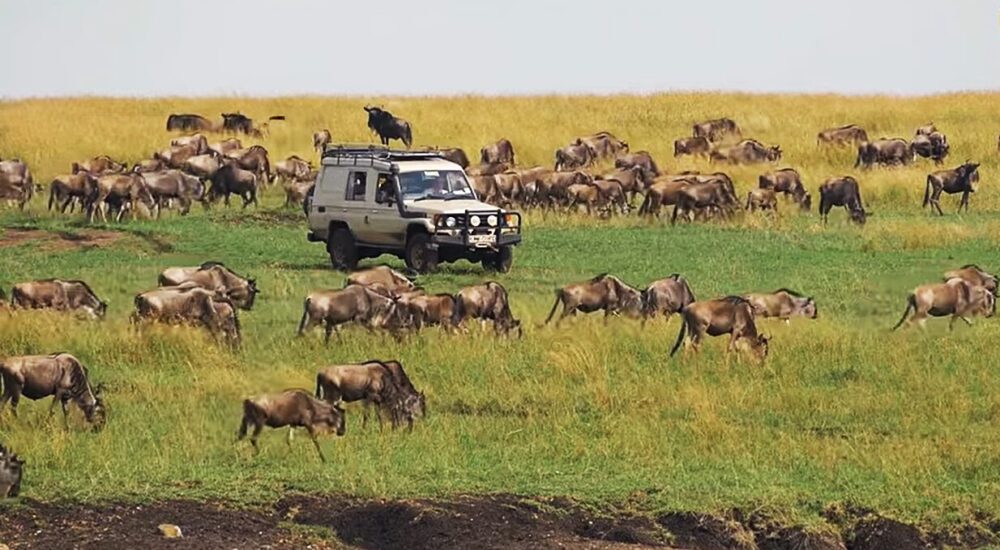
The Serengeti National Park in Tanzania is the crown jewel of African safaris, home to the legendary Great Migration—an annual clockwise movement of over 1.5 million wildebeest, accompanied by 250,000 zebras and thousands of gazelles, across the Serengeti-Mara ecosystem.
This colossal herd follows the rains in search of fresh grazing, drawing relentless predators in its wake. The Serengeti’s endless plains offer some of the most dramatic predator photography on earth, with lion prides, cheetah coalitions, and leopard ambushes occurring year-round.
The river crossings, where wildebeest hurl themselves into crocodile-infested waters, are the planet’s most awe-inspiring wildlife spectacle.
2. Masai Mara National Reserve, Kenya — Densest Wildlife
The Masai Mara National Reserve in Kenya boasts the highest concentration of big cats in Africa.
Connected to the Serengeti across the border, the Mara is where the Great Migration herds arrive between July and October, creating the famous Mara River crossings—a chaotic, adrenaline-charged spectacle where thousands of wildebeest plunge into crocodile-infested waters.
The reserve’s relatively compact size (approximately 1,510 square kilometers) means wildlife sightings are virtually guaranteed, making it ideal for first-time safari-goers from the USA, UK, and Europe seeking maximum impact in minimum time.
3. Kruger National Park, South Africa — Best for Self-Drive
Kruger National Park in South Africa is the continent’s most accessible and affordable Big Five destination. Spanning nearly 20,000 square kilometers, Kruger supports extraordinary biodiversity—including the densest population of rhinos in Africa.
Unlike East African reserves that require fly-in access, Kruger offers an extensive road network enabling self-drive safaris, dramatically reducing costs.
Rest camps within the park provide comfortable accommodation, and the well-maintained infrastructure makes this the premier choice for budget-conscious travelers and families from Latin America, Asia, and Oceania seeking independence and flexibility.
4. Okavango Delta, Botswana — Water Safari Paradise
The Okavango Delta in Botswana is a UNESCO World Heritage Site and the world’s largest inland delta—a unique ecosystem where floodwaters from the Angolan highlands create a lush wetland oasis in the Kalahari Desert.
The signature experience here is the mokoro safari: silently gliding through crystal-clear channels in a traditional dugout canoe, eye-level with reedbucks, hippos, and elephants.
Botswana’s low-impact, high-value tourism model means fewer crowds and exclusive, luxury-focused camps. This is the ultimate destination for travelers seeking an intimate, uncrowded, and utterly unique water-based safari.
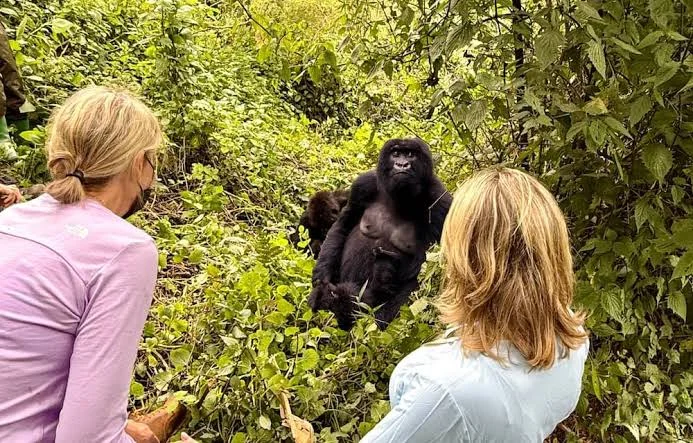
5. Bwindi Impenetrable Forest, Uganda — Gorilla Trekking
Bwindi Impenetrable Forest National Park in Uganda is the premier destination for mountain gorilla trekking—one of the most profound wildlife encounters on earth.
Home to roughly half of the world’s remaining mountain gorillas (approximately 459 individuals in Bwindi), this ancient rainforest offers visitors the rare privilege of spending one hour with a habituated gorilla family.
A gorilla permit in Uganda costs $800 for foreign non-residents, compared to $1,500 in Rwanda, making Uganda the most accessible option for this bucket-list experience. This is the ultimate primate safari, combining adrenaline, conservation, and raw emotion.
Destination Comparison Table
Ready to witness the Great Migration? [Book our 7-Day Serengeti Safari Package →]
Related Read | African Safari | Serengeti National Park | Okavango Delta | Kruger National Park | Bwindi Impenetrable National Park | Masai Mara National Reserve
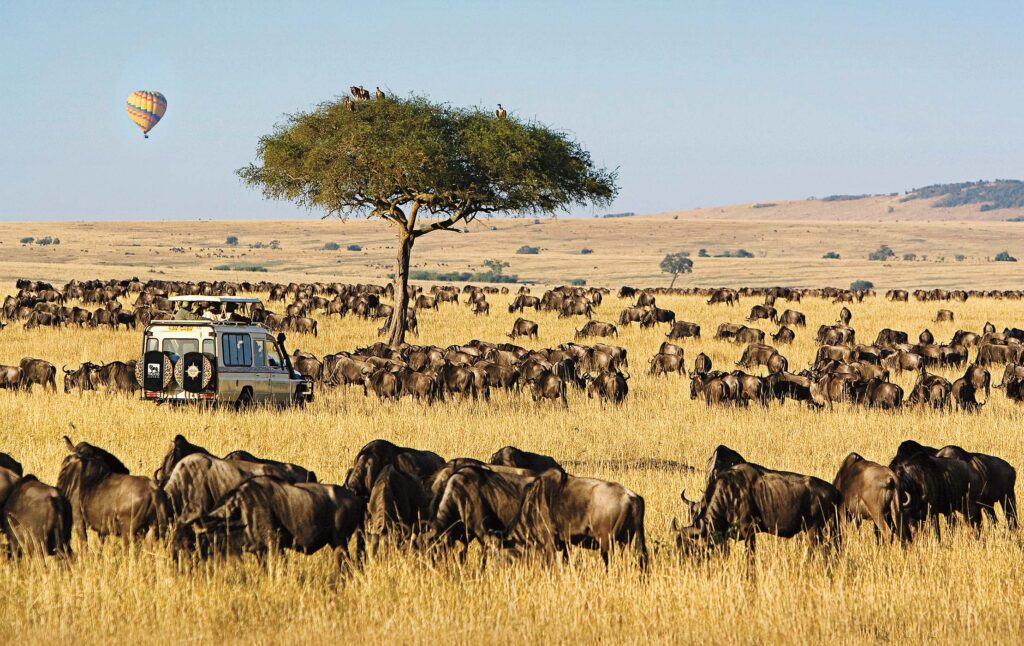
Best Time to Go on an African Wildlife Safari
Timing is critical for maximizing wildlife sightings and managing your safari budget.
The best time for an African safari depends on whether you prioritize the Great Migration, predator photography, birding, or lower rates. Africa’s safari seasons are governed by rainfall patterns, which differ between East Africa and Southern Africa.
1. Dry Season (June to October) — Peak Game Viewing
The dry season from June to October is universally considered the best time for an African wildlife safari. As the bush dries out, vegetation thins dramatically, making animals easier to spot.
Water sources become scarce, forcing wildlife to concentrate around remaining rivers and waterholes—creating predictable, high-density viewing opportunities.
In East Africa, this period coincides with the Great Migration’s arrival in the Masai Mara, peaking with the dramatic Mara River crossings in July and August.
Southern Africa’s Kruger and Okavango also peak during these months, with the Okavango’s floodwaters reaching maximum depth.
Expect warm, sunny days with minimal rainfall and cool mornings (pack a fleece for dawn game drives).
This is peak safari season, meaning premium pricing—accommodation rates can be 30–50% higher than the green season, and popular camps book out 6–12 months in advance.
International travelers from the USA, UK, Europe, Canada, and China should plan and book early to secure preferred lodges.
2. Green Season (November to April) — Lush Landscapes & Birding
The green season (also called the wet or emerald season) transforms the savannah into a verdant paradise.
From November to April, afternoon thunderstorms nourish the land, and a wave of new life arrives—wildebeest calves hit the ground running in the Serengeti’s southern plains (January–February), attracting opportunistic predators in dramatic hunting scenes.
Migratory birds arrive in their millions, making this the best time for birding, with over 450 species recorded in the Okavango Delta alone.
For predator photography, the green season offers moody skies, vibrant green backdrops, and abundant action as predators exploit the calving season.
The trade-off is thicker vegetation, making some animals harder to spot, and occasional rain that can render dirt roads impassable.
However, accommodation rates drop 30–40%, crowds thin, and the photographic opportunities are extraordinary. This is ideal for budget-conscious travelers from Latin America, Asia, and the Middle East.
Season Quick Reference Table
Not sure when to go? [Tell us your travel dates and we’ll find the best deals →]
The Big Five & Other Iconic African Wildlife
The term “Big Five” was coined by hunters to describe the five most dangerous African animals to track on foot.
Today, spotting all five—lion, leopard, elephant, rhinoceros, and Cape buffalo—is the hallmark of a complete African wildlife safari.
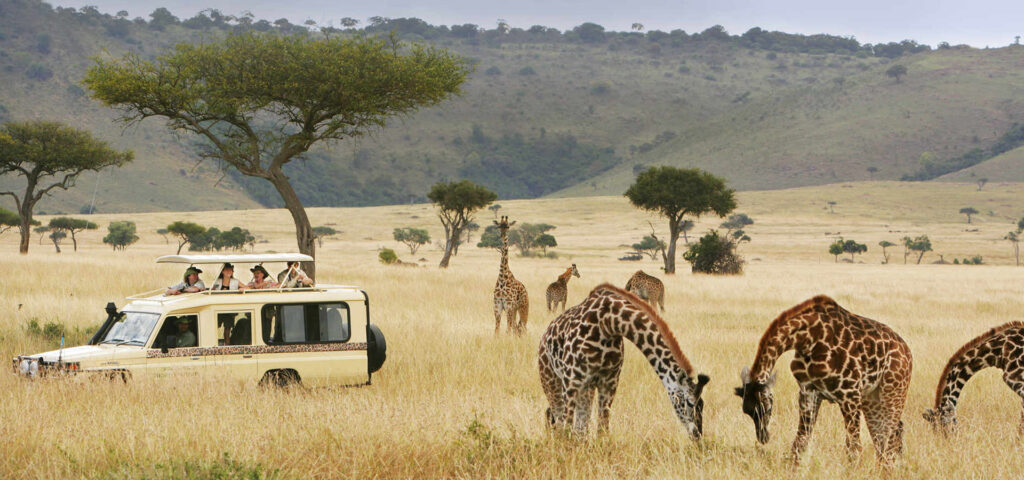
Beyond the Big Five, Africa’s safari animals include cheetahs, wild dogs, giraffes, hippos, and the millions of wildebeest and zebras of the Great Migration.
Here is where to find each icon, plus expert predator photography tips.
1. Lions
Lions are the apex predators of the African savannah and the most sought-after sighting on any Big Five safari. The Masai Mara in Kenya and the Serengeti in Tanzania offer the highest density of prides, particularly in the Mara’s Musiara Marsh and the Serengeti’s Seronera Valley.
Look for lions at dawn, when prides are often still active from night hunts, or resting under acacia trees during the heat of the day. For dramatic shots, use a fast shutter speed (1/1000s or faster) to freeze action during a hunt or cub play.
2. Leopards
Leopards are the most elusive of the Big Five—nocturnal, solitary, and masterfully camouflaged.
Your best chances are in Sabi Sands Game Reserve (bordering Kruger in South Africa), where leopards are famously habituated to vehicles, and South Luangwa National Park in Zambia, renowned for night drives that reveal these spotted cats on the prowl.
Photography tip: Leopards often drag kills into trees; scan low-hanging branches during golden hour for a frame-worthy shot.
3. Elephants
Elephants are abundant across eastern and southern Africa, but two destinations deliver unforgettable encounters.
Chobe National Park in Botswana hosts the world’s largest elephant population—estimated at over 120,000 individuals—creating scenes of massive herds drinking and bathing along the Chobe River.
Amboseli National Park in Kenya offers the iconic image of elephants grazing against the backdrop of snow-capped Mount Kilimanjaro. For photography, use a wide-angle lens to capture the herd within its landscape.
4. Rhinoceros
Rhinoceroses are the rarest Big Five sighting, with both black and white rhinos critically endangered due to poaching.
The best viewing opportunities are in Lewa Wildlife Conservancy in Kenya, a pioneering rhino sanctuary with exceptional protection and high sighting success, and Etosha National Park in Namibia, where rhinos congregate at illuminated waterholes at night.
Always use a long lens (400mm+) and keep your distance—rhinos have poor eyesight but excellent hearing and can charge unpredictably.
5. Cape Buffalo
Cape buffalo are the most underestimated Big Five member—bad-tempered, powerful, and responsible for more hunter fatalities than any other African mammal.
They are abundant in Kruger National Park and the Serengeti, often seen in massive herds numbering hundreds.
Large herds offer excellent photographic opportunities; isolate a single subject using a shallow depth of field to emphasize their menacing horns and weathered expressions.
6. Beyond the Big 5
Africa’s safari animals extend far beyond the Big Five. Cheetahs—the fastest land animals—sprint across the Serengeti’s short-grass plains.
African wild dogs (painted wolves) are the continent’s most endangered carnivore and a Holy Grail sighting, best found in Botswana’s Okavango Delta and Zimbabwe’s Mana Pools.
Giraffes stride elegantly across the savannah, hippos and Nile crocodiles rule the waterways, and the Great Migration brings over 2 million wildebeest and zebra surging across the Serengeti-Mara ecosystem each year.
For predator photography, always prioritize golden-hour light and patience—Africa rewards those who wait.
Want a guaranteed Big Five experience? [Browse our Big Five safari packages →]
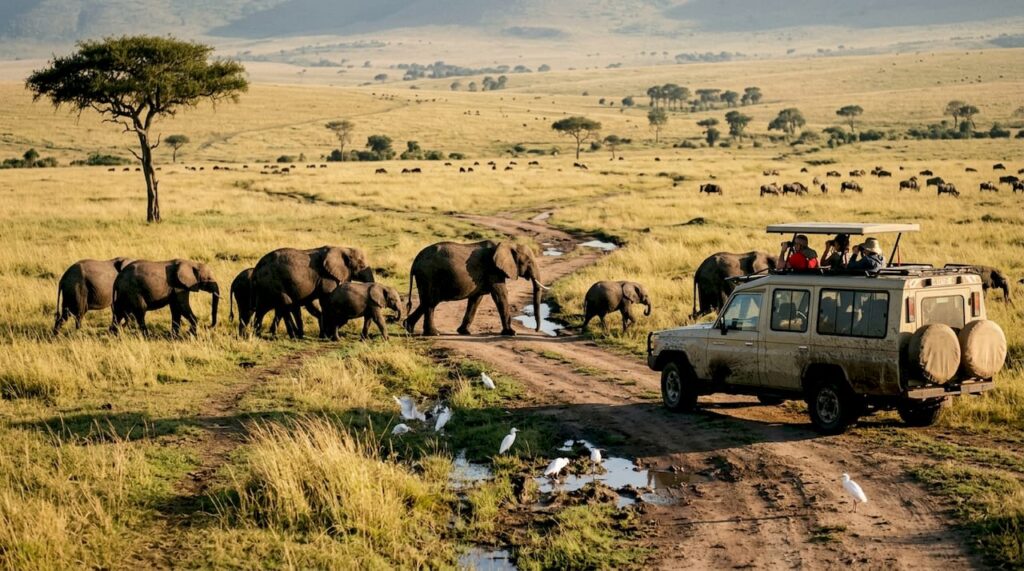
How Much Does an African Wildlife Safari Cost?
Understanding African safari costs is essential for setting realistic expectations. An African wildlife safari is a significant investment, but the sheer quality of wildlife, exclusivity, and life-changing experiences justify the price.
Costs vary dramatically by country, accommodation tier, season, and activities. Here is a transparent breakdown for 2026 travelers from the USA, Canada, UK, Europe, Asia, Australia, and the Middle East.
1. Budget Safaris ($150–$300 per person/day)
Budget safaris typically cost $150–$300 per person per day, translating to roughly $3,500–$5,000 total for a 7–10 day trip from the USA.
These include overland camping safaris (traveling in a custom truck, sleeping in dome tents), group tours with shared vehicles and guides, and self-drive safaris in Kruger National Park.
While accommodation is basic, the wildlife viewing is identical to luxury experiences—animals do not care about thread counts. This tier is ideal for young travelers, backpackers, and budget-conscious adventurers from Latin America, Asia, and Oceania.
2. Mid-Range Tented Camps ($350–$700 per person/day)
Mid-range safaris cost $350–$700 per person per day in peak season, or $500–$900 at prime times in East Africa. A typical 7–10 day mid-range trip totals $5,000–$8,500 per person from international gateways.
This tier features permanent tented camps with en-suite bathrooms, comfortable beds, and private guides. You will enjoy exclusive game drive routes, fewer crowds, and excellent cuisine served under the stars.
This is the sweet spot for travelers seeking authentic wilderness immersion without sacrificing comfort—the most popular choice for families and couples from the UK, Europe, and Middle East.
3. Luxury Fly-In Lodges ($800–$2,500+ per person/day)
Luxury fly-in safaris cost $800–$2,500+ per person per day, with total trips ranging from $8,500 to $15,000+ per person.
These experiences are all-inclusive: chartered light aircraft transfers, private plunge pools, personal butlers, gourmet dining with paired wines, and exclusive use of vast private concessions.
South African luxury fly-in options start around $920 per person sharing. This tier represents the pinnacle of safari travel—unmatched privacy, world-class guiding, and access to the most remote, wildlife-dense corners of Africa, including the Okavango Delta and Serengeti’s exclusive northern reserves.
Cost Breakdown Table
Get a personalized safari quote tailored to your budget. [Calculate Your Safari Cost →]
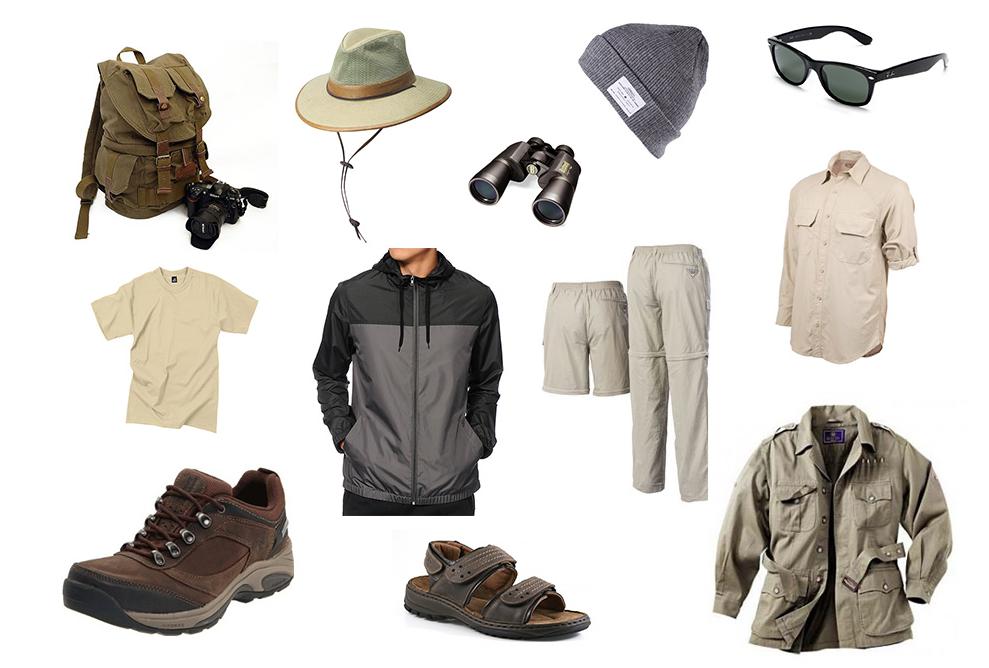
African Safari Packing List: What to Bring
A well-planned safari packing list can make or break your African wildlife safari. Luggage restrictions on light aircraft are strict—often limited to 15kg (33 lbs) of soft-sided baggage—so every item must earn its place.
Here is the definitive, photographer-approved packing list for an African safari, optimized for game drives, walking safaris, and bush camp living.
- Neutral-colored clothing in khaki, olive, brown, and tan. Bright whites and vivid colors spook wildlife and attract tsetse flies. Camouflage is illegal in many African countries, including Uganda and Botswana.
- Layered clothing—cold dawn game drives can drop below 10°C/50°F, while midday temperatures soar past 30°C/86°F. Pack a fleece, windbreaker, and moisture-wicking base layers.
- Sturdy hiking boots with ankle support for walking safaris; closed-toe shoes protect against thorns and insects in camp.
- Binoculars (8×42 or 10×42)—the single most important safari tool. Wildlife is often viewed at distance, and quality optics transform a speck into a leopard.
- Camera with a 200mm+ zoom lens for predator photography. A 100–400mm lens is ideal for capturing lions, leopards, and cheetahs without disturbing them.
- Sun protection—high-SPF sunscreen (SPF 50+), polarized sunglasses to cut water glare, and a wide-brimmed hat with a chin strap for open vehicle game drives.
- Insect repellent (DEET-based, 20–30%) for malaria zones. Most African safari destinations sit in malaria areas—consult your doctor about antimalarial prophylaxis before travel.
- Soft duffel bag (if using light aircraft transfers). The 15kg/33lb limit is strictly enforced, and hard-shell suitcases are rejected as they cannot fit into aircraft baggage pods.
- Microfiber cloth to clean dust from camera lenses, binoculars, and sunglasses—game drives on dry savannah generate significant dust.
- Headlamp or flashlight for navigating unfenced camps at night, where wildlife moves freely between tents.
Still packing? [Check our African safari checklist →]
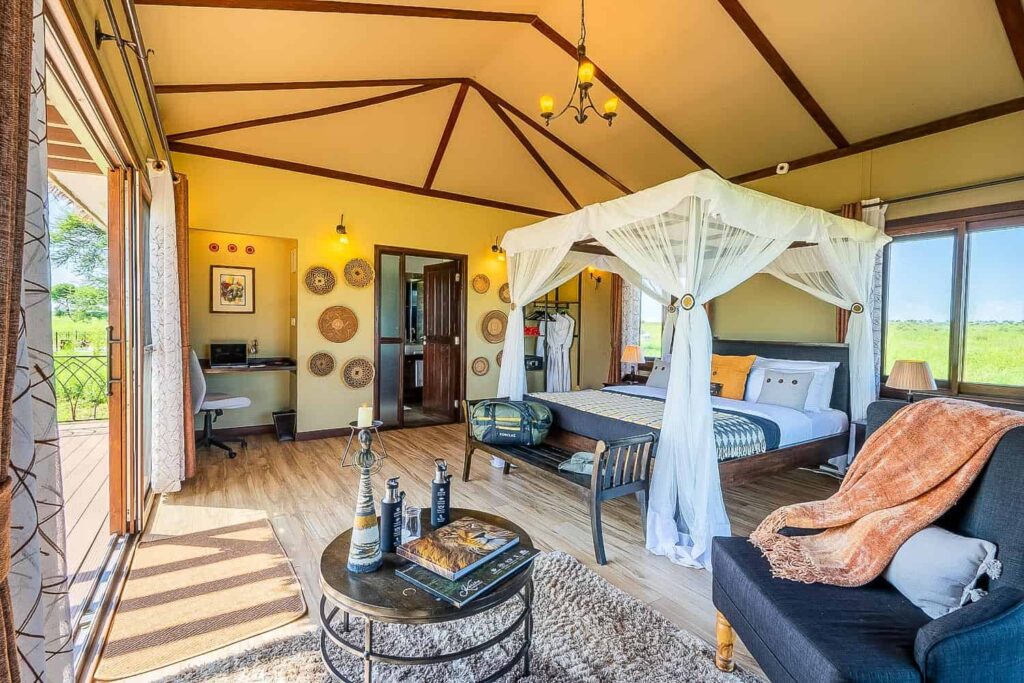
Choosing the Right Safari Style: Lodge vs. Mobile vs. Overland
Selecting the right safari style is as important as choosing the destination. Each format offers a distinct balance of comfort, immersion, and budget, catering to different traveler profiles from the USA, UK, Europe, Asia, and Middle East.
1. Lodge Safaris
Lodge safaris feature permanent, structurally solid accommodations—brick-and-thatch buildings or luxury tented camps with en-suite bathrooms, electricity, and full-service dining.
These are ideal for comfort-seekers, honeymooners, and first-time travelers who want authentic wildlife experiences without sacrificing modern comforts.
Lodges in prime concessions (like Mombo in the Okavango or Singita in the Serengeti) offer unrivaled luxury and consistent Big Five sightings, but come at premium pricing of $800–$2,500+ per night.
2. Mobile/Tented Safaris
Mobile safaris involve moving campsites every few days, allowing you to explore multiple regions of a park or country.
A crew sets up your private camp in advance—spacious walk-in tents with real beds, private bathrooms with bucket showers, and a chef preparing meals over an open fire.
This format delivers an authentic, immersive bush experience at a mid-range price ($350–$700 per day), following the wildlife rather than waiting for it to come to you.
Mobile safaris are the choice for adventurous travelers seeking flexibility and a genuine under-canvas experience.
3. Overland Group Safaris
Overland safaris are budget-friendly group adventures traveling in a custom 4×4 truck with a driver-guide and cook. Participants often help with camp setup, creating a social, communal atmosphere.
These are budget-friendly ($150–$300 per day), social, and adventure-focused—ideal for young travelers, backpackers, and solo adventurers from Latin America, Europe, and Oceania who prioritize breadth of experience over luxury.
Overland tours typically cover multiple countries (e.g., Kenya, Tanzania, Uganda, Rwanda) in 14–28 days.
African Wildlife Safari Frequently Asked Questions
Which African country is best for a first-time safari?
Kenya and Tanzania are the best countries for a first-time African wildlife safari due to the Masai Mara and Serengeti, which offer the densest wildlife concentrations and the iconic Great Migration. South Africa’s Kruger National Park is also excellent for first-timers, offering accessibility, affordability, and reliable Big Five sightings, plus excellent infrastructure for self-drive options.
How much does an African safari cost?
An African wildlife safari costs $150–$300 per person per day for budget camping safaris, $350–$700 for mid-range tented camps, and $800–$2,500+ for luxury fly-in lodges. A typical 7–10 day trip ranges from $2,000 to $15,000+ per person, including international flights, park fees, and accommodations.
What is the best month to go on safari in Africa?
The best months for an African safari are June to October (the dry season), when vegetation is thin and wildlife concentrates around shrinking water sources. For the Great Migration in the Masai Mara, target July to October; for gorilla trekking in Uganda, aim for June to September or December to February.
Is an African safari safe?
Yes, African safaris are safe when conducted with licensed, professional guides in established national parks and game reserves. Risks are minimal if you follow camp rules, remain seated during game drives, never wander alone at night, and take prescribed antimalarial medication. Crime in safari areas is extremely low compared to urban centers.
Conclusion: Your African Wildlife Safari Awaits
An African wildlife safari is not merely a vacation—it is a transformative encounter with the natural world in its most raw, unfiltered form.
From the thundering hooves of 1.5 million wildebeest crossing the Mara River to the silent glide of a mokoro through the Okavango’s papyrus channels, Africa etches itself into your soul.
The investment is significant, but the value—measured in heart-pounding predator sightings, genuine cultural connections, and memories that outlast any photograph—is immeasurable.
Whether you seek the Great Migration in Tanzania, a Big Five safari in South Africa, a water safari in Botswana, or an intimate gorilla trekking experience in Uganda, the perfect itinerary is waiting. The only question is when you will answer Africa’s call.
Don’t just watch Africa on a screen—stand in the shadow of Kilimanjaro, hear a lion’s roar at dawn, and lock eyes with a silverback mountain gorilla in the misty forests of Uganda. Book your gorilla permit through Muzungu Africa Safaris today and secure your place among the last remaining mountain gorillas on earth. Our experts craft tailor-made itineraries for travelers from the USA, North America, Latin America, UK, Europe, Canada, Asia, China, Oceania, and the Middle East—combining luxury Serengeti fly-ins, budget Kruger self-drives, and life-changing gorilla trekking expeditions into one seamless journey. Permits sell out months in advance—[Get Your Free Custom Safari Quote Now →] and let Muzungu Africa Safaris turn your African dream into reality.