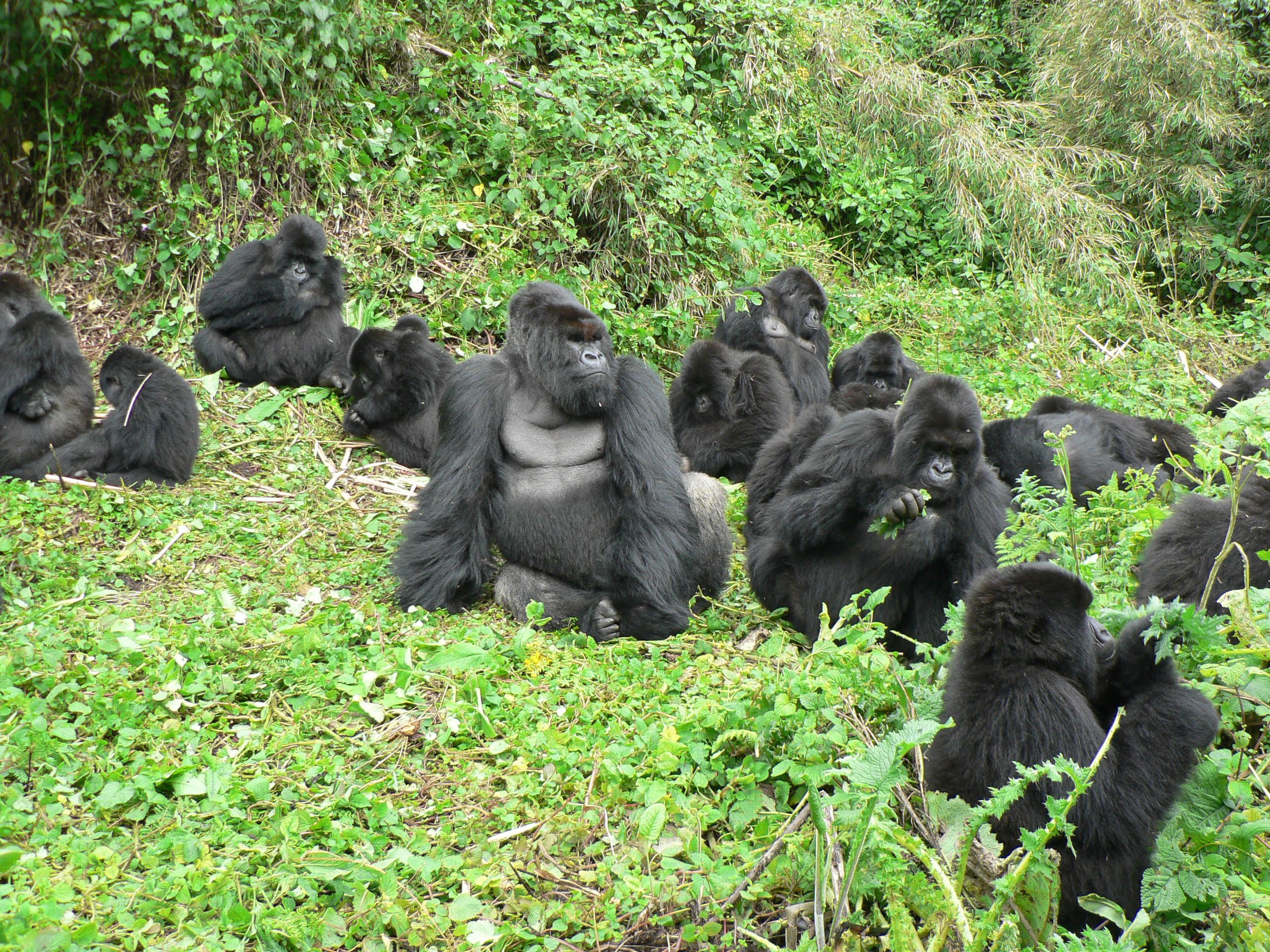
Mountain Gorilla Population 2026: The Ultimate Guide to Conservation & Trekking
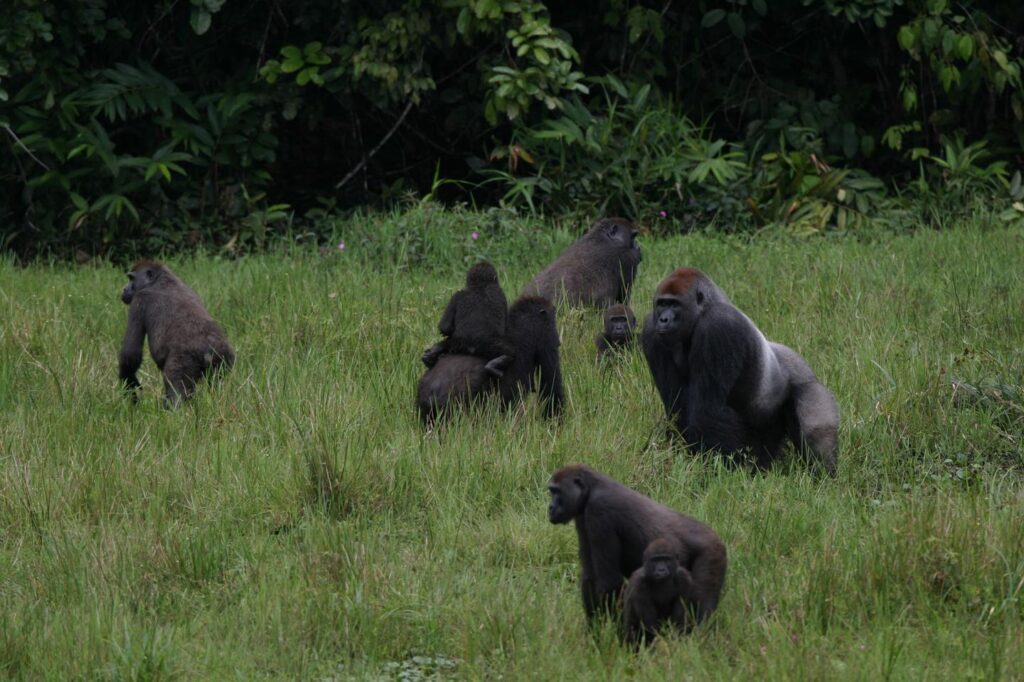
Mountain Gorilla Population stands at just over 1,100 individuals, with most living in Uganda’s Bwindi Impenetrable National Park and the Virunga Massif.
Seeing these endangered gorillas in the wild is a rare experience, while responsible gorilla trekking helps fund conservation, protect their forest habitat, and support nearby communities.
Deep in the mist-covered mountains of East Africa lives one of our closest relatives: the mountain gorilla. Sharing 98% of our DNA, these majestic creatures were once on the brink of extinction.
Today, the mountain gorilla population represents one of the greatest conservation success stories in modern history.
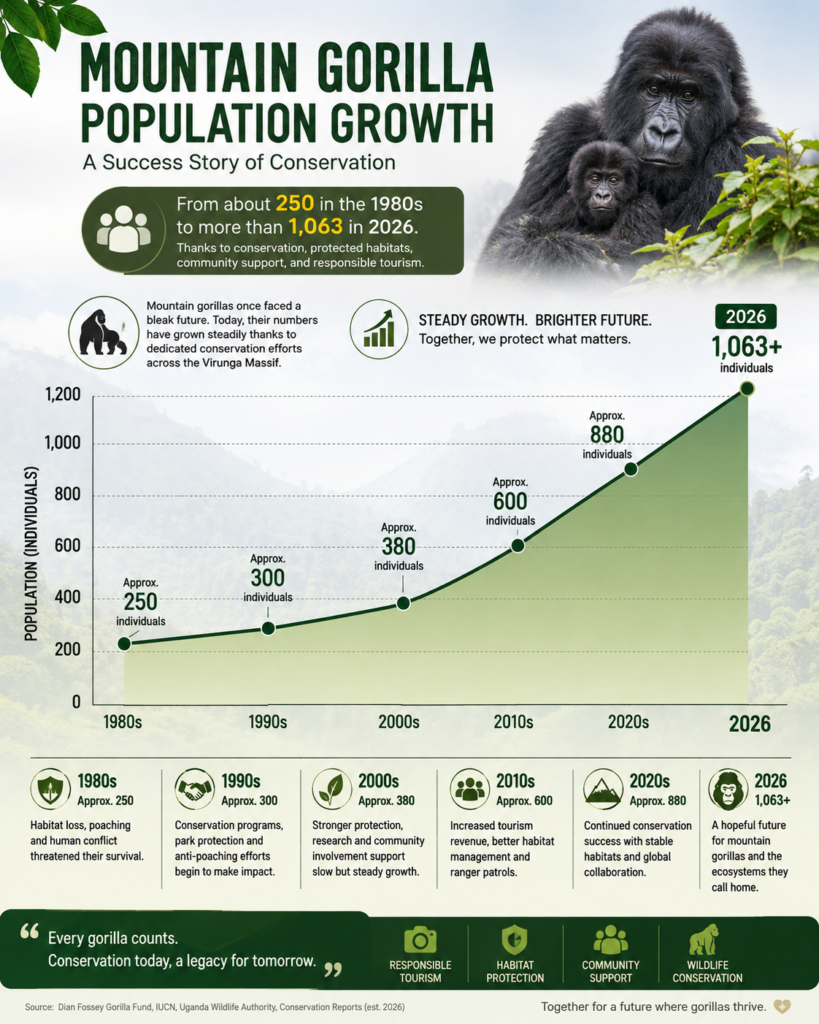
With the current population sitting at just over 1,100 individuals, mountain gorillas are the only great ape species whose numbers are actively increasing.
This incredible comeback from near-extinction is a testament to rigorous anti-poaching efforts, veterinary interventions, and the power of eco-tourism.
But the fight isn’t over. In this comprehensive guide, we will break down the latest mountain gorilla population statistics for 2026, explore their fragile habitats, and reveal how travelers from the USA, UK, Europe, Canada, Asia, and beyond can safely and ethically visit them.
Plan Your Trek Today – View Gorilla Safari Packages.
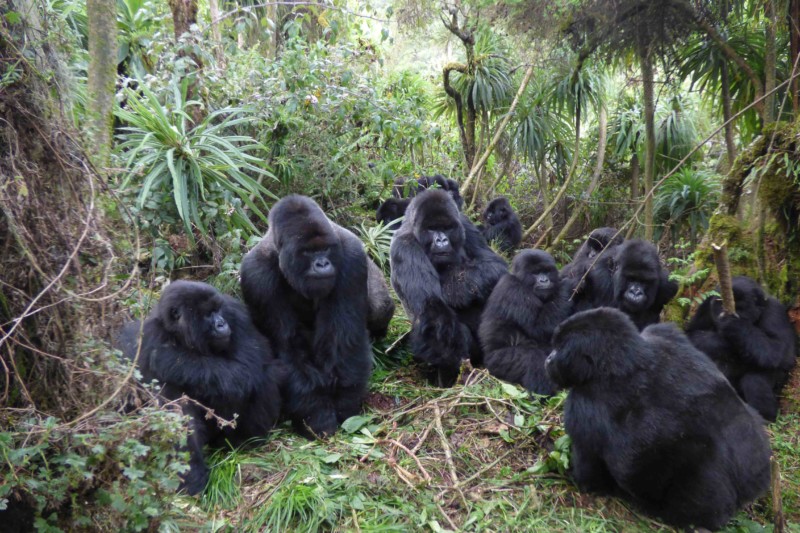
The Current State of the Mountain Gorilla Population
Understanding the mountain gorilla population requires looking at decades of meticulous data collection. Mountain gorillas (Gorilla beringei beringei) are restricted to two isolated populations in East Africa.
How Many Mountain Gorillas Are Left?
As of the most recent comprehensive censuses, the global mountain gorilla population is estimated at 1,063 individuals. This figure is broken down into two distinct habitats:
- The Virunga Massif: A 2015/2016 census recorded 604 individuals here.
- Bwindi-Sarambwe Ecosystem: A 2018 census recorded 459 individuals here.
Combined, this brings the total to exactly 1,063 wild mountain gorillas. While a 2026 update is pending, conservationists estimate the number has slightly increased due to consistent birth rates among habituated groups.
From “Critically Endangered” to “Endangered”
In 2018, the International Union for Conservation of Nature (IUCN)** officially downlisted** the mountain gorilla from “Critically Endangered” to “Endangered.”
Why did this happen? The status change was the direct result of intensive conservation efforts. Organizations like the Dian Fossey Gorilla Fund and local wildlife authorities implemented daily anti-poaching patrols.
Additionally, veterinary care—such as the Gorilla Doctors who treat respiratory illnesses and remove snares—drastically reduced mortality rates.
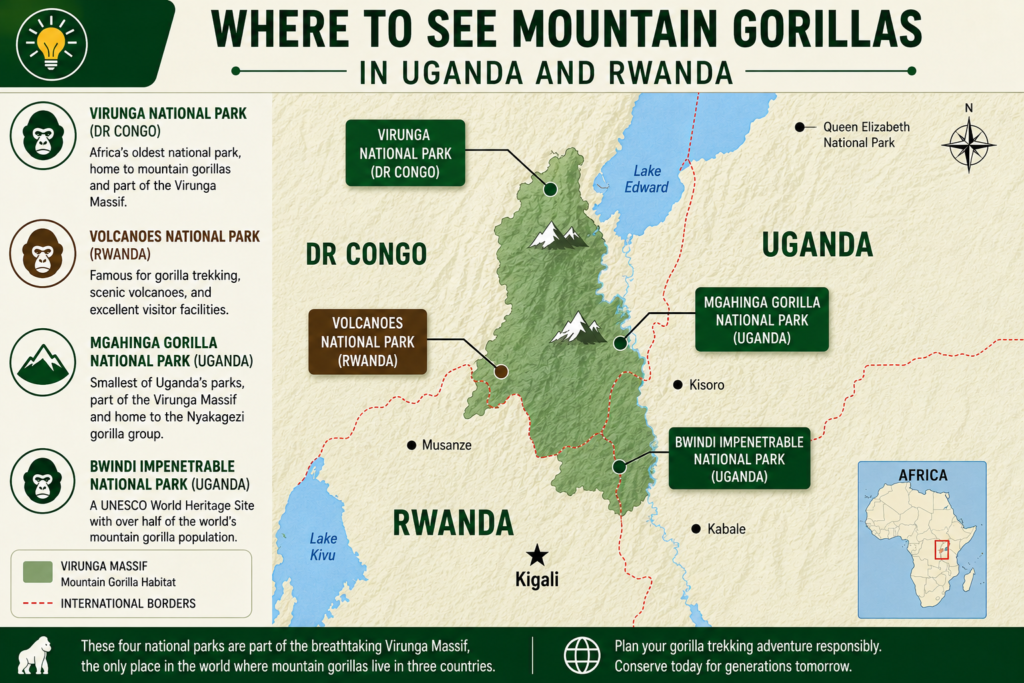
Where Do Mountain Gorillas Live? (Habitat Breakdown)
Mountain gorillas live in high-altitude montane and bamboo forests, ranging from 2,200 to 4,300 meters above sea level.
Their habitat is highly restricted.
1. The Virunga Massif
The Virunga Massif is a tri-national park spanning three countries:
- Rwanda: Volcanoes National Park
- Uganda: Mgahinga Gorilla National Park
- DR Congo: Virunga National Park
This chain of volcanic mountains is home to roughly 604 mountain gorillas. The terrain is rugged, featuring dense bamboo forests and nettle patches, making it a premier destination for African wildlife safaris.
2. Bwindi Impenetrable National Park
Located in southwestern Uganda, Bwindi Impenetrable National Park is a UNESCO World Heritage Site. It is home to nearly half the world’s mountain gorilla population (459 individuals).
Bwindi’s ancient, biologically diverse rainforest offers a vastly different trekking experience compared to the Virunga mountains, characterized by steep ridges and deep valleys.
The History of Mountain Gorilla Conservation
The survival of the mountain gorilla population is deeply tied to human intervention—both the destruction and the subsequent rescue of their habitat.
The Dian Fossey Legacy
In 1967, American primatologist Dian Fossey established the Karisoke Research Center in Rwanda’s Volcanoes National Park. Fossey pioneered the “active conservation” model.
She introduced the digitization of tracking (using nose-print identifications, similar to human fingerprints) and established rigorous anti-poaching patrols.
Her work exposed the plight of mountain gorillas to the world, laying the foundation for modern primate conservation.
The Turning Point: How Eco-Tourism Saved the Species
By the 1980s, the population had plummeted to 250 individuals. The turning point was the introduction of eco-tourism.
Governments in Uganda and Rwanda realized that live gorillas were worth more than poached ones.
By launching gorilla trekking programs, they created a paradigm shift: locals who once relied on poaching or deforestation for charcoal burning were hired as trackers, porters, and rangers.
Tourism revenue became the primary funding source for conservation, proving that wildlife protection could be economically viable.
Top Threats to the Mountain Gorilla Population Today
Despite their comeback, mountain gorillas remain an endangered species. Their restricted habitat makes them highly vulnerable to several ongoing threats.
1. Habitat Loss
As human populations grow around the national parks, there is immense pressure on the forest.
Deforestation for agriculture and charcoal burning continually encroach on gorilla territory. While strict park boundaries exist, illegal logging occasionally occurs, fragmenting the gorillas’ living space.
2. Human Diseases
Because mountain gorillas share 98% of human DNA, they are highly susceptible to human respiratory illnesses. A common cold from a tourist can be lethal to a gorilla. During the COVID-19 pandemic, trekking was temporarily halted to protect the apes.
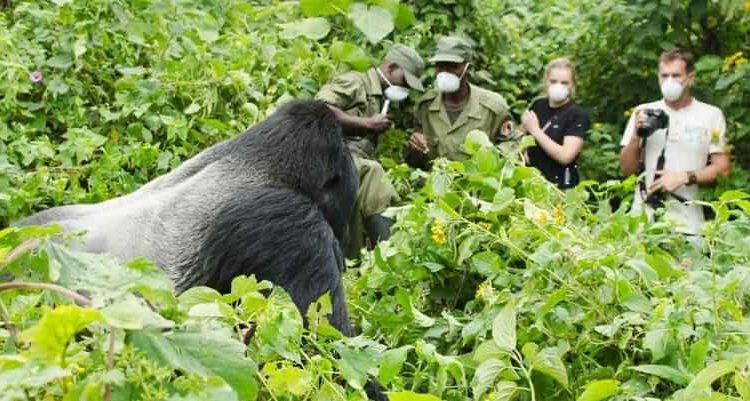
Today, strict health protocols are in place: trekkers must stay 7 meters (21 feet) away and are often required to wear surgical masks in the presence of the gorillas.
3. Poaching and Snares
Mountain gorillas are rarely targeted directly by poachers. Instead, they fall victim to indirect poaching.
Poachers set wire snares to catch antelopes and bushbucks for bushmeat, but gorillas—especially infants—can accidentally get caught. These snares can cause gangrene or fatal injuries, requiring dangerous interventions by veterinary teams.
4. Climate Change
Climate change poses a long-term threat. Shifting temperatures and unpredictable rainfall affect the growth of high-altitude bamboo, a primary food source for gorillas.
As their food sources shift, gorillas may be forced into higher, colder elevations, stressing their reproductive cycles.
How You Can Help: Mountain Gorilla Conservation Efforts
Conservation is an ongoing financial battle. Here is how international travelers and wildlife enthusiasts can contribute to the mountain gorilla population growth.
1. -Based Tourism
The most impactful way to help is through community-based tourism. In Uganda and Rwanda, a percentage of gorilla trekking permit fees goes directly to local communities.
This revenue funds schools, health clinics, and water projects. When locals see tangible benefits from gorilla tourism, they become the fiercest protectors of the forest.
2. Adopt a Gorilla / Donate
If you cannot travel immediately, you can still make a difference. Supporting reputable organizations ensures frontline rangers have the equipment they need.
Support Conservation – Buy our Gorilla Charity T-Shirt (20% goes to the Dian Fossey Fund)]
Gorilla Trekking: The Ultimate Wildlife Experience
Gorilla trekking is widely considered the greatest wildlife experience on Earth. It is a physically demanding but emotionally overwhelming adventure.
Whether you are an intrepid backpacker from Oceania or a luxury traveler from the Middle East, there is a trekking experience tailored for you.
1. Gorilla Trekking in Uganda
Uganda offers the most accessible and diverse trekking experiences. You can trek in both Bwindi Impenetrable National Park and Mgahinga Gorilla National Park.
- Permit Cost: $800 per person (Foreign Non-Residents)
- Experience Level: Moderate to strenuous. Bwindi’s terrain is steep and muddy, requiring a good level of fitness.
- Best For: Budget-conscious travelers, deep nature lovers, and those wanting to combine treks with classic savanna safaris.
2. Gorilla Trekking in Rwanda
Rwanda positions itself as a high-end, luxury eco-tourism destination. Trekking occurs in Volcanoes National Park, just a two-hour drive from Kigali.
- Permit Cost: $1,500 per person
- Experience Level: Moderate. The trails are generally better maintained than in Uganda, though the altitude can be challenging.
- Best For: Travelers seeking luxury lodges, shorter trip durations, and VIP experiences.
3. Gorilla Trekking in DR Congo
The Democratic Republic of Congo (DRC) offers the most rugged and affordable experience in Virunga National Park.
- Permit Cost: $400 per person
- Experience Level: Strenuous. Infrastructure is less developed.
- Best For: Adventurous travelers. Note: Always check current travel advisories before booking, as the eastern DRC experiences periodic security instability.
What to Expect on a Gorilla Trek (A Quick Guide)
To ensure you are fully prepared for your gorilla safari, here is a quick guide to the experience.
1. Physical Preparation: How Hard is the Hike?
Gorilla trekking is physically demanding. You will hike through dense jungle, navigate slippery vines, and climb steep elevations.
- Book a Porter: Hire a local porter for $15-$20. They carry your backpack and help you navigate tricky terrain, providing vital local income.
- Fitness Level: You should be able to walk for 2 to 6 hours at altitude. Cardiovascular training is recommended before your trip.
2. The One-Hour Rule
Once trackers locate a gorilla family, you will spend exactly one hour with them. This strict rule is enforced to prevent disease transmission and reduce stress on the gorillas.
During this hour, you will watch them eat, play, and groom, under the watchful eye of the dominant Silverback.
You must maintain a distance of 7 meters, though curious juveniles may occasionally approach you (stay still and follow the guide’s instructions).
3. Packing List
Having the right gear makes or breaks your trek.
- Sturdy Hiking Boots: Waterproof with good ankle support.
- Gardening Gloves: Essential for grabbing thorny vines and pulling yourself up steep slopes.
- Gaiters: Prevents mud and ants from entering your boots.
- Rain Jacket: The forest is unpredictable; rain can happen at any time.
- Camera (No Flash): Bring a zoom lens, but strictly disable your flash, as it distresses the gorillas.
Get Your Ultimate Gorilla Trekking Packing List & Gear Guide
Frequently Asked Questions (FAQ)
Q: Can mountain gorillas be kept in zoos?
A: No. Mountain gorillas do not survive in captivity. They require highly specific high-altitude montane forest diets and are incredibly susceptible to human diseases, making zoo environments fatal for them.
Q: Are mountain gorillas aggressive?
A: No. Mountain gorillas are gentle giants. They live in peaceful, cohesive family groups led by a dominant Silverback. They only display aggression (like chest-beating or charging) if they feel their family is directly threatened.
Q: What is the lifespan of a mountain gorilla?
A: In the wild, mountain gorillas live for 35 to 40 years. A Silverback usually assumes leadership of a group around age 15.
Q: How much does a gorilla trekking permit cost?
A: A permit costs $400 in DR Congo, $800 in Uganda, and $1,500 in Rwanda. Prices vary based on the country’s tourism strategy and infrastructure.
Conclusion: The Future of the Mountain Gorilla Population
The mountain gorilla population is a rare beacon of hope in the global biodiversity crisis. Growing from a mere 250 individuals in the 1980s to over 1,000 today proves that when humanity commits to conservation, nature can heal.
However, the future of these magnificent creatures still relies entirely on continued human support, anti-poaching funding, and responsible eco-tourism.
By choosing to trek, you are not just checking an item off your bucket list; you are directly funding the survival of an entire species.
Be part of the success story. Book your ethical gorilla trekking safari today with Muzungu Africa Safaris and witness these majestic creatures in the wild.
Book Your Gorilla Permit with Muzungu Africa Safaris Today]