The Ultimate Mountain Gorilla Trekking Guide: Permits, Parks & Planning
Few wildlife experiences on earth match the emotional gravity of locking eyes with a wild mountain gorilla silverback in the montane rainforests of East Africa.
Mountain gorilla trekking is not just a safari; it is a profound, deeply moving encounter with one of our closest living relatives.
The mountain gorilla (Gorilla beringei beringei) is a conservation success story—numbers have risen from a precarious 620 in the 1990s to over 1,063 today, thanks to tightly controlled tourism and conservation funding.
This definitive guide covers everything you need to plan your mountain gorilla trekking adventure: gorilla permit costs (Uganda vs. Rwanda), best parks and sectors, best time to visit, essential packing lists, fitness requirements, and a step-by-step booking guide.
Whether you are traveling from the USA, UK, Europe, Canada, Asia, China, Oceania, or the Middle East, this resource equips you to make informed decisions and secure your place in one of nature’s most exclusive experiences.
Secure your permit early—only ~88 issued daily in Uganda. [Check permit availability with Muzungu Africa Safaris today.]
What Is Mountain Gorilla Trekking?
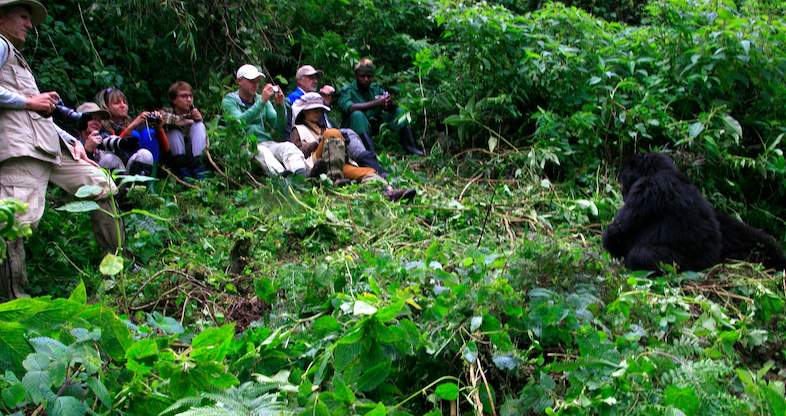
Mountain gorilla trekking is the practice of hiking through dense montane rainforest in Uganda’s Bwindi Impenetrable National Park or Rwanda’s Volcanoes National Park to observe a habituated gorilla family in the wild.
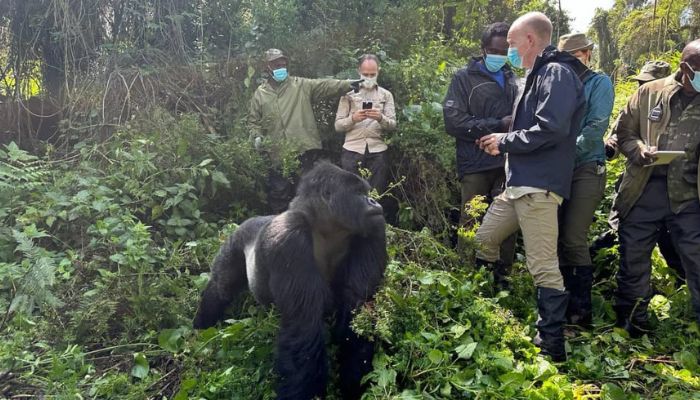
Led by expert guides and armed rangers, small groups of trekkers spend one strict, unforgettable hour in the presence of a gorilla family headed by a dominant silverback. This hour is regulated to minimize stress on the animals and disease transmission.
Mountain gorillas are listed as Critically Endangered by the IUCN, with approximately 1,063 individuals remaining in the wild, found only in the Virunga Massif and Bwindi ecosystem.
Tourism is their primary survival lifeline—permit revenue funds anti-poaching patrols, veterinary interventions, and community programs.
The standard gorilla trekking permit allows one hour with a habituated family. However, Uganda offers an exclusive gorilla habituation experience in the Rushaga sector of Bwindi, allowing trekkers to spend four hours alongside semi-habituated families and researchers.
This extended encounter costs $1,500 per person and is available nowhere else in the world.
Want the extended 4-hour habituation experience? [Check availability with Muzungu Africa Safaris.]
Where to Go Gorilla Trekking: Uganda, Rwanda, or DRC?
Choosing your destination is the first and most consequential decision in planning your mountain gorilla trekking adventure. Three countries offer the experience, but only two are currently viable and safe.
1. Uganda — Bwindi Impenetrable National Park
Bwindi Impenetrable National Park in southwestern Uganda is the premier destination for gorilla trekking in Uganda.
This UNESCO World Heritage Site hosts nearly half of the world’s mountain gorilla population across approximately 21 habituated families available for tourism.
Bwindi is divided into four trekking sectors, each offering distinct terrain and family dynamics:
- Buhoma Sector (North): The original sector, easiest terrain, excellent family lodges. Families include Mubare, Rushegura, and Habinyanja.
- Ruhija Sector (East): Higher elevation, shorter drives from Entebbe. Families include Bitukura and Oruzogo.
- Rushaga Sector (South): Most families, including the habituation experience. Families include Nshongi, Mishaya, and Bweza.
- Nkuringo Sector (Southwest): Steep terrain, dramatic views of the Virunga volcanoes. Family: Nkuringo and Christmas.
Mgahinga Gorilla National Park is Uganda’s second gorilla park, smaller and bordering Rwanda. It hosts one habituated family (Nyakagezi) and offers excellent golden monkey trekking as a combined experience.
2. Rwanda — Volcanoes National Park
Volcanoes National Park in northwestern Rwanda is legendary as the base of Dian Fossey’s research.
It is approximately a 2.5-hour drive from Kigali International Airport (KGL), making it the most accessible gorilla trekking destination for international travelers with limited time.
The terrain is generally gentler—shorter treks and less dense vegetation than Bwindi. Rwanda has approximately 10 habituated gorilla groups and charges a premium $1,500 per permit, positioning itself as the luxury gorilla destination.
3. DRC — Virunga National Park
Virunga National Park in the Democratic Republic of Congo is Africa’s oldest national park and home to roughly eight habituated gorilla families.
However, as of September 2026, Virunga’s public tourism operations remain closed due to unresolved security concerns in eastern DRC.
We do not recommend DRC for gorilla trekking in 2026. Uganda and Rwanda remain the only safe, viable options.
Mountain Gorilla Trekking Destination Comparison
Not sure which country suits you? [Get a free itinerary consultation from Muzungu Africa Safaris.]
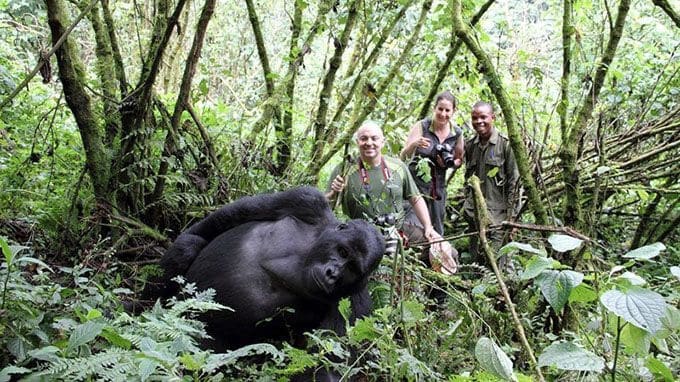
Mountain Gorilla Trekking Permit Costs (2025/2026)
The gorilla permit is your most critical planning component. It is not a ticket you purchase at the gate; it is a pre-booked, passport-linked document issued by the Uganda Wildlife Authority (UWA) or the Rwanda Development Board (RDB).
Without a permit, you cannot trek.
1. Uganda Gorilla Permit Costs
- Foreign Non-Resident: $800 per person, per trek
- Foreign Resident in East Africa: $700 per person, per trek
- East African Citizen: 150,000 UGX per person, per trek
2. Rwanda Gorilla Permit Cost
- All Nationalities (Foreign Non-Resident & Resident): $1,500 per person, per trek
3. Gorilla Habituation Experience (Uganda Only)
- $1,500 per person for four hours with a semi-habituated family in Bwindi’s Rushaga sector. This is a research-oriented experience limited to a maximum of 4 trekkers per day, making it one of the most exclusive wildlife encounters on earth.
4. What Is Included in a Gorilla Permit?
- Park entry fees for the day of trekking
- Services of an expert guide and armed rangers
- One hour (standard) or four hours (habituation) with a habituated gorilla family
- Community levy (a portion of permit revenue funds local community projects)
5. Critical Permit Rules
Gorilla permits are non-refundable and non-transferable. Once purchased, they are linked to your specific passport and trekking date.
If you fall ill, miss your flight, or fail to show, the permit is forfeited. This is why booking through a licensed operator who manages the entire logistics chain is strongly recommended.
🦍 Book your gorilla permit through Muzungu Africa Safaris—we handle UWA permit acquisition, logistics, and lodge pairing. [Start your booking today.]
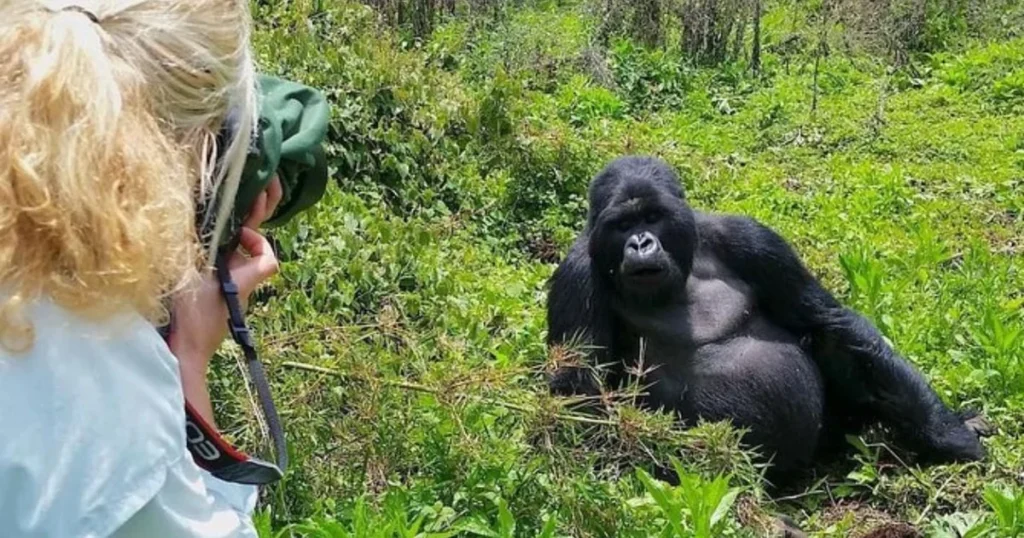
Best Time to Go Mountain Gorilla Trekking
Selecting the best time for mountain gorilla trekking is crucial for terrain conditions, wildlife viewing, and permit availability.
Uganda and Rwanda share similar climate patterns, with two dry seasons and two wet seasons.
1. Dry Seasons (June–September & December–February)
The dry seasons are the optimal time for gorilla trekking. Trails are firmer and less muddy, making the physical trek less exhausting.
Malaria risk is lower. Vegetation is less dense, improving visibility.
However, these are peak seasons—permits sell out 3 to 6 months in advance, especially for Rwanda’s Volcanoes National Park and Bwindi’s Buhoma sector. International travelers from the USA, UK, Europe, and Canada typically align their trips with these months.
2. Wet Seasons (March–May & October–November)
The wet seasons transform the forests into lush, emerald-green paradises—ideal for photography. Crowds are thinner, and lodge rates drop significantly (sometimes 30–50%).
However, trails become extremely muddy and steep sections are treacherous. Treks may take longer as gorillas retreat to lower, drier ground.
For budget-conscious travelers from Latin America, Asia, and Oceania, the wet season offers excellent value.
Quick-Reference: Best Time to Trek Gorillas
Planning to trek during peak season? [Secure your permit through Muzungu Africa Safaris before they sell out.]
Related Read | Bwindi Gorilla Trekking Guide
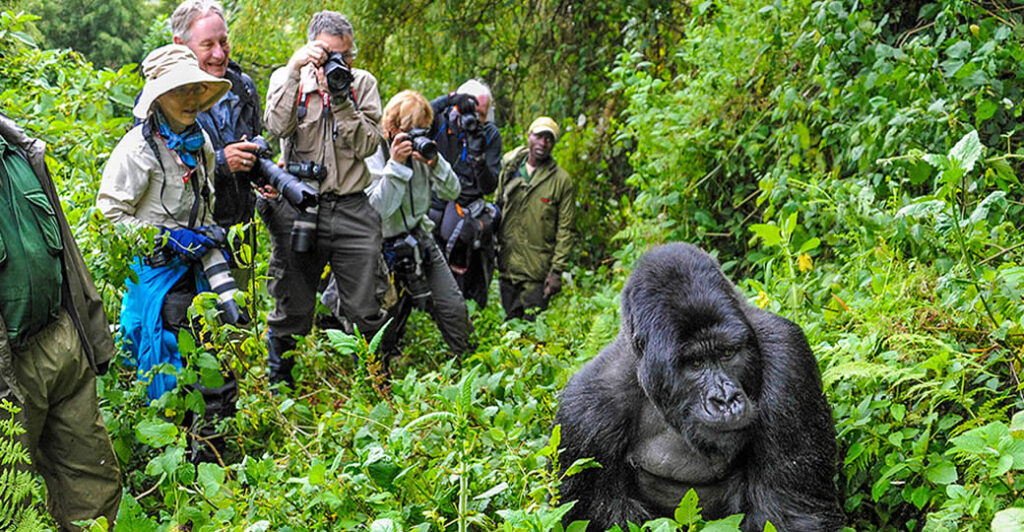
How to Book a Gorilla Permit: 5 Step-by-Step Guide
Booking a gorilla permit requires precision and advance planning.
Follow these five steps to secure your place.
Step 1: Choose Your Country and Trekking Dates
Decide between Uganda (value, diversity, habituation experience) and Rwanda (convenience, luxury, shorter treks). Select 2–3 preferred dates, as permits for popular families sell out quickly.
Step 2: Check Permit Availability
Contact the Uganda Wildlife Authority (UWA) or Rwanda Development Board (RDB) directly, or use a licensed safari operator like Muzungu Africa Safaris to check real-time availability. UWA publishes an online permit availability portal, but it can be slow to update during peak season.
Step 3: Pay Your Deposit
Operators typically require a 30–50% deposit to secure and register your permit. The balance is paid 60–90 days before your trek. Permit prices are fixed by the government—no operator can offer a discount, so be wary of deals below the official rate.
Step 4: Submit Passport Details
Your permit is linked to your passport. Submit clear scanned copies of your passport bio-data page to your operator or UWA/RDB. Any discrepancy between your permit and passport on trekking day will result in denial of access.
Step 5: Receive Your Permit Voucher and Attend the Pre-Trek Briefing
You will receive a printed or digital permit voucher. The evening before your trek, attend the mandatory briefing at park headquarters, where guides assign gorilla families based on fitness levels and group composition.
Skip the paperwork—[Muzungu Africa Safaris secures permits, transfers, and lodges in one seamless package.]
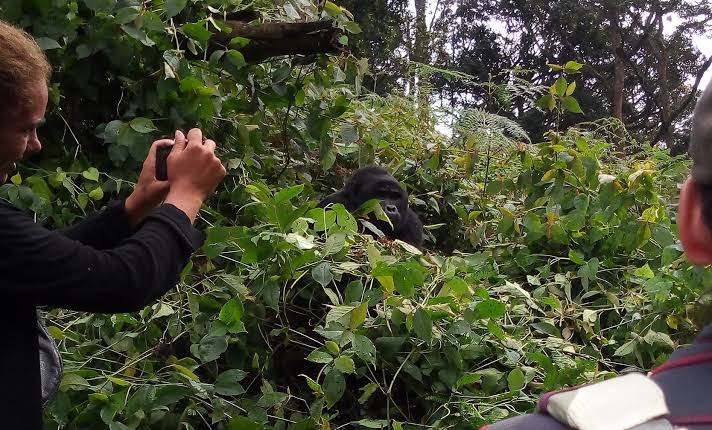
Physical Difficulty & Fitness Requirements
Mountain gorilla trekking is a physically demanding activity. You are hiking through equatorial montane rainforest at high altitude, on steep, muddy, and unmarked trails.
- Trek Duration: Between 1 and 6 hours depending on where the gorilla family is located that day. Some families are found within 45 minutes; others require full-day expeditions.
- Elevation: Trekking occurs at 2,000 to 2,500 meters above sea level. Altitude effects are mild but noticeable if you are arriving from sea level.
- Terrain: Bwindi’s name—”Impenetrable”—is apt. Expect steep ravines, tangled undergrowth, biting nettles, and deep mud.
- Age Limit: 15 years minimum. No exceptions. Children under 15 are not permitted to trek under UWA and RDB regulations.
- Fitness Level: Moderate to strenuous. You should be able to hike continuously for 3–4 hours on uneven, steep ground. No technical climbing skills are required.
Hire a Porter—Strongly Recommended
Porters are available at every trailhead for $15–$20 per trek. They carry your daypack, assist you on steep or slippery sections, and provide invaluable support. Hiring a porter also directly supports local community livelihoods, a critical component of gorilla conservation.
Tipping Guidelines
- Lead Guide: $10–$15 per trekker
- Porter: $10 per trekker
- Trackers/Rangers: $10 per trekker (shared)
Tipping is voluntary but deeply appreciated in a region where tourism is the primary economic driver.
Want to ensure you are matched with a gorilla family suited to your fitness level? [Consult with Muzungu Africa Safaris before booking.]
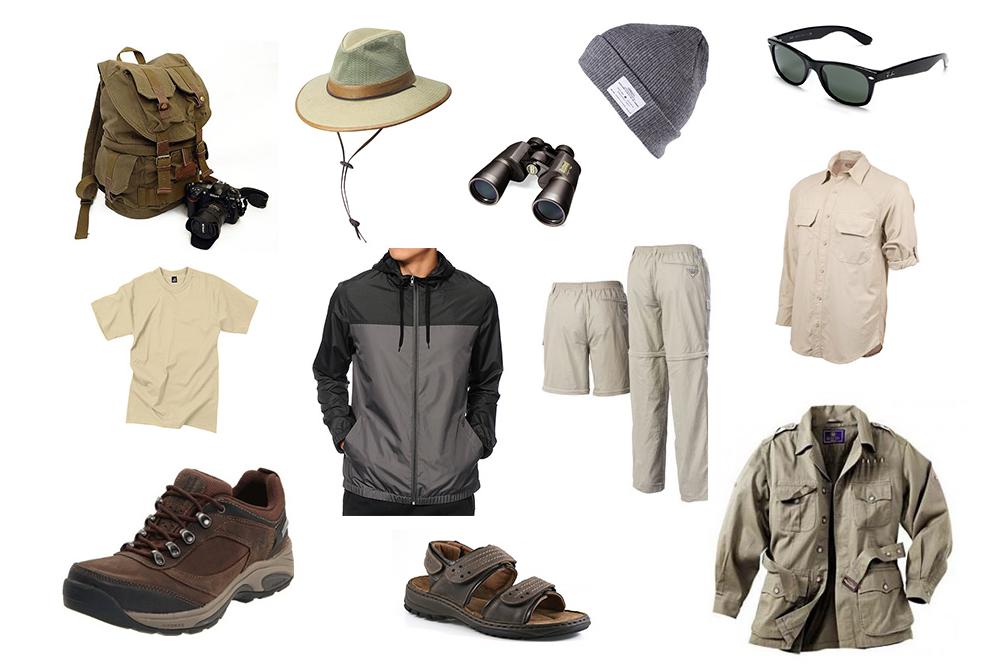
Essential Mountain Gorilla Trekking Packing List
The right gear makes the difference between an enjoyable trek and a miserable one. Montane rainforests are wet, thorny, and cool at altitude.
Pack these items:
- Sturdy Waterproof Hiking Boots: Ankle support is essential on steep, muddy slopes. Break them in before you arrive.
- Gardening Gloves: Leather or canvas gloves protect your hands when gripping thorny vegetation and pulling yourself up steep embankments.
- Long-Sleeve Shirts and Long Trousers: Neutral colors (khaki, olive, brown). No bright colors or white. Long sleeves protect against nettles and insects.
- Lightweight Rain Jacket: Rain can fall at any time in the rainforest, even during the dry season.
- Daypack with 2–3 Liters of Water and Snacks: You will be trekking for hours; hydration is critical. Energy bars or trail mix are recommended.
- Walking Stick: Most trailheads provide carved wooden sticks for free. They are invaluable for stability on steep descents.
- Camera (No Flash), Binoculars, and Insect Repellent: Flash photography is strictly prohibited near gorillas. A 200mm+ zoom lens is ideal for photography. Insect repellent should be DEET-based for tick and mosquito protection.
Need help coordinating gear rental or logistics? [Muzungu Africa Safaris provides full pre-departure support.]
Gorilla Trekking Rules & Etiquette
Strict rules govern mountain gorilla trekking to protect both the gorillas and the trekkers. These are non-negotiable and enforced by armed rangers:
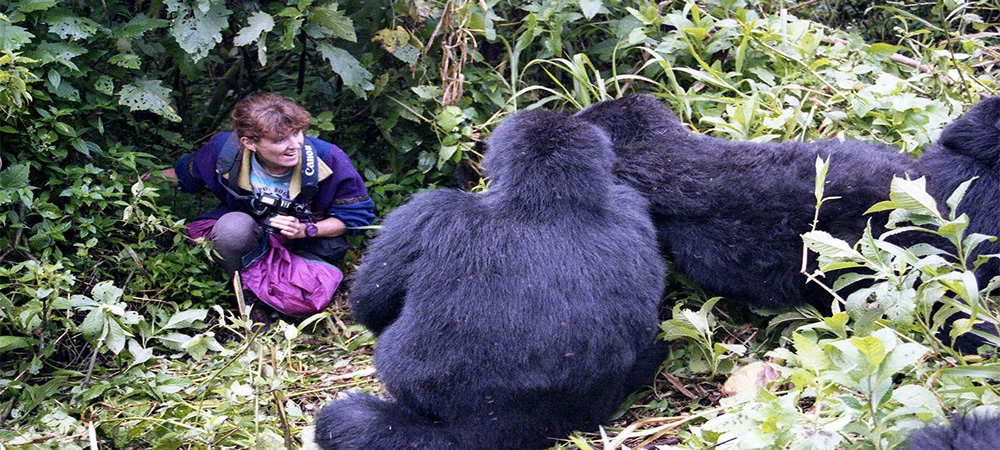
- Keep a minimum distance of 7 meters (21 feet) from the gorillas at all times.
- No flash photography. Flash can startle gorillas and provoke silverback charges.
- No eating or drinking within 200 meters of the gorillas. Food scent and crumbs attract gorillas and risk disease transmission.
- Cover coughs and sneezes; do not trek if ill. Mountain gorillas share 98.3% of our DNA and are highly susceptible to human respiratory illnesses, which can be fatal to them.
- Maximum 8 visitors per gorilla family per day. This limits stress and disease exposure.
- Follow all guide instructions immediately. If the silverback charges, crouch down, avoid eye contact, and remain still—never run.
Sample 3-Day Gorilla Trekking Itinerary
This plug-and-play itinerary is ideal for international travelers combining gorilla trekking in Uganda with a broader East African safari.
Day 1: Arrival and Transfer to Bwindi
Fly into Entebbe International Airport (EBB) near Kampala, or Kigali International Airport (KGL) in Rwanda (a shorter 3–4 hour drive to Bwindi’s southern sectors). Transfer to your booked lodge in your assigned sector (Buhoma, Ruhija, Rushaga, or Nkuringo). Check in by late afternoon. At 6:00 PM, attend the mandatory pre-trek briefing at park headquarters, where you will be assigned your gorilla family based on fitness level and group composition. Dinner and overnight at the lodge.
Day 2: Gorilla Trekking Day
6:30 AM: Breakfast at the lodge. 7:30 AM: Convene at the trailhead for final briefing and porter assignment. 8:00 AM: Begin trekking through the rainforest. Depending on your assigned family, the trek may take 1 to 6 hours. Once the family is located, spend your one unforgettable hour observing the silverback, females, and infants as they feed, play, and rest. Return to the trailhead by mid-afternoon. Celebration dinner at the lodge.
Day 3: Cultural Experience and Departure
Morning visit to a Batwa community for a cultural experience showcasing the indigenous forest dwellers’ traditional life, or an optional golden monkey trek in Mgahinga (if applicable). Mid-morning departure for your transfer back to Kigali or Entebbe for onward flights.
Book this exact 3-Day Bwindi Gorilla Safari with Muzungu Africa Safaris—all-inclusive from $1,450 pp. [View itinerary and availability.]
Mountain Gorilla Trekking Frequently Asked Questions
How much does a gorilla trekking permit cost?
A gorilla trekking permit costs $800 in Uganda (Foreign Non-Resident) and $1,500 in Rwanda. The gorilla habituation experience in Uganda costs $1,500 for four hours. Permit prices are fixed by government wildlife authorities and are the same regardless of which operator you book through.
Is gorilla trekking safe?
Yes, gorilla trekking is safe when conducted with trained, armed rangers and expert guides. Mountain gorillas are habituated to human presence and are generally docile. However, you are in a wild environment with large animals, and following all guide instructions is mandatory.
How hard is the gorilla trek?
The trek is moderate to strenuous, lasting 1 to 6 hours on steep, muddy terrain at 2,000–2,500 meters elevation. Porters are available at the trailhead for $15–$20 and are strongly recommended. Trekkers should be in reasonable physical condition.
Can children go gorilla trekking?
No. The minimum age for gorilla trekking is 15 years in both Uganda and Rwanda. This rule is strictly enforced by UWA and RDB. Children under 15 are not permitted to trek under any circumstances.
What are the chances of seeing gorillas?
The success rate for seeing gorillas on a trek is over 98%. Advance tracker teams locate each family before dawn and radio their position to your guide. It is extremely rare—though possible—to not find your assigned family.
Conclusion: Is Gorilla Trekking Worth It?
Mountain gorilla trekking is one of the most profound wildlife encounters on earth. Standing seven meters from a 400-pound silverback as he watches over his family is an experience that transcends ordinary tourism.
It is expensive, physically demanding, and requires months of advance planning—but it is worth every dollar, every step, and every moment.
Your permit fee does not just buy an hour with gorillas. It directly funds anti-poaching patrols, veterinary care, and community upliftment programs that have helped the mountain gorilla population rise from 620 to over 1,063 in three decades.
By trekking, you are an active participant in one of conservation’s greatest success stories.
Permits sell out months ahead, especially during the June–September and December–February peak seasons. Do not leave your booking to chance.
🦍 Book your gorilla permit through Muzungu Africa Safaris today. Our expert team handles UWA and RDB permit acquisition, lodge pairing, ground transfers, and full itinerary design. Contact us now and lock in your date with the giants of Bwindi and Volcanoes National Park.